
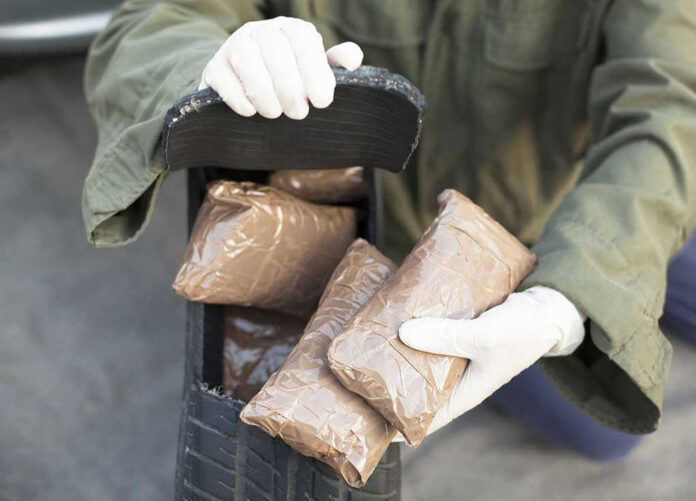
A 23-year-old Texan’s audacious attempt to smuggle 75 pounds of marijuana through Miami International Airport to London exposes the brazen disregard traffickers have for federal law, even as lax border policies under the previous administration emboldened criminal enterprises nationwide.
Story Snapshot
- Harrison O’Neill Tiernan arrested at Miami International Airport with 75 pounds of vacuum-sealed marijuana in checked luggage destined for London
- U.S. Customs and Border Protection officers intercepted 65 packages totaling nearly 75 pounds during routine inspection on March 7, 2026
- Tiernan faces cannabis trafficking charges with potential penalties up to 30 years under Florida’s mandatory minimum laws
- Bond set at $20,000 with GPS monitoring requirement; case underscores ongoing airport interdiction efforts against international drug smuggling
Brazen Smuggling Attempt at Major Airport Hub
Harrison O’Neill Tiernan checked two suitcases at Miami International Airport on March 7, 2026, intending to board a British Airways flight to London’s Heathrow Airport. U.S. Customs and Border Protection officers conducting routine inspections discovered 65 vacuum-sealed packages concealing 74.98 pounds of marijuana hidden inside the luggage. The sheer volume attempted by a single traveler demonstrates the audacity of modern traffickers exploiting international transit routes. Miami-Dade Sheriff’s Office partnered with CBP to execute the arrest, preventing a significant drug shipment from reaching overseas black markets where demand remains high despite evolving cannabis laws.
Federal Law Enforcement Prevails Despite State Confusion
While marijuana legalization spreads across various states, creating public confusion about its legal status, federal law remains unambiguous: cannabis is a Schedule I controlled substance, illegal for export or import regardless of state policies. This case highlights the critical distinction between state-level decriminalization and federal enforcement authority at ports of entry. CBP maintains rigorous screening protocols at Miami International Airport, a major gateway for international drug interdiction efforts, using advanced detection methods including canine units and X-ray technology. The arrest reinforces that federal agencies under the Trump administration prioritize border security and controlled substance enforcement, contrasting sharply with the permissive attitudes that flourished under previous leadership.
Severe Consequences Await Young Trafficker
Tiernan appeared before a judge on March 10, 2026, where bond was set at $20,000 with mandatory GPS monitoring if posted. He remains held at Metrowest Detention Center facing cannabis trafficking charges that carry severe penalties under Florida law. Trafficking over 25 pounds of marijuana triggers mandatory minimum sentences potentially reaching 30 years in prison, reflecting the state’s commitment to combating drug distribution networks. The estimated street value of the seized marijuana exceeds one million dollars, indicating this was no casual personal use scenario but a calculated criminal enterprise. Tiernan invoked his right to an attorney immediately upon arrest, and no trial date has been set as the case progresses through pretrial phases.
Pattern of International Smuggling Operations
Miami International Airport consistently ranks among the nation’s top locations for drug seizures due to its role connecting Latin American and European destinations. CBP reports thousands of marijuana interdictions annually at U.S. ports, with Florida airports accounting for substantial volumes despite domestic legalization trends in certain states. The destination choice of London is particularly significant, as the United Kingdom maintains strict drug laws with persistent black-market demand fueling international smuggling operations. This case differs from typical MIA seizures by involving an unusually large quantity carried by a solo young traveler rather than organized gang operations or concealment in commercial cargo, suggesting evolving trafficker tactics that law enforcement must continuously counter.
Broader Implications for Border Security
This arrest demonstrates the essential role of vigilant federal enforcement at ports of entry, protecting communities from criminal enterprises that disregard legal boundaries. The interception prevented 75 pounds of marijuana from reaching overseas consumers, disrupting illicit supply chains that fund broader criminal activities. Under President Trump’s renewed emphasis on border security and law enforcement support, agencies like CBP receive the backing needed to execute their missions effectively. This stands in stark contrast to the previous administration’s inconsistent approach that often prioritized progressive drug policy narratives over enforcement. Americans concerned about rule of law and public safety can take reassurance that federal authorities remain committed to intercepting traffickers who exploit our transportation infrastructure for criminal profit.
Sources:
Texas Man Arrested at MIA With 75 Pounds of Marijuana in Luggage
MDSO: Man arrested at MIA after being caught with 75 pounds of marijuana in luggage
Man packed 75 pounds marijuana