President Trump’s new Iran ceasefire is already being stress-tested by contradictions, fresh explosions, and Israel’s refusal to tie its Hezbollah war to the deal.
Quick Take
- A conditional two-week ceasefire took effect after Trump said the parties agreed to reopen the Strait of Hormuz and head into talks in Islamabad.
- Iran, the U.S., and Israel are describing the terms differently—especially on sanctions, military posture, and whether Lebanon is included.
- Explosions near Iranian oil-linked sites and continued attacks on Gulf energy infrastructure signal a truce that may be more “pause” than peace.
- U.S. officials publicly call the arrangement “fragile” and say American forces remain ready to resume strikes quickly if it collapses.
A ceasefire announced, but the fine print is still contested
President Trump announced a conditional two-week ceasefire involving the U.S., Israel, and Iran, with a central goal: reopening the Strait of Hormuz and moving quickly into negotiations in Islamabad led by Vice President JD Vance. The immediate problem is that the parties are not describing the same deal. Iran’s leadership is promoting a 10-point proposal as the basis, while U.S. officials signal partial alignment with a different framework.
Those conflicting narratives matter because ceasefires fail when compliance can’t be measured. Iran’s reported proposal includes items like sanctions relief, limits on attacks on Iranian allies, and changes to U.S. military posture in the region. The Trump administration, meanwhile, is emphasizing maritime stability and leverage—signaling that any “deal” is conditional, reversible, and dependent on verifiable behavior rather than public declarations of victory.
Explosions and Gulf energy hits raise the risk of a rapid breakdown
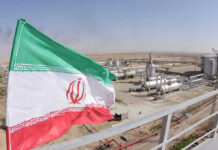
Reports of explosions on Iranian Gulf islands—near Lavan, close to oil infrastructure, and on Siri—surfaced after the ceasefire announcement, alongside continued incidents targeting Gulf oil facilities involving countries such as Saudi Arabia, the UAE, and Kuwait. Attribution is contested, and some claims remain unverified, but the practical effect is the same: uncertainty. When energy assets are struck during a “truce,” markets and militaries prepare for escalation.
The Strait of Hormuz sits at the heart of that escalation risk because it is a strategic chokepoint for global oil shipments. Even limited harassment, ambiguous attacks, or threats to re-close the strait can spike energy prices and feed inflation at home. Early signals were mixed: shipping traffic reportedly picked up, and markets reacted with oil dipping below $100 per barrel and stocks rising—yet the optimism depends on whether the ceasefire becomes enforceable rather than rhetorical.
Lebanon is the deal’s biggest unresolved battlefield
A major dispute is whether the ceasefire covers Israel’s separate war with Hezbollah in Lebanon. Iranian and Pakistani statements have suggested Lebanon is part of the picture, but Prime Minister Benjamin Netanyahu has rejected that interpretation. Israel has continued operations against Hezbollah, with reports of significant fatalities, and Iran has accused Israel of violating the ceasefire’s spirit. That split creates a dangerous loophole: fighting can continue “legally” while still provoking regional retaliation.
For American observers, this is the familiar problem of overlapping conflicts. Even if Washington and Tehran reduce direct exchanges, proxy dynamics can reignite a broader war quickly—especially if either side treats strikes on allied forces as outside the ceasefire’s scope. The lack of a shared definition for what counts as a violation also complicates congressional oversight debates, as some U.S. lawmakers warn that security-relevant terms should not be left to vague, shifting interpretations.
“Fragile truce” messaging signals deterrence, not trust
U.S. officials have not tried to sell the ceasefire as a lasting peace. Vice President Vance has described it as “fragile” and suggested internal Iranian messaging is unreliable, while Defense Secretary Pete Hegseth has emphasized that U.S. forces remain ready to “restart” military action on short notice. Defense assessments also point to breakdowns in Iranian command and control during the fighting, a detail that may shape how Washington judges compliance and deterrence.
The larger takeaway is sobering: even when Washington announces a ceasefire, the region’s competing agendas can undercut it in hours. Trump’s approach appears designed to test whether economic stabilization—especially keeping the strait open—can be separated from the region’s ideological wars. If the talks in Islamabad fail to produce clear verification steps, Israel and the U.S. could face renewed pressure to strike again, while Americans once again absorb the economic shockwaves.
Sources:
https://www.axios.com/2026/04/08/iran-ceasefire-questions-strait-lebanon