
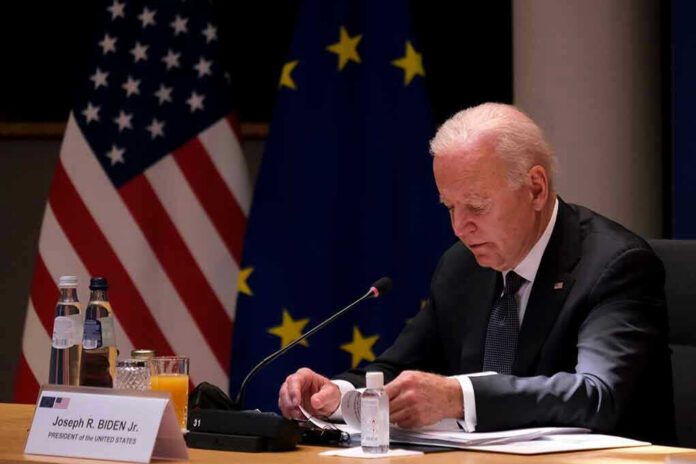
Biden’s bid to seal 70 hours of memoir recordings collides with a growing push for transparency on potential mishandling of classified material.
Story Highlights
- Politico reports Biden plans to fight the Department of Justice effort to release 70 hours of audio with his ghostwriter [5].
- Special Counsel Robert Hur said the ghostwriter deleted recordings after the probe began, though he declined obstruction charges [2][3][5].
- Hur’s report states Biden read classified passages to his ghostwriter at least three times, nearly verbatim [5].
- The House Judiciary Committee subpoenaed the ghostwriter for transcripts and recordings amid noncompliance concerns [4].
Biden’s Legal Move to Stop Release of 70 Hours of Audio
Politico reported that former President Joe Biden intends to intervene in litigation to block the Department of Justice from releasing about 70 hours of audio recordings of his conversations with ghostwriter Mark Zwonitzer, material obtained during Special Counsel Robert Hur’s classified documents investigation [5]. The dispute unfolds as the Trump administration emphasizes transparency across federal agencies. Biden’s planned legal action revives questions about what the audio contains and whether the public has a right to hear it given prior findings in the Hur report [5].
Special Counsel Robert Hur’s public report explains investigators obtained Zwonitzer’s devices and recovered recordings and materials relevant to Biden’s handling of classified information [5]. The same report documents that Zwonitzer deleted recordings after learning of Hur’s appointment, but Hur ultimately declined to bring obstruction charges, citing insufficient evidence of intent and noting Zwonitzer preserved transcripts containing potentially incriminating statements [2][5]. Axios likewise reported Zwonitzer’s explanation that he deleted files over hacking and privacy concerns [2].
What The Hur Report Says About Classified Readings
Hur concluded that Joe Biden, during memoir sessions, read classified passages “nearly verbatim” from notebooks to his ghostwriter on at least three occasions, sometimes for extended periods [5]. The report further recounts Biden’s statement about finding “classified stuff downstairs” in 2017, captured in materials Zwonitzer preserved, which Hur cited as inconsistent with an intent to conceal because the ghostwriter kept those transcripts [5]. Despite those facts, Hur declined prosecution, finding the evidence insufficient to prove Biden knowingly intended to share classified information [5].
Hur’s public findings create a narrow lane for debate: the recordings had “significant evidentiary value,” yet the special counsel decided that neither Biden nor Zwonitzer should face criminal charges based on available proof of intent [5]. Conservative readers will see a tension here. If the audio speaks to handling of sensitive topics like Afghanistan surge deliberations, opponents argue the public interest in disclosure is substantial. Supporters of sealing the audio cite privacy, executive communications sensitivity, and the lack of charges [5].
Congressional Oversight and Subpoena Pressure
The House Judiciary Committee, under Republican leadership, subpoenaed Zwonitzer after determining he had not voluntarily provided requested recordings and transcripts referenced by the special counsel [4]. Committee materials describe a need to obtain the full scope of his interviews with Biden, pressing for compliance to inform legislative oversight [4]. Separate media coverage amplified Hur’s testimony that deletions occurred after the probe’s start, a timing detail that has fueled skepticism even as prosecutors declined obstruction charges [2][3][5].
Biden Moves to Block Release of 70 Hours of Audio Recordings With Ghostwriter https://t.co/p6uykSoiyY
— Rachel Morse (@rm36863307) May 10, 2026
For constitutional conservatives, the balance is straightforward: Congress legislates and oversees; the public funds and deserves accountability; the executive branch cannot unilaterally bury records that bear on official conduct unless a compelling, lawful privilege clearly applies. Hur’s report is already public, but the audio itself remains sealed. Biden’s anticipated legal fight signals an aggressive posture to prevent release, while the current administration’s Justice Department signals a willingness to publish with appropriate safeguards [4][5].
Why This Matters Now
Americans are living with the consequences of prior Washington decisions on borders, spending, and national security, and they expect straight answers. The Hur report found no prosecutable intent, but it also stressed that the recordings were evidentiary and that Biden read out sensitive material to an uncleared writer multiple times [5]. Given that conflict, redacted public release could resolve doubts, inform oversight, and reinforce standards for safeguarding classified information—without jeopardizing genuine security equities [5].
What To Watch Next
Watch for Biden’s formal court filings articulating the legal basis for blocking release and any assertion of privilege or privacy. Track whether the Department of Justice proposes redactions to protect sources and methods while honoring the public interest. Monitor the House Judiciary Committee’s enforcement steps on the Zwonitzer subpoena and any additional testimony or document production. Transparency, correctly executed, strengthens institutions. With trust already strained, the cleanest path forward is a legally sound, narrowly tailored release [4][5].
Sources:
[2] Web – Biden’s ghostwriter deleted recordings, special counsel was told
[3] Web – Hur confirms Biden’s ghostwriter destroyed evidence after special …
[4] Web – Chairman Jordan Subpoenas President Biden’s Ghostwriter
[5] Web – [PDF] report-from-special-counsel-robert-k-hur-february-2024.pdf