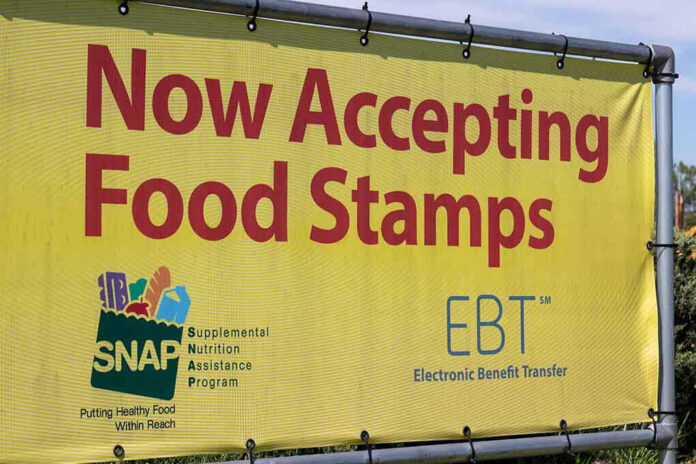
Amid a government shutdown, the USDA’s announcement to suspend SNAP benefits has left millions of Americans vulnerable, with Senate Democrats facing backlash for the deadlock.
Story Overview
- USDA halts SNAP benefits due to government shutdown, impacting over 42 million Americans.
- Senate Democrats blamed for failing to pass a budget to fund SNAP.
- State agencies scramble to manage the crisis, but federal action is essential.
- Suspension marks an unprecedented disruption in federal nutrition assistance.
SNAP Benefits Suspended Amid Shutdown
The U.S. Department of Agriculture (USDA) has confirmed the suspension of the Supplemental Nutrition Assistance Program (SNAP) benefits for November 2025, citing a federal government shutdown and depleted funds. This decision affects over 42 million low-income Americans who rely on these benefits for essential nutrition. State agencies, such as South Carolina’s Department of Social Services, have been instructed to halt benefit issuances until further notice, signaling a pressing need for a congressional resolution to restore funding.
The USDA and some political figures have pointed the finger at Senate Democrats for the funding lapse, accusing them of failing to pass a budget that would ensure the continuity of SNAP benefits. This public attribution of blame has intensified partisan tensions, with Republicans arguing that Democrats are holding up the process for broader policy concessions. The political deadlock has left millions in limbo, uncertain about their next meal.
State-Level Impact and Responses
The suspension of SNAP benefits has prompted emergency responses from state governments across the nation. New Mexico’s governor has announced expedited funding for food banks, acknowledging that these measures are temporary and insufficient to fully replace the federal assistance provided by SNAP. Such state-level interventions highlight the limited capacity of local governments to address the scale of this crisis without federal support.
In South Carolina, over 260,000 households are directly affected, with state agencies publicly alerting residents about the hold on November benefits. As these states grapple with the immediate consequences, they emphasize that a federal resolution is critical to alleviate the widespread hunger and uncertainty facing their constituents.
Political Ramifications and Future Outlook
The ongoing government shutdown, with no resolution in sight, underscores the deep partisan divides in Congress over budget priorities and social safety nets. The suspension of SNAP benefits is unprecedented in recent history and raises significant concerns about the reliability of federal support for vulnerable populations. The crisis has sparked calls for reforming the budget and appropriations processes to prevent similar disruptions in the future.
As the political blame game continues, both parties face mounting pressure to negotiate a resolution that restores SNAP funding and addresses broader fiscal concerns. The outcome of this standoff will likely shape future debates over the role of government in providing essential services to its citizens.
Sources:
Alert: SCDSS Monitoring Federal Government Shutdown
Governor Responds to USDA Suspension of SNAP Benefits
SNAP ABAWD Exemptions Implementation Memo
SNAP Payments Halted: USDA Confirms No Food Benefits