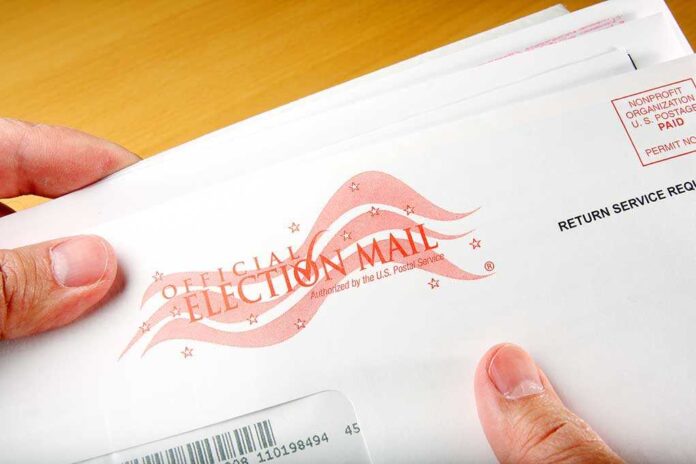
The Supreme Court has agreed to hear a pivotal case that could dismantle mail-in ballot grace periods in 17 states, potentially restoring constitutional order to America’s election system after years of chaotic pandemic-era voting changes.
Story Highlights
- Supreme Court will decide if states can count mail ballots received after Election Day
- Case challenges Mississippi’s 5-day grace period law affecting 16 other states plus D.C.
- RNC argues grace periods violate federal law requiring single Election Day
- Ruling could restore election integrity by enforcing constitutional deadlines
Constitutional Challenge to Extended Voting Windows
The Supreme Court has officially agreed to hear Watson v. RNC, a landmark case challenging Mississippi’s law allowing mail-in ballots postmarked by Election Day to be counted if received within five business days afterward. The Republican National Committee argues this grace period violates federal election law, which establishes a single, definitive Election Day. This legal challenge represents a crucial step toward restoring constitutional order to America’s election process after pandemic-era changes fundamentally altered voting procedures nationwide.
Mississippi’s Republican-controlled legislature passed this grace period law in 2020 during the COVID-19 pandemic, ostensibly to prevent disenfranchisement due to postal delays. However, this well-intentioned measure has created a dangerous precedent that undermines the constitutional principle of Election Day finality. Seventeen states and Washington D.C. now operate under similar laws, creating a patchwork system where election results remain uncertain for days after Americans cast their votes.
Federal Law Versus State Flexibility Debate
Legal experts recognize this case will establish significant precedent for federal versus state control over election procedures. The RNC’s challenge centers on federal statutes requiring uniform Election Day compliance, arguing that extended counting periods create confusion and undermine public confidence in election results. This position aligns with conservative principles emphasizing clear, consistent rules that prevent manipulation and ensure transparent democratic processes.
The Department of Justice has historically intervened in similar cases, particularly regarding military voter deadlines, creating additional complexity in this constitutional dispute. State governments assert their authority to set election procedures, but this case will determine whether such state flexibility can override federal election law requirements. The tension between accommodation and constitutional compliance strikes at the heart of election integrity concerns that have plagued American politics since 2020.
Implications for Election Security and Voter Confidence
A Supreme Court ruling against grace periods could force states to change their laws, potentially strengthening election security by enforcing clear, unambiguous deadlines. This outcome would address conservative concerns about extended counting periods that allow for potential irregularities and undermine public trust in electoral outcomes. Military, overseas, and disabled voters who rely on mail-in voting would need to plan accordingly, but stricter deadlines would ensure all Americans operate under the same constitutional framework.
The case’s resolution will likely intensify partisan debates over election integrity versus voter access, but constitutional conservatives understand that clear, enforceable rules ultimately protect everyone’s voting rights. Election officials may face increased administrative burdens implementing stricter deadlines, but this temporary adjustment would restore the constitutional principle that elections conclude on Election Day, not days or weeks afterward. The Supreme Court’s decision will determine whether America returns to traditional election practices or continues operating under pandemic-era exceptions that have outlived their original justification.
Sources:
U.S. Supreme Court to Hear Critical Case on Mail Ballot Deadlines