The first sign your brain is aging faster than it should isn’t a forgotten name or misplaced keys—it’s a hidden metabolic glitch you won’t feel until it’s already sabotaging your mind’s sharpness.
Story Snapshot
- Insulin resistance quietly accelerates brain aging, often decades before dementia appears.
- Early interventions—especially ketone-based therapies—can reverse some brain aging if started soon enough.
- New metabolic biomarkers like eGDR help spot at-risk individuals before irreversible damage sets in.
- Major studies show the brain’s aging clock can be reset, but only if the window for intervention isn’t missed.
Insulin Resistance: The Silent Accelerator of Brain Aging
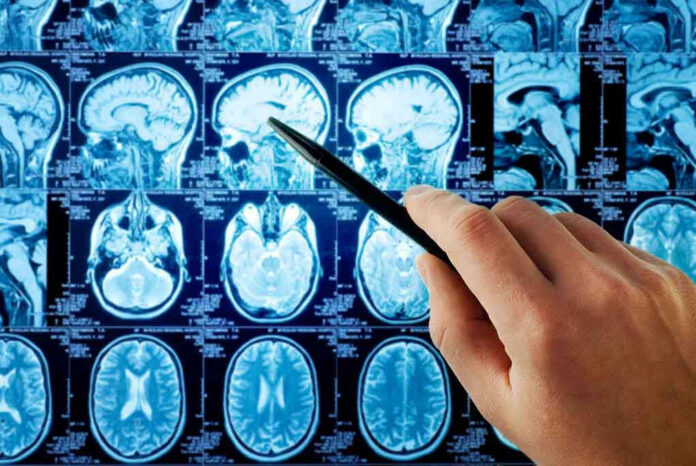
Most people think of insulin resistance as the first step toward diabetes, but recent research reveals a more insidious threat—its role in speeding up brain aging. Scientists have found that even in people without diabetes, the brain regions hit hardest by insulin resistance show signs of accelerated wear and tear as early as middle age. These changes are not subtle: neuroimaging pinpoints declining connectivity and shrinking gray matter in areas responsible for memory, attention, and executive function. The connection is so strong that the earliest cognitive declines often track directly with metabolic dysfunction, not simply age.
These brain changes don’t progress like a slow leak; they take off in a series of nonlinear jumps. Think of your brain’s aging as a staircase, not a gentle slope: each step down is triggered when insulin resistance crosses a critical threshold. The terrifying part is that you may not notice the first tumble until you’ve lost the best window to act. For many, the first warning comes too late, when neuronal damage has already begun to stick, making reversal far more difficult.
Decoding the Neurometabolic Clock: Why Early Intervention Matters
What flips the switch from healthy aging to runaway decline? Researchers at leading centers, including the Joslin Diabetes Center, have identified insulin signaling in the brain as a master regulator of neuronal health. When this pathway falters, neurons lose their ability to efficiently process energy, triggering a cascade of dysfunction—from impaired synaptic plasticity to outright cell death. This process, long suspected, is now confirmed by molecular and neuroimaging data linking insulin resistance to glucose hypometabolism—the brain’s version of an energy crisis.
Critically, new biomarkers like eGDR and METS-IR allow clinicians to identify at-risk individuals long before classic symptoms develop. The 2025 CHARLS study validated eGDR as a powerful predictor of cognitive decline even in non-diabetic adults, opening the door to targeted screening programs for the aging population. This means, for the first time, doctors can tell who is most likely to suffer accelerated brain aging based on a simple metabolic profile, years before memory loss becomes obvious.
Can Brain Aging Be Reversed? The Promise and Limits of Ketone Therapies
For decades, the best advice for avoiding cognitive decline was “eat right and exercise”—a message that’s both true and, for many, frustratingly vague. Now, a radical new approach is emerging: bypass insulin resistance altogether by feeding the brain with ketones, a clean-burning alternative fuel. Landmark studies published in 2025 demonstrated that administering ketones to people with early insulin resistance can restore brain network function and improve cognition—if, and only if, the therapy is started before irreversible neuronal loss.
Experts caution, however, that this window is finite. In late-stage neurodegeneration, when neurons have already died, ketone therapy offers little hope of reversal. The brain’s metabolic clock, once it passes a point of no return, cannot be rewound by diet or supplements. This makes early identification and intervention essential—a message that’s beginning to reshape public health strategies for dementia prevention.
The New Frontier: Metabolic Biomarkers and Brain Health Policies
With aging populations worldwide, the stakes are enormous. The widespread adoption of metabolic biomarkers like eGDR could transform how we screen and treat cognitive risk, moving from reactive care to true prevention. Healthcare systems are beginning to integrate these new tools, shifting focus from treating dementia after the fact to catching the earliest signs of trouble—sometimes decades earlier than before.
This shift has ripple effects across medicine and industry. Pharmaceutical and biotech companies are racing to develop next-generation metabolic therapies, while neurologists and endocrinologists are forging new collaborations to understand the shared roots of diabetes and neurodegenerative disease. For patients, the message is clear: protecting your brain starts with protecting your metabolism, and the sooner you act, the more brainpower you can preserve for life’s second half.
Sources:
PNAS study (2025): Accelerated brain aging, insulin resistance, and ketone intervention
Frontiers in Medicine (2025): eGDR as a biomarker in non-diabetic adults
Joslin Diabetes Center (2025): Brain insulin signaling in Alzheimer’s disease
Stony Brook: Critical midlife window and brain decline