
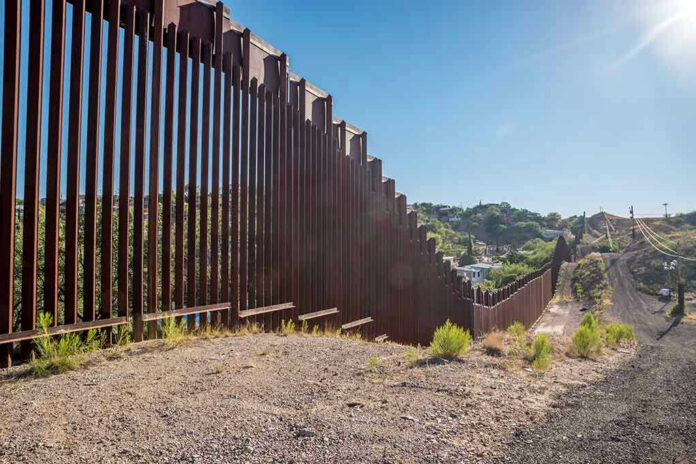
Federal officials are telling West Texas ranch families to sign away access for a border wall now or risk losing their land later in court.
Story Snapshot
- Texas landowners in the Big Bend region are getting “right-of-entry” offers that warn of future condemnation if they refuse.
- Federal law gives Washington sweeping power to take land for the wall, even while Texas itself has outlawed eminent domain for its own state wall.[4]
- Past wall projects show sloppy surveys, low-ball offers, and years-long court fights that leave families in limbo.[9]
- Conservatives must balance strong borders with defending core property rights against government overreach.[3]
Federal Pressure Puts Ranch Families in a Corner
Across far West Texas, ranchers and farmers are opening their mailboxes to find thick packets from United States Customs and Border Protection. The letters offer up to $5,000 if owners will sign “right-of-entry” construction agreements that let federal contractors onto their land for surveys and early wall work.[2][6] They also carry a thinly veiled threat: if owners delay or refuse, the government may sue to condemn the land using eminent domain.[2][3] For families who have held these acres for generations, that reads like a bad choice between surrender and a costly court fight.
Federal law gives Washington heavy leverage in that standoff. Congress ordered miles of border barriers and roads in statutes stretching back to the Illegal Immigration Reform and Immigrant Responsibility Act and the Secure Fence Act, and it let the Department of Homeland Security contract for or buy any land interest it deems essential to control the border.[1][15] That power includes condemnation. On top of that, Washington can “waive all legal requirements” that slow wall construction, from environmental rules to some property protections.[1][15] Many conservative readers will see how easily that can morph into raw federal overreach.
Texas Protects Property, But Washington Still Has the Bigger Stick
Texas lawmakers, pushed by landowners and grassroots conservatives, moved the other direction. In 2021, the Legislature barred use of eminent domain for the state’s own border wall program, forcing state officials to rely on voluntary easements instead of land seizures.[4][5] As a result, at least a third of landowners approached by the state have refused to sign, and the state wall now zigzags through remote ranchland with major gaps.[4][5] That is property rights in action: no wall on your land unless you agree. But that protection does not bind the federal government, which still holds the superior constitutional power of eminent domain for “public use.”[4][14]
For West Texas landowners, that split creates confusion and fear. On one side, Austin is telling them the state cannot seize their land for the wall. On the other side, Washington is warning that if they will not sign right-of-entry forms, the Justice Department can march into federal court and file a “Declaration of Taking.”[4][14] Once a judge signs off, the government can seize the land and argue about “just compensation” later. That process favors agencies with deep pockets and full-time lawyers, not families trying to run a ranch while they scramble to find counsel.
History Shows Why Landowners Do Not Trust Wall Takings
Border families are not being paranoid; they are reading history. After the last major wall push, the federal government filed more than 360 eminent domain lawsuits against property owners who refused to sell, including 334 in South Texas alone.[4] A decade later, 60 to 70 of those cases were still unresolved because of fights over how much the land was worth.[4] Investigations by journalists and advocates found cases where Washington paid the wrong people, failed to identify the true owners, and then had to pay twice when the mistake surfaced.[9] That kind of record naturally destroys trust in “fair” compensation.
There is also a pattern of cutting corners on basic safeguards. One fact sheet notes that the Department of Homeland Security used its waiver authority to raise the dollar threshold that triggers a formal appraisal, letting officials skip detailed valuations for many small tracts.[4] A joint ProPublica and Texas Tribune investigation found the agency quietly set aside conflict-of-interest rules and negotiation steps meant to protect owners, then pushed rushed deals that underpaid many families.[9] When folks in Big Bend look at new offers today, they see the same federal playbook coming back around, only faster and with even more pressure.
New Tactics Raise Fresh Red Flags in Big Bend
Under the current Trump administration push to finally secure the southern border, officials insist they must move fast in high-traffic corridors, including rugged stretches near Big Bend National Park.[2][6] To speed work, United States Customs and Border Protection is bundling surveys and early construction into single “right-of-entry” agreements, hoping owners will trade quick access for modest incentives.[6] Some packets sent to West Texas landowners reportedly contain bad survey lines or even wrong ownership details, forcing recipients to question whether Washington actually knows what it is trying to take.[10] That sloppiness feeds fears that the process, not just the policy, is broken.
In far West Texas, the threat of land seizures for a border wall has families on edge.
In the Big Bend region, where some families have lived for generations, government letters seeking access to their land is sparking fear and resistance. https://t.co/iM6GEXs14i
— Texas Tribune (@TexasTribune) June 16, 2026
Environmental and activist groups are already in court over these new waivers and tactics. A recent lawsuit filed in federal court challenges the Department of Homeland Security for waiving dozens of environmental, cultural, and historic-protection laws to fast-track a cross-continental wall, including through the Big Bend region.[2] The suit argues that such sweeping power, used to reshape entire border communities, violates constitutional limits like the “major questions” doctrine, which requires clear congressional approval for actions with huge economic and political impact.[2] While many conservatives may not agree with every plaintiff, they may share concern about agencies claiming unchecked authority.
What Conservatives Should Watch – And How Landowners Can Respond
For constitutional conservatives, this fight is not wall versus no wall. It is about demanding secure borders without letting the federal government steamroll private citizens. The Fifth Amendment allows eminent domain only with real “just compensation,” and the spirit of that protection is respect for the home and the ranch, not bureaucratic shortcuts.[12][14] Strong border security and strong property rights can stand together, but only if citizens push back when Washington treats rural families as obstacles instead of partners. That means asking hard questions any time an agency offers a quick bonus in exchange for broad access and vague promises.
Lawyers who work these cases tell landowners to slow down, demand full appraisals, and document every impact a wall would have on access, water, and business.[8][14] Owners do not have to accept the government’s first offer, and they can band together to hire independent surveyors and attorneys who know condemnation law.[8][14] Political pressure still matters too. Texas has already proven that citizen pushback can force elected leaders to curb eminent domain for state projects.[4] If Washington wants to keep the trust of Texans while closing the border, it will have to show it can defend the nation without trampling the very property rights the Constitution was written to protect.
Sources:
[1] Web – Texas Landowners Face a Difficult Decision: Allow Border Wall or Lose …
[2] Web – DHS waives certain legal regulations to expedite border wall …
[3] Web – Lawsuit Challenges Big Bend Border Wall Construction
[4] Web – [PDF] obstructing human rights: the texas-mexico border wall
[5] Web – [PDF] Eminent Domain Along the Southern Border: Government Seizures …
[6] Web – Official Border Wall plans have been released for the Big Bend. If …
[8] Web – In far West Texas, the threat of land seizures for a border wall has …
[9] Web – As landowners resist, Texas’ border wall is fragmented and built in …
[10] Web – Landowner resistance forces Texas to build wall in remote areas
[12] Web – Zapata County landowners say border wall contractors … – TPR
[14] Web – Texas Landowners Dig In to Fight Trump’s Border Wall – VOA
[15] Web – Texas landowners in the Big Bend region are fighting federal efforts …
© standardnewsdaily.com 2026. All rights reserved.