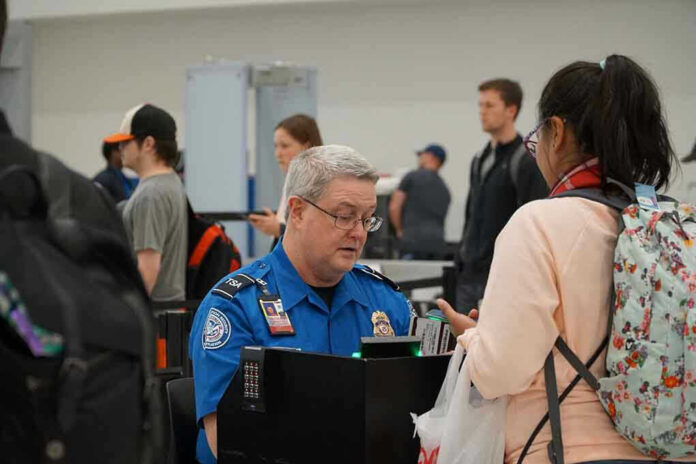
President Trump bypassed congressional gridlock with an executive order repurposing federal funds to pay furloughed TSA agents, promising relief for travelers stranded in security line chaos while leaving thousands of federal workers and broader DHS operations in limbo.
Story Snapshot
- Trump signed executive order on March 27, 2026, redirecting funds with “reasonable nexus” to pay TSA workers after DHS shutdown caused 40% agent absenteeism and airport delays.
- DHS Secretary announced TSA paychecks would arrive by Monday or Tuesday, easing immediate financial strain on 500+ agents who called out amid unpaid furloughs.
- Senate approved full DHS funding bill including FEMA and Coast Guard, but House Republicans rejected it as inadequate, prolonging broader shutdown crisis.
- Airport wait times began easing by March 29, though officials still urged travelers to arrive 2-3 hours early as morale and staffing issues persist.
Executive Action Sidesteps Congressional Stalemate
President Trump signed an executive order on Friday, March 27, 2026, repurposing federal funds to pay Transportation Security Administration agents furloughed during the Department of Homeland Security shutdown. The order invokes a “reasonable and logical nexus” to redirect money toward TSA operations, bypassing a deadlocked Congress that failed to pass appropriations. DHS Secretary Mark Wayne Mullen confirmed paychecks would reach workers by Monday or Tuesday, offering immediate relief to agents struggling to cover rent and food costs. This unilateral move mirrors Trump’s 2019 executive actions reallocating funds for border wall construction, setting a precedent for executive budget maneuvers during legislative impasses.
TSA Staffing Crisis Crippled Airport Operations
The DHS funding lapse triggered a staffing catastrophe at major airports, with up to 40% of TSA agents calling out of work as unpaid furloughs stretched into weeks. Approximately 500 agents were absent at peak travel times, creating security line bottlenecks that left passengers waiting hours to reach gates. Travelers interviewed by FOX 5 expressed frustration over delays while acknowledging agents’ financial hardships, noting families depend on these paychecks to survive. Morale among TSA workers plummeted as they faced the choice between reporting to unpaid shifts or staying home to manage personal crises. The 2018-2019 government shutdown saw similar absenteeism rates of 30-40%, resulting in over 10,000 mishandled bags and widespread flight disruptions.
Congressional Gridlock Leaves Broader DHS Unfunded
While Trump’s order addresses TSA pay, it leaves unresolved the broader DHS shutdown affecting FEMA, the Coast Guard, and thousands of other federal workers. The Senate approved a comprehensive funding bill late Friday covering all DHS agencies, but House Republicans dismissed it as a “joke,” refusing to advance legislation they view as inadequate or laden with Democratic concessions. No compromise appears imminent, with both parties digging in on competing priorities. This stalemate exposes vulnerabilities in disaster response and maritime security, as FEMA and Coast Guard personnel remain unpaid during a period when spring storms and coastal emergencies typically spike. Critics argue the executive workaround solves one symptom while ignoring the root cause: Congress’s failure to fulfill its constitutional appropriations duty.
Partial Relief Masks Constitutional Overreach Concerns
Trump’s fund repurposing delivers short-term wins for travelers and TSA families, with airport wait times reportedly easing by March 29 as agents return to work. However, this executive action raises questions about the balance of powers enshrined in the Constitution, which grants Congress sole authority over federal spending. Repurposing funds without legislative approval, even with claimed “nexus” justifications, stretches executive power into territory traditionally reserved for elected representatives accountable to voters. For conservatives weary of government overreach, this creates a troubling precedent: if a president can redirect money unilaterally during shutdowns, what limits remain on executive budget control? The move may score political points against an obstructionist Congress, but it undermines the checks and balances designed to prevent concentration of power in any single branch.
Airports continue advising early arrivals despite improvements, signaling incomplete recovery from the shutdown’s damage. TSA agents face ongoing uncertainty about long-term pay stability, as the executive order funds only immediate paychecks without addressing future appropriations. FEMA and Coast Guard workers remain stranded without similar relief, left to weather financial strain while Congress bickers. The aviation sector stabilizes temporarily, but unresolved DHS funding threatens readiness for emergencies, from hurricanes to national security threats. For travelers caught in this political crossfire, the lesson is clear: Washington’s dysfunction has real costs, measured in missed flights, strained families, and eroded trust in institutions supposed to serve the public interest.