
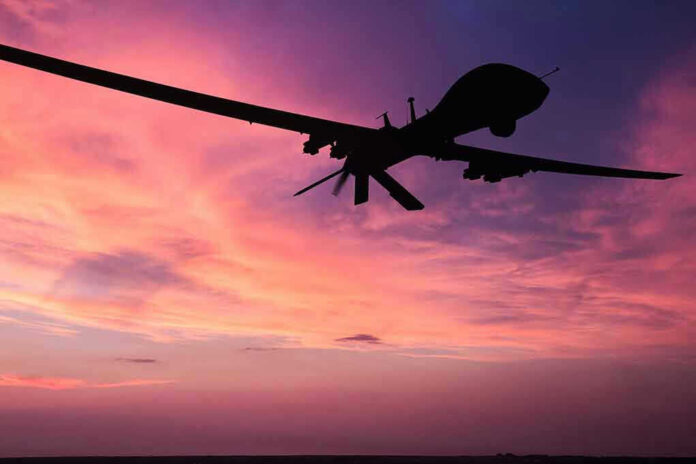
Mystery drones breached a military base believed to store US nuclear weapons—twice in 24 hours—exposing alarming gaps in America’s defenses and raising urgent questions about national security as adversaries exploit modern technology.
Story Snapshot
- Repeated drone incursions targeted a base suspected of holding US nuclear weapons, challenging military readiness.
- International agencies like the IAEA issued warnings, highlighting vulnerability and lack of clear attribution for the drone operators.
- Escalating drone technology outpaces traditional defenses, creating asymmetric threats for critical infrastructure.
- Incidents trigger political and public anxiety, with calls for urgent countermeasures to safeguard national security.
Drones Expose Critical Weaknesses at Nuclear Sites
Within a 24-hour window, multiple drones were detected buzzing near the perimeter of a military base internationally believed to store US nuclear weapons. Security personnel responded with heightened alerts and gunfire, but the drones returned the following day, coming within mere hundreds of meters of sensitive facilities. The repeated nature of these incursions stunned both military leadership and international observers, who warn that such brazen acts exploit vulnerabilities in base security. This event has intensified worries about the readiness of US and allied defenses to respond to new, asymmetric threats that bypass traditional physical barriers and airspace controls.
The International Atomic Energy Agency (IAEA), responsible for monitoring nuclear safety, swiftly issued public warnings and requested urgent access for site inspection. Despite the gravity of the events, authorities have yet to attribute the drone flights to any particular group or nation, fueling speculation and concern. The IAEA’s statements called for an immediate halt to drone activity near nuclear sites, emphasizing that repeated incidents of this nature risk catastrophic consequences if not addressed. Their involvement highlights the international dimension of the threat and the limitations faced by watchdog organizations when access is restricted by host nations or military authorities.
Background: The Rising Tide of Drone Threats
Since the early 2010s, drones have transformed from niche military assets into widely accessible tools for surveillance, sabotage, and attack. Both state and non-state actors now use unmanned aerial vehicles (UAVs) to gather intelligence, test defenses, or cause disruption—especially in regions marked by ongoing conflict. The accessibility of cheap, commercially available drones means that critical sites, including nuclear facilities, are more exposed than ever before. Past incidents, such as drone crashes near Chernobyl and Zaporizhzhia, have caused minor damage but always reignited safety concerns. The proximity of the targeted base to conflict zones only increases the likelihood—and potential severity—of such incursions.
Prior related events underscore the escalating risk: in April 2025, a drone was shot down near a training center at Zaporizhzhia, and in February, another damaged protective structures at Chernobyl. By September, a staggering 22 drones were observed near the South Ukraine Nuclear Power Plant. These developments reveal a clear trend: the frequency and boldness of drone operations near high-value targets are growing, while defenders struggle to adapt. Families living nearby, and Americans at large, bear the burden of this uncertainty, as even minor incidents can have far-reaching social, economic, and political impacts in the event of a major accident or security breach.
Military, Political, and Civilian Implications
The incursion has drawn sharp attention from military commanders, US and NATO leadership, and international observers. The IAEA, led by Director General Rafael Mariano Grossi, continues to press for full access and transparency, yet faces persistent barriers due to political sensitivities and national security restrictions. Meanwhile, the identity and motives of the drone operators remain unknown, with plausible scenarios ranging from hostile state actors probing defenses to non-state groups or autonomous systems exploiting gaps in surveillance and response. The inability to assign blame or establish deterrence further erodes public confidence and emboldens future attempts. These trends highlight the urgent need for robust counter-drone technologies, improved intelligence sharing, and clear command protocols to safeguard American lives and national interests.
As international scrutiny mounts, emergency protocols have been activated at affected sites, including reliance on backup power systems and temporary operational shutdowns. Economic costs from heightened security, emergency response, and potential cleanup operations could be significant, while social anxiety and political friction grow among impacted communities. The nuclear industry faces renewed regulatory scrutiny, and the drone technology sector may soon see tighter restrictions. With incidents increasing in frequency and severity, it is clear that effective countermeasures and international cooperation are not optional—they are imperative for the continued safety of the nation and the world.
Dozens of drones buzz military base ‘storing US nuke weapons’ twice in 24 hours
Nov 2, 2025https://t.co/VeptE6GYIZ— Denny Celes†ino/Redeemed✞HybridSpeciesUS (@HybridSpeciesUS) November 3, 2025
Expert perspectives reinforce the urgency of the situation. IAEA officials consistently emphasize the inadequacy of traditional air defenses in the face of agile, hard-to-detect drones. Military analysts warn that without significant investment and adaptation, critical infrastructure remains exposed to sabotage or catastrophic accident. As the technological arms race accelerates, America’s enemies, both foreign and domestic, are testing the limits of our preparedness. For conservatives committed to a strong national defense and safeguarding American sovereignty, these developments are a clarion call to demand accountability, transparency, and action from our leaders—before it’s too late.
Sources:
IAEA warning over drones near nuclear sites
IAEA issues fresh warning over drones near nuclear plants
Drones detected at nuclear sites
Drone technology and the future of nuclear weapons
First drone war between nuclear nations raises global alarm