Archer’s electric air taxis will start flying over Los Angeles from Hawthorne Airport, aiming squarely at the 2028 Olympic clock.
At a Glance
- Federal approval enables piloted Midnight demo flights in Los Angeles soon.
- Operations will stage from Hawthorne Airport without passengers at first.
- The test program is a live blueprint for urban air mobility at LA28.
- Paris 2024 showed how demos can run ahead of full certification.
Los Angeles flights clear the runway for a practical air taxi playbook
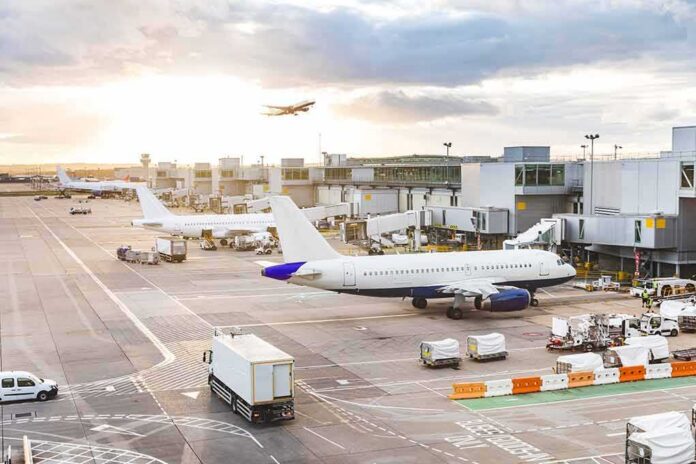
Archer Aviation says its Midnight aircraft earned a Federal Aviation Administration Market Survey Special Airworthiness Certificate, which opens the door to piloted demonstration flights in Los Angeles within weeks. The company plans to base operations at Hawthorne Airport. The early sorties will not carry passengers. The team will use a standard runway for takeoff while it collects data and trains crews. The goal is simple and bold: make a repeatable plan that scales by the 2028 Games.
The company’s public milestones support that aim. Archer previously announced a pre-delivery payment from a major airline for one hundred aircraft, a signal of market intent and a push toward commercial service. Industry trackers report that Los Angeles is one of five early regions targeted for urban air mobility, along with New York City, the San Francisco Bay Area, Florida, and Texas. The Los Angeles work now shifts from PowerPoint to pavement, where procedures, noise, and turnaround times must meet real city demands.
What these flights are designed to prove in the real world
The program will measure how a city-friendly aircraft behaves in live airspace and ground ops. Crews need to master short, frequent legs, fast charging or swaps, and tight scheduling. Dispatchers must line up slots with nearby air traffic flows. City partners need to watch noise, routing, and emergency response planning. Each sortie writes a checklist for later passenger service. That is the difference between a one-off demo and a network that commuters and visitors can trust.
Regulatory steps frame the pace. The current certificate allows piloted demos and conventional runway operations. Archer must still complete the full training and certification path before passenger service can start at scale, a point trade outlets and company statements both underline. The United States aviation regulator will decide when the aircraft and the operation meet the standard. That keeps safety first while still letting industry test what a mature service needs to run on time.
Lessons from Paris: deadlines spotlight promise and pressure
Major events invite moonshots. Paris 2024 showed how public trials can run ahead of final approvals. A planned network did not secure certification in time, and the aircraft ended up flying a showcase without people on board during the Games window. The lesson is not “do less.” The lesson is “sequence better.” Prove the aircraft. Prove the ground play. Prove the timetable. Then invite the public. Los Angeles now gets four years to turn a splashy idea into a sober service.
The nearer LA step is smaller than type certification: Archer said on 9 Nov that an FAA certificate for market-survey flights would let piloted operations start in Los Angeles in the coming weeks. Cash at 30 Sep: $1.35B. $ACHR
— FlightBrief (@flightbriefnews) November 16, 2026
City leaders and operators should focus on two near-term wins. First, reliable corridors that link obvious demand pairs, like airport-to-venue or neighborhood-to-transit hubs. Second, a clean passenger flow on the ground: quick security, clear signage, and tight links to ride-hail and rail. If those two pieces click, the service earns trust. If they slip, riders will default to cars and trains. Common sense says convenience beats novelty every day.
Why this blueprint matters beyond the Olympics
The nation needs more ways to move people fast without adding highways. If flights show safe, quiet, and predictable ops, cities gain a new peak-hour relief valve. If not, the market will sort it out. That aligns with conservative values: prove it, price it, and let customers decide. Archer’s Los Angeles runs will not settle every debate, but they will turn theory into data. That data will drive what scales in 2027 and what is ready when the Olympic torch lights in 2028.
Sources:
nypost.com, thelalocal.org, investors.archer.com, avi-go.com, uk.finance.yahoo.com, avweb.com
© standardnewsdaily.com 2026. All rights reserved.