
The Trump administration is tightening the screws on Iran’s regime—but the move raises a question conservatives won’t ignore: how far can Washington go on immigration enforcement without trampling due process at home?
Quick Take
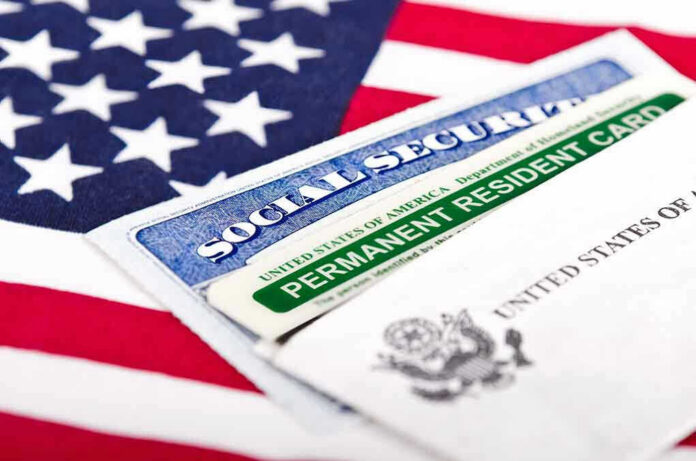
- Secretary of State Marco Rubio announced the U.S. is revoking immigration privileges, including green cards, for family members of Iranian senior officials tied to the regime.
- The State Department framed the policy as denying U.S. benefits to people who “profit” from Iran’s oppression and repression.
- Rubio publicly emphasized that visas are “a privilege, not a right,” and indicated deportation can apply even to permanent residents.
- The announcement landed as the EU designated Iran’s IRGC a terrorist organization, signaling coordinated Western pressure on Tehran.
What Rubio Announced, and Why It’s Politically Explosive
Secretary of State Marco Rubio said the Trump administration is moving to revoke immigration privileges—including green cards—for relatives and family members of Iranian senior officials. The State Department position is straightforward: individuals connected to a regime accused of brutal oppression should not benefit from America’s immigration system. For a conservative base that’s demanded tougher lines on hostile foreign regimes, the headline reads like accountability. For a movement wary of government overreach, the details matter even more.
Rubio’s public messaging focused on using immigration leverage as a national-security tool. He said the administration is “determined to deny or revoke your visa if you’re here to support terrorists,” and he made clear that deportation can be on the table even for permanent residents. That language speaks directly to years of frustration about selective enforcement—where ordinary Americans face rules while connected insiders appear to get exceptions. The policy aims to flip that script for Iran’s ruling class.
How the Policy Connects to the Iran Conflict—and the MAGA Split
The announcement arrives amid broader pressure on Iran, with reporting in the research pointing to coordinated U.S. and Israeli strikes that have weakened parts of Iran’s missile, nuclear, and proxy networks. That context matters because Trump’s second-term coalition includes voters who back hard power against terror networks but strongly oppose another open-ended Middle East war. The result is a split: some see maximum pressure as overdue, others see any escalation as a familiar ramp toward regime-change commitments.
The EU’s designation of the Islamic Revolutionary Guard Corps as a terrorist organization adds to that pressure campaign and gives the administration international cover for a more aggressive posture. In practice, coordinated actions like this can help isolate Iranian networks that reach into the West through finance, travel, and family connections. Still, conservatives who remember how “temporary” national-security measures have expanded over time will watch for clear limits and transparent standards—especially when green cards are involved.
Green Card Revocations: National Security Tool or Due Process Test?
Revoking visas is one thing; targeting green-card holders is where the constitutional nerves get touched. The research summary says enforcement can include arrests and deportation proceedings for affected family members. But the available materials do not provide names, case counts, specific arrest narratives, or a detailed timeline. That gap matters because conservatives typically support strong borders and strong law enforcement—while also insisting the federal government follow lawful procedure, apply standards consistently, and avoid guilt-by-association shortcuts.
The administration’s stated rationale is that relatives of senior regime figures “profit” from oppression, and should not “take advantage” of U.S. immigration systems while their connected officials repress basic rights at home. That argument will resonate with voters tired of global elites enjoying Western comforts while funding anti-Western activity abroad. At the same time, the lack of publicly available specifics in the research means Americans cannot yet evaluate how the government is determining eligibility, what evidence thresholds apply, or what appeal avenues are being used.
What We Know—and What We Still Don’t
The research indicates multiple sources confirm the core claim: Rubio announced revocations of immigration privileges for Iranian officials’ families, and the policy is being actively enforced. It also indicates limitations: the “most notorious terror general” referenced in the headline is not identified, and there is no clear accounting of how many people are impacted or how arrests are being carried out. Until those basic facts are clarified, conservatives should separate the principle (deny benefits to hostile-regime networks) from the process (how the state proves it).
Politically, this is also a test of Trump’s second-term promise to keep America out of new wars. Tightening immigration rules around terror-linked networks can be framed as a domestic action that avoids large deployments, but it also sits inside a wider escalation cycle involving Iran and Israel. A durable approach would pair strong enforcement with clear legal guardrails, so national security does not become a blank check. In 2026, the conservative demand is simple: protect Americans, respect the Constitution, and stop drifting into endless conflict.
Sources:
https://www.state.gov/briefings/department-press-briefing-march-28-2025