Trump did not just topple a dictator; he opened a high-stakes auction on the world’s largest oil vault and told American companies he would personally hold the shield.
Story Snapshot
- Trump links regime change in Venezuela directly to a $100 billion push for U.S.-led oil investment.
- Oil executives hear promises of “total safety” but still call Venezuela “uninvestable.”
- Washington claims it will control Venezuela’s oil industry “indefinitely,” raising sovereignty questions.
- Conservatives must weigh cheaper energy and weaker adversaries against risk socializing corporate losses.
Trump’s Oil Gambit: From War Room to Boardroom
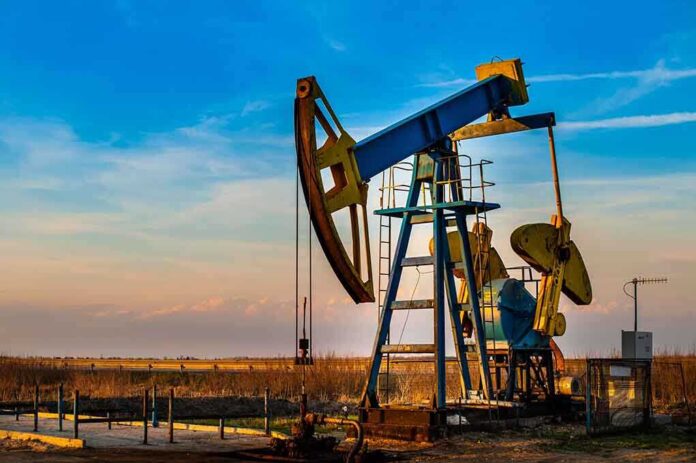
Donald Trump did not wait weeks to turn Maduro’s capture into an energy project; he moved in days from military briefings to a White House sales pitch aimed straight at the C-suites of Chevron, ExxonMobil, ConocoPhillips, and other giants. He told them Venezuela was now a “whole different country,” promised “total safety, total security,” and floated “at least 100 Billion Dollars” in fresh investment to revive fields that hold roughly a fifth of the world’s proven oil reserves.
The message was blunt: the U.S., not Caracas, would decide who gets in and on what terms, with companies “dealing with us directly.” For a conservative audience, that framing hits two familiar chords at once. First, it signals a hard-power assertion of American primacy in the Western Hemisphere. Second, it telegraphs a kind of government-backed industrial policy, where Washington uses security and legal clout to clear commercial obstacles abroad.
Why Oil CEOs Are Not Rushing In
The CEOs in that room have long memories, balance sheets, and shareholders to answer to, and their reaction cut through the theatrics. ExxonMobil’s Darren Woods reportedly described Venezuela as “uninvestable” under current conditions, citing the history of his company’s assets being seized twice during earlier nationalization drives. Chevron, the only major still operating under narrow waivers, stuck to cautious talking points about following the law and protecting staff, not about stampeding into new billion-dollar projects.
Executives know that Venezuelan crude is heavy, difficult, and expensive to bring back online after years of mismanagement, corruption, and sanctions-driven decay. They also understand that Trump’s security guarantees do not erase commercial risk: unstable contracts, contested sovereignty, and political backlash can all destroy value. From a conservative, markets-first perspective, their hesitation looks rational. If a project needs the U.S. military and taxpayers as a backstop before a board will approve it, that is not free-market capitalism—it is a hybrid of foreign policy and corporate welfare.
American Power, Venezuelan Sovereignty, and Conservative Principles
Energy Secretary Chris Wright’s assertion that Washington will control Venezuela’s oil industry “indefinitely” crystallizes the deeper question: who actually owns the upside and who eats the downside. On paper, Venezuelan interim authorities insist they remain in charge, while PDVSA negotiates with Washington over next steps. In practice, U.S. ships sit off the coast, U.S. forces just removed the previous government, and the White House is openly picking corporate “winners.”
Critics like Tyson Slocum at Public Citizen call this “violent imperialism” and a handover of national wealth to billionaires. A conservative assessment starts from different premises but lands on a related concern: if Washington assumes open-ended control and risk, are American citizens effectively underwriting private bets in a volatile foreign patch while Venezuelans watch outside powers decide their economic fate? Limited government and national sovereignty, American or Venezuelan, both strain under that arrangement.
Cheaper Energy, Weaker Adversaries, and the Taxpayer Question
Trump sells the Venezuela play as a two-for-one deal: lower U.S. fuel prices and a reassertion of U.S. influence that squeezes Russia, China, and Iran out of a strategic foothold. On the geopolitical ledger, there is logic here. Bringing Venezuelan barrels back under Western control would reduce leverage for adversarial regimes and feed Gulf Coast refineries designed for heavy crude. Conservatives who favor robust American power abroad will find that aspect compelling, especially compared with leaving the field to Moscow or Beijing.
The economic promise is murkier. Analysts across outlets warn that serious production gains will take years and enormous capital, even under friendlier rules.[2][3] In the meantime, consumers still face high heating and power bills now, not in 2030. If companies demand ironclad guarantees, insurance, and financing sweeteners before committing, taxpayers may shoulder much of the risk while any eventual profits flow to corporate balance sheets and political bragging rights. That structure clashes with conservative instincts against socializing losses and privatizing gains.
What Comes Next if the Money Follows the Flag
Trump’s push forces a hard choice on everyone at the table. Executives must decide whether to trust U.S. protection enough to re-enter a country that burned them before, and whether the trophy of vast reserves outweighs the reputational and political baggage. Venezuelans must decide whether accepting U.S.-designed oil governance is the price of escaping economic collapse, or a new chapter of dependence under a different flag.
For American conservatives, the judgment hinges on whether this is a strong, interest-driven use of power or a slippery blend of regime change and corporate subsidy. If the policy truly delivers cheaper, reliable energy, weakens hostile regimes, and keeps taxpayer exposure limited and transparent, it aligns with a hard-nosed, America-first realism. If it evolves into an open-ended commitment where Washington guarantees “total safety” for private capital in perpetuity, the project begins to look less like capitalism and more like an expensive habit dressed up as a victory lap.
Sources:
Le Monde – Trump promises oil executives ‘total safety, total security’
CBS News – Venezuela, Trump oil push and Maduro capture
Fox News – Trump’s Venezuela push runs into hard realities for US energy giants
U.S. Energy Department – Fact Sheet: President Trump Restoring Prosperity, Safety, and Security