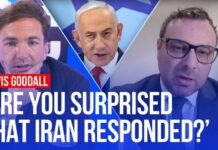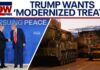
President Trump’s blunt warning to Iran—“they better not” retaliate or face “a force that has never been seen”—signals a high-stakes pivot from endless diplomacy to decisive deterrence.
Story Snapshot
- U.S. and Israeli forces launched large-scale strikes on Iranian military, nuclear, and government-linked targets around February 28, 2026, followed by President Trump’s public warning against retaliation.
- Trump said the operation aims to eliminate Iran’s nuclear program, ballistic missiles, navy capabilities, and support for proxy forces.
- Iran responded with missiles and drones aimed at Israel and U.S. bases across the Gulf region, as the U.N. Security Council prepared an emergency session.
- Reports include confirmed deaths of senior Iranian military leaders and unverified claims about Iran’s supreme leader, underscoring how uncertain and fast-moving the conflict remains.
Trump’s Warning After the Feb. 28 Strikes Raises the Stakes
President Donald Trump issued his warning after U.S.-Israeli strikes expanded across Iranian military and strategic infrastructure on February 28, 2026. Trump described the campaign as focused on crippling Iran’s nuclear program, ballistic missiles, naval capacity, and proxy support networks. The message was simple: Iran can choose restraint, or it can choose escalation and face overwhelming U.S. response. The strikes followed days of collapsing diplomacy, including Oman’s mediation efforts.
Iran’s government and its allies framed the strikes as “aggression,” while Trump framed them as defense of U.S. interests and a prevention strategy against a nuclear-armed Tehran. From a constitutional perspective, the public tension point for Americans is familiar: foreign threats are real, but prolonged conflict can also expand federal power at home. The immediate question is whether deterrence prevents a wider war—or whether Tehran uses proxies and regional strikes to prolong it.
Iran’s Retaliation Spreads Risk Across U.S. Bases and Allies
Iran retaliated with missiles and drones targeting Israel and U.S. military sites across multiple countries, including Bahrain, Jordan, Kuwait, Qatar, Saudi Arabia, and the United Arab Emirates. That geographic spread matters because it threatens U.S. personnel and pulls host nations deeper into the conflict whether they want it or not. Officials described the U.S. strike tempo as “heavy and pinpoint,” using Tomahawks and aircraft, with the campaign measured in days rather than hours.
Reports also included allegations of significant civilian casualties, including claims of more than 60 student deaths connected to a strike on a school in Minab—information attributed to Iranian state media and not independently verified in the provided research. The fog of war is not a slogan; it is a practical reality. Americans should demand clarity before treating any single battlefield claim as settled fact, especially when adversaries can exploit tragedy for propaganda.
Leadership Hits and Unconfirmed Claims Complicate Tehran’s Next Move
The strikes reportedly killed top Iranian defense leadership, including IRGC Commander Mohammed Pakpour and Defense Minister Aziz Nasirzadeh. Those confirmed losses suggest a deliberate strategy to disrupt command-and-control, reduce Iran’s ability to coordinate missile launches, and weaken the regime’s capacity to manage proxy warfare. Separately, claims circulated about the possible death of Supreme Leader Ali Khamenei, but that remains unconfirmed in the research, leaving succession questions unresolved.
When leadership status is uncertain, miscalculation becomes more likely. Iran may lash out to project strength, or it may struggle to coordinate a coherent response. For Americans, the core security issue is whether Iran’s reduced capability actually lowers the threat—or whether the regime, facing internal pressure, chooses a riskier path. Trump’s call for Iranians to overthrow their government adds another variable: it may encourage dissent, but it also hardens the regime’s survival instincts.
The U.N. Scramble Highlights Global Divisions Over Force and Diplomacy
Iran petitioned the U.N. Security Council for an emergency meeting, while China and Russia backed demands to condemn the U.S.-Israel operation. U.N. Secretary-General António Guterres publicly condemned the escalation. At the same time, France and the U.K. urged talks while criticizing Iranian strikes, reflecting the West’s split-screen concern: preventing a nuclear Iran while avoiding a regional explosion. The emergency meeting was placed under the Council’s “Middle East” agenda.
That diplomatic backdrop matters for U.S. voters who watched years of global forums produce statements but little restraint from regimes that fund terror proxies and threaten neighbors. The provided research points to a Trump administration strategy rooted in “maximum pressure,” including sanctions and prior military action such as the June 2025 Operation Midnight Hammer. The unresolved question is whether international pressure will constrain Tehran—or mostly constrain America and Israel.
What This Means for Americans Watching Inflation, Energy, and Security
Energy markets and shipping risks often react quickly when Gulf tensions rise, and the research flags potential oil disruption alongside broader volatility. Trump’s approach seeks to deter a nuclear threat and reduce proxy warfare, but any prolonged conflict can still raise costs, test readiness, and invite retaliatory plots. With the situation still fluid, the most responsible takeaway is straightforward: verify claims, track official objectives, and watch for any policy shifts that trade domestic liberty for open-ended foreign entanglement.
Trump Warns Iran 'THEY BETTER NOT' Counter Attack Or 'WE WILL HIT THEM WITH A FORCE THAT HAS NEVER BEEN SEEN!' https://t.co/8cU0bm6GFV
— Mediaite (@Mediaite) March 1, 2026
For now, the administration’s public line is deterrence through strength, paired with clear red lines against retaliation. Whether that prevents a wider war depends on Iran’s next decisions, the durability of the U.S.-Israel operational tempo, and whether Tehran’s leadership can even stabilize. Americans should keep their focus on measurable outcomes: nuclear capability degraded, proxy attacks reduced, and U.S. forces protected—without letting crisis politics erode constitutional limits at home.
Sources:
Emergency Meeting on the Military Escalation in the Middle East