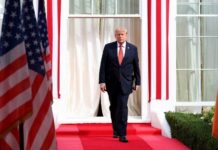
As President Donald Trump welcomes Iraqi Prime Minister Ali al-Zaidi to the White House, the meeting is poised to reshape America’s role in the Middle East while testing whether Washington can cut terrorism and control Iran without endless wars or blank-check spending.
Story Snapshot
- Trump hosts Iraq’s new prime minister Ali al-Zaidi at the White House for high-stakes talks on security, energy, and Iran.
- The visit caps months of Trump support for al-Zaidi, including a phone call, public backing, and a formal invitation to Washington.
- Both leaders aim to deepen U.S.–Iraq ties, push back on Iran’s influence, and move toward a smaller U.S. military footprint in Iraq.
- Oil and gas deals are on the table, with plans to secure energy flows without relying on unstable routes like the Strait of Hormuz.
Trump’s New Partner in Baghdad
President Donald Trump is meeting Iraqi Prime Minister Ali al-Zaidi at the White House for their first official bilateral session, after strongly backing the political newcomer’s rise to power. The visit is al-Zaidi’s first foreign trip since taking office, a clear sign that he sees Washington as his key international partner. Al-Zaidi, a businessman turned leader, was sworn in earlier this year after months of gridlock in Iraq’s parliament, which struggled to form a stable government. His selection followed intense bargaining among factions, many tied to Iran.
Trump began building this relationship long before today’s photo-op. In late April, he called al-Zaidi as prime minister-designate, congratulated him, and formally invited him to visit the White House once his government was formed. He then used his Truth Social platform to declare that the United States “stands firmly behind him” and that America “backs wholeheartedly” Iraq’s new leader. This public embrace sent a clear message at home and abroad: Trump wants a strong ally in Baghdad who is not a puppet of Tehran and who can help end the cycle of terror instead of feeding it.
High-Stakes Talks: Security, Iran, and Ending Endless Missions
The White House meeting centers on core issues that matter to American families: security, peace, and the cost of foreign entanglements. Trump and al-Zaidi are expected to discuss Iran’s aggressive behavior in the region, threats from Islamic State sleeper cells, and the future of U.S. forces in Iraq. Reporting around the visit points to a planned withdrawal of U.S. coalition troops from Iraq by the end of September, matching Baghdad’s own timeline for shifting more security duties to Iraqi forces. That would mark a major step away from the “forever wars” model many conservatives have long opposed.
At the same time, Trump is pressing for a clearer deal: Iraq must work toward a real state monopoly on weapons and move to disarm armed groups tied to Iran that operate outside government control. For years, these militias have undermined Iraqi sovereignty and targeted U.S. interests. Now, with a prime minister who owes his survival to balancing between powerful blocs, Washington is using this visit to underline that future U.S. support depends on Baghdad taking its own security seriously. The goal is a partner who can stand up to extremists and foreign meddling without needing a permanent American garrison.
Energy Deals and Protecting American Economic Interests
This meeting is not just about guns and troops; it is also about energy and the wallet of every American household. The two leaders are expected to move forward on key oil and gas agreements that would create alternate export routes and reduce dependence on chokepoints like the Strait of Hormuz. Disruptions in that narrow waterway have repeatedly driven up global energy prices, hurting U.S. consumers and giving Iran leverage. By helping Iraq ship its energy through safer paths, Trump is pushing a plan to keep markets stable while undercutting Tehran’s power to threaten trade.
New alliances..
President Trump meets with the Iraqi Prime Minister, discusses oil, and not needing the U.S. Military for protection
You know what that means right? 1974… bye bye bye pic.twitter.com/AhrYiKwjiA
— Trumpusa1 (@Trumpusa1A1) July 14, 2026
These talks also aim to deepen economic cooperation in ways that support jobs and investment instead of endless aid. Statements from U.S. and Iraqi officials describe a vision of a “robust, dynamic, and highly fruitful” partnership built on prosperity and stability, not nation-building or globalist experiments. For Trump’s base, that matters: better energy cooperation can mean more secure supplies, lower risk of price shocks, and less pressure for climate-driven regulations that punish American workers. If Iraq becomes a steadier partner, it can help anchor a more predictable energy landscape without Washington writing blank checks.
A New Chapter in U.S.–Iraq Relations — On America’s Terms
Today’s meeting fits a familiar pattern in U.S.–Iraq diplomacy, but under Trump it carries a different tone. For years, Washington has backed certain Iraqi leaders and then hosted them to seal the relationship, often drawing criticism from Iran-linked factions who cry “interference.” In this case, Trump is using the White House visit to tie support to clear expectations: al-Zaidi must strengthen Iraqi sovereignty, reduce militia influence, and work with the United States against terrorism and destabilizing actors in the region. The message is that partnership is earned through action, not just speeches.
Al-Zaidi gains vital legitimacy from this meeting, but he also faces new pressure. As a relatively unknown 40-something businessman with no deep political base, he relies on outside backing to survive Iraq’s fragmented politics. Trump’s firm support helps him stand up to Iran-backed groups that would prefer a weaker, more pliable prime minister. For American conservatives, that dynamic matters: a stronger, more independent Iraq can reduce the need for U.S. intervention while also blocking Iran and extremist networks. If today’s talks lead to real steps on disarming rogue militias, securing borders, and stabilizing energy flows, they will mark a win for U.S. security and for a more focused, less wasteful foreign policy.
Sources:
youtube.com, reuters.com, aljazeera.com, apnews.com, bloomberg.com, yahoo.com, facebook.com, al-monitor.com, en.wikipedia.org, thenationalnews.com, nytimes.com, middleeasteye.net
© standardnewsdaily.com 2026. All rights reserved.