Iran’s “30-minute” threat to sink a U.S. Navy ship near the Strait of Hormuz is a reminder that a ceasefire on paper doesn’t automatically restore American freedom of navigation—or stable energy prices.
Quick Take
- Iranian channels warned a U.S. warship it would be attacked if it entered what Iran claims as its waters near the Strait of Hormuz; reports say the ship turned back.
- The confrontation unfolded as ceasefire talks were hosted in Islamabad, underscoring how fragile the post-war pause remains.
- The Strait of Hormuz remains a critical chokepoint for global energy, with roughly a fifth of world oil and gas moving through it under normal conditions.
- Tracking and reporting indicate traffic is still severely reduced, with many vessels stranded despite limited movements during the ceasefire window.
Iran’s Warning Tests Whether the Ceasefire Has Real Enforcement
Iranian messaging tied to the Islamic Revolutionary Guard Corps warned a U.S. Navy ship near the Strait of Hormuz that it would be targeted if it entered Iranian-claimed territory, with some reports describing a 30-minute ultimatum. Accounts circulating through viral video coverage describe the American ship turning away, avoiding an immediate clash. The precise movements are disputed across reporting, which is important because small differences can signal big shifts in deterrence.
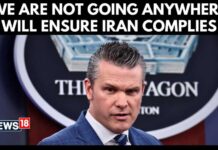
Stars and Stripes reported the broader context: a last-minute, two-week ceasefire reached after weeks of conflict, with the Trump administration emphasizing that passage through the strait must remain free. Defense Secretary Pete Hegseth’s public posture has been blunt that the United States will not accept a permanent shutdown. Iran, meanwhile, has framed coordination as conditional and time-limited, insisting on control measures that look less like a ceasefire concession and more like leverage.
Why Hormuz Matters: A Narrow Waterway With Outsized Economic Power
The Strait of Hormuz is only about 21 miles wide at its narrowest point, but its importance is global because it serves as a primary corridor for oil and gas shipments. Under normal conditions, roughly 20% of global oil and gas transits the chokepoint. When traffic slows, insurers, shippers, and energy traders price in risk immediately—meaning American households can feel foreign standoffs at the pump and in broader inflation pressures.
Reporting also indicates traffic remains far below pre-war levels. Shipping data cited in coverage points to a stark contrast between typical daily volumes and the current trickle, with hundreds of vessels described as stranded. Even if a limited number of ships transit under coordination, the market signal is still that the route is politically hostage to armed actors. That uncertainty becomes a silent tax on working families and small businesses already weary of elevated costs.
Diplomacy in Islamabad Meets Hard Reality at Sea
Pakistan’s role hosting talks in Islamabad illustrates how the current pause is being managed: indirectly, carefully, and with major questions left unresolved. Iran’s reported demands have included asset releases, reparations, and a say over how the strait is governed, while the U.S. position centers on open transit. Oman has also been mentioned in discussions related to traffic systems, but none of these forums can substitute for what actually happens when ships move.
The central vulnerability is that maritime incidents can outrun negotiators. A ceasefire can hold in theory while commanders test boundaries in practice. Analysts in the video coverage suggested the threats function as a form of territorial assertion and may not derail talks unless an attack causes significant casualties or hits commercial shipping. That framing is plausible, but it also highlights the risk: a single miscalculation could force Washington into rapid decisions with global economic consequences.
The Policy Question for Washington: Deterrence Without a New War
Trump has publicly argued that the U.S. is helping manage traffic and that Iran is paying a price for the confrontation, while also warning that mines and asymmetric attacks remain a danger. That combination—pressure plus caution—reflects a reality conservatives often emphasize: deterrence is cheaper than war, but deterrence still requires credibility. If Iranian threats routinely cause U.S. ships or commercial convoys to change course, the credibility problem becomes visible to allies and adversaries alike.
What Ceasefire? Iranians Threaten to Attack American Navy Ships That Enter the Strait of Hormuz https://t.co/aq9djInMYl
— Pete (@Deepcow1965) April 11, 2026
For Americans skeptical of “forever wars” and equally skeptical of elite diplomatic theater, the immediate measuring stick is simple: does the ceasefire restore predictable shipping and reduce the leverage of armed groups over global energy? Based on current reporting, the answer is not yet. The ceasefire window appears fragile, the strait’s status remains contested, and the administration faces a narrow path—keep trade routes open, avoid needless escalation, and prevent energy shocks from spilling into renewed inflation at home.
Sources:
Strait of Hormuz: Iran ceasefire, Trump