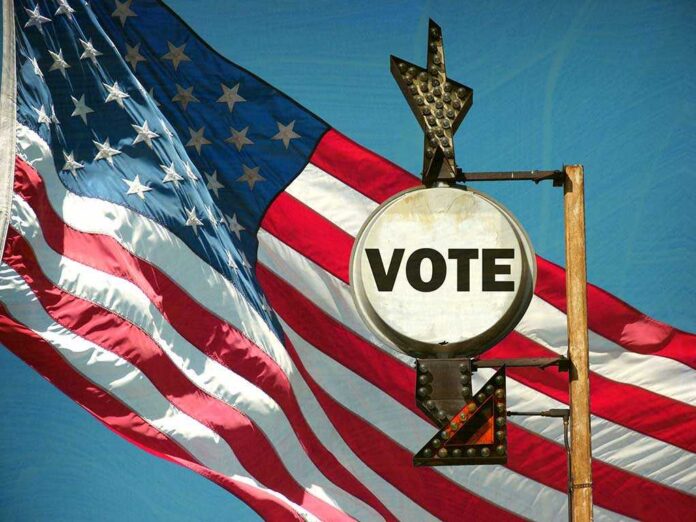
Strict voter ID laws risk turning millions of eligible Americans into silent bystanders on Election Day, echoing ghosts of Jim Crow while fraud remains a phantom threat.
Story Snapshot
- “No ID Should Equal No Vote” slams photo ID mandates as modern poll taxes suppressing Black, Latino, elderly, and poor voters.
- Post-2013 Shelby County ruling unleashed state laws previously blocked for racial bias, hitting VRA-protected areas hardest.
- Courts struck down North Carolina’s 2016 law for “surgical precision” in targeting Black voters, yet 18 states enforce strict photo ID today.
- Proponents cite election integrity; critics highlight zero fraud proof and burdensome ID acquisition for the marginalized.
Jim Crow’s Shadow Returns Post-1965
The 15th Amendment in 1870 promised Black men voting rights, but Southern states crushed them with poll taxes, literacy tests, and grandfather clauses. Black registration plunged from over 90% to under 6% by 1892. The 1965 Voting Rights Act ended these tactics and required federal preclearance for suspect jurisdictions. Black voter rolls surged by 250,000 that year alone. Yet echoes persist in today’s ID battles.
Shelby County Unleashes State Restrictions
The Supreme Court’s 2013 Shelby County v. Holder decision gutted VRA’s preclearance formula. Texas and South Carolina rushed strict photo ID laws, previously halted by DOJ for discriminatory impact. After 2010 elections, 25 states imposed photo ID, slashed early voting, and tightened registration amid unproven fraud claims. Help America Vote Act of 2002 mandated some ID for mail voters, but strict photo rules go further.
No ID Should Equal No Vote https://t.co/ywKWtpxSlY
— NA404ERROR (@Too_Much_Rum) February 16, 2026
Stakeholders Clash Over Equity Versus Integrity
ACLU and Brennan Center sue against ID laws, arguing they disenfranchise minorities without curbing rare fraud. NAACP halted Virginia’s 1999 pilot. Republican legislatures in Texas, Wisconsin, and South Carolina under Nikki Haley push ID for security, rooted in HAVA’s legacy. Courts wield ultimate power: 7th Circuit upheld Wisconsin’s, but federal rulings blocked others. Power shifted post-Shelby to states until appeals.
Courts Expose Discriminatory Precision
Federal judges in 2016 dismantled North Carolina’s law, citing its “almost surgical precision” in targeting Black voters’ habits like early voting. Texas faced similar blocks for racial impact. South Carolina’s risked sidelining 180,000 Black voters. Today, 36 states require some ID; 18 demand strict photo versions. Supreme Court declined North Carolina’s appeal, leaving remnants intact amid ongoing purges.
Disproportionate Burdens Echo Historical Suppression
Low-income, elderly, Latino, and immigrant communities bear ID costs in time and travel, despite “free” options—mirroring poll taxes banned in 1964. Turnout drops short-term; long-term, VRA gains erode as rolls purge and early voting shrinks. Social distrust revives Jim Crow wounds. Politically, power tilts to white rural voters. Election lines lengthen, straining administration.
Conservative Common Sense on Fraud Claims
League of Women Voters notes ID laws prevent no fraud, given its rarity. Brennan Center tracks post-2010 surge without justification. Pro-ID advocates invoke integrity, aligning with American values of secure elections. Facts show minimal fraud cases, so burdens on citizens demand scrutiny. Common sense favors accessible voting for all legal citizens over unproven barriers.
Sources:
https://www.aclu.org/voting-rights-act-major-dates-in-history
https://nlihc.org/resource/history-voter-suppression
http://pcritp.me/history_of_voting_rights
https://en.wikipedia.org/wiki/Voter_identification_laws_in_the_United_States
https://www.brennancenter.org/our-work/research-reports/new-voting-restrictions-america
https://guides.library.unt.edu/voting/history-of-voting-America
https://www.carnegie.org/our-work/article/voting-rights-timeline/
https://www.lwv.org/blog/whats-so-bad-about-voter-id-laws