A second video is reshaping the national narrative around the Alex Pretti shooting—and exposing how fast politics, policing, and a legal concealed-carry can collide in the street.
Story Snapshot
- New footage from Jan. 13 shows Alex Pretti confronting federal agents days before he was killed, undercutting early portrayals of him as simply a passive bystander.
- On Jan. 24, Pretti—an ICU nurse and licensed concealed-carry holder—was shot by Border Patrol agents during an immigration enforcement operation in south Minneapolis.
- Videos appear to show Pretti was pepper-sprayed and tackled before shots were fired; his handgun was visible afterward, but no clear draw is seen in the bystander footage.
- DHS has described Pretti as a serious threat, while his family and attorney say the earlier incident does not justify lethal force on Jan. 24.
What the New Jan. 13 Video Shows—and Why It Matters
Video released in late January shows Pretti in an earlier confrontation on Jan. 13, when federal agents were operating amid protests. In that clip, Pretti yells insults, makes obscene gestures, spits toward an agents’ SUV, and appears to kick the vehicle’s taillight. Agents then take him to the ground before releasing him, and a handgun is visible in his waistband afterward. Pretti’s family confirmed it is him in the video.
PR Fallout of the New Pretti Video: Aggressive Policing Would’ve Saved This Weirdo’s Lifehttps://t.co/RQV4OHcQGd
— PJ Media Updates (@PJMediaUpdates) January 29, 2026
The release created instant “PR fallout” because it provides context opponents of the protests say was missing: Pretti had previously escalated a face-to-face encounter with federal agents. At the same time, the footage does not settle what happened on Jan. 24. A person can behave recklessly on one day and still be unlawfully shot on another. That distinction is why the investigation, not social media edits, has to drive final conclusions.
The Jan. 24 Shooting: What Bystander Video Can—and Can’t—Prove
On Jan. 24, Border Patrol agents conducting immigration enforcement in south Minneapolis encountered a crowd that was whistling and shouting. Bystander video reportedly shows an agent pushing two women and then shoving Pretti. Pretti then steps in close, appearing to position himself protectively as tempers rise. Agents spray him at close range, force him to the ground, and multiple shots follow after agents yell that he is armed.
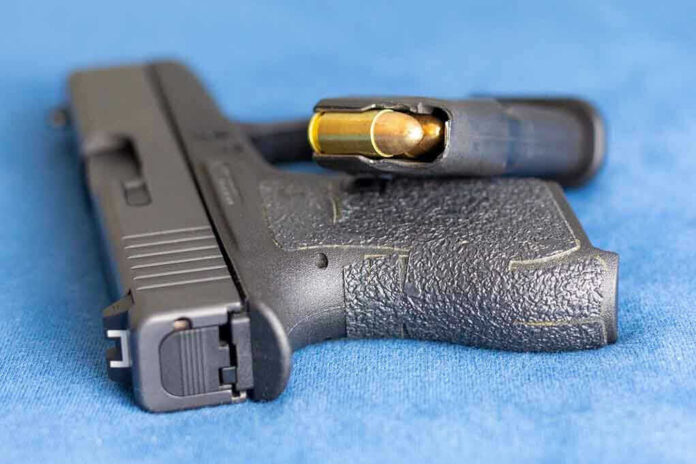
Authorities say nearly a dozen rounds were fired and that the two agents used a Glock 19 and a Glock 47. Pretti’s 9mm Sig Sauer pistol was removed from his waistband after the shooting, and bystander footage does not clearly show a gun being drawn before shots are fired. That gap matters because it leaves the public arguing over frames and angles rather than full evidentiary records, including any body-camera video and the precise sequence of commands.
DHS Claims vs. Family Claims: The Case for Evidence Over Labels
DHS has used harsh language about Pretti, at times describing him as a “domestic terrorist” and suggesting agents feared a mass-casualty scenario. Pretti’s family and attorney have countered that the Jan. 13 incident does not justify killing him on Jan. 24, emphasizing that the videos do not show him presenting an immediate lethal threat. Those competing claims are exactly why due process and transparent evidence handling matter.
Expert Critiques of Tactics Raise Hard Questions for Both Sides
Use-of-force experts quoted in local reporting have raised concerns about tactics shown in the available video, including close-range pepper spray and a rapid move to physical force rather than verbal de-escalation. That critique doesn’t require anyone to excuse Pretti’s behavior; it highlights a separate issue: when government agents escalate quickly in a dense crowd, chaos increases and split-second judgments become more deadly. Public trust suffers when the government’s own evidence remains limited or delayed.
Why This Story Hits Conservatives: Federal Power, Public Order, and Gun Rights
Conservatives generally support strong border enforcement and public order, but many also demand clear constitutional boundaries on government force. This case sits at the uncomfortable intersection of both. Pretti was not reported to be an illegal immigrant; he was a VA ICU nurse and a legal gun owner. If body-cam and forensics ultimately show he never drew, then lethal force will raise serious Fourth Amendment questions. If evidence shows he reached or moved to draw, the legal analysis changes.
For Minneapolis and the country, the larger takeaway is straightforward: edited clips will keep fueling narrative warfare until investigators release complete, verifiable records—especially body-camera footage and preserved evidence. The Trump administration’s enforcement push is going to keep colliding with deep-blue local politics, and every high-profile use-of-force incident becomes a stress test for legitimacy. Conservatives should insist on two standards at once: enforce the law, and prove the facts.
Sources:
Alex Pretti New Video Days Before Death Shows Aggressive Encounter With Federal Agents
What we know about the shooting death of Alex Pretti by federal agents in Minneapolis
Videos and witness statements shed new light on moments leading up to Alex Pretti shooting