
A California judge’s denial of parental rights to a Chinese billionaire using multiple U.S. surrogates spotlights a system rich insiders can navigate while regular families face chaos and costs.
Story Highlights
- A Los Angeles judge denied Xu Bo’s bid for parentage linked to multiple surrogate pregnancies.
- Reports say Xu sought roughly 20 U.S.-born sons to inherit his business.
- Xu’s company admits “over 100” children overall but says only 12 were U.S.-born via surrogacy.
- U.S. rules still recognize citizenship at birth for children born here, including via surrogacy.
Court Ruling Signals Scrutiny Of Mass Surrogacy Plans
Los Angeles family court records described by reporters say Judge Amy Pellman denied Chinese billionaire Xu Bo’s petition for parentage after reviewing filings tied to several unborn surrogate children. Reporting indicates the court found he had already fathered or was in the process of fathering at least eight more through surrogates, a rare rebuke in a light-regulated industry. This single order does not settle every fact. But it confirms a real legal clash between large-scale private plans and a system built for individual families, not mass design.
Separate reporting says Xu told the court he aimed for around 20 U.S.-born children, with a focus on sons, to one day run his company. That goal, if correct, frames the effort as a strategic family project rather than a traditional path to parenthood. Critics see this as proof that wealthy foreign nationals can shape outcomes through volume and cash. Supporters argue that surrogacy is legal, and choice in family formation belongs to parents, not the state.
Disputed Numbers And What We Actually Know
Media accounts repeated a striking figure: more than 100 children tied to Xu’s efforts. His company, Duoyi Network, pushed back on the details and accused The Wall Street Journal of misrepresentation. Yet the company also stated that Xu has “over 100” children overall, while saying that only 12 were born in the United States through surrogacy. That admission narrows the claim. It still leaves a very large family footprint, but it undercuts the broadest “100-plus U.S.-born” headline.
Because many family court records are sealed, outside confirmation is thin. The best documented facts are the Los Angeles denial and the company’s own statement about totals and the 12 U.S.-born subset. Other reports describe nannies caring for the children in Southern California with plans to move the children abroad, but those details rely on secondhand accounts rather than public records. Readers should separate the clear legal event from claims that lack direct documents.
Why This Touches Birthright Citizenship And Uneven Rules
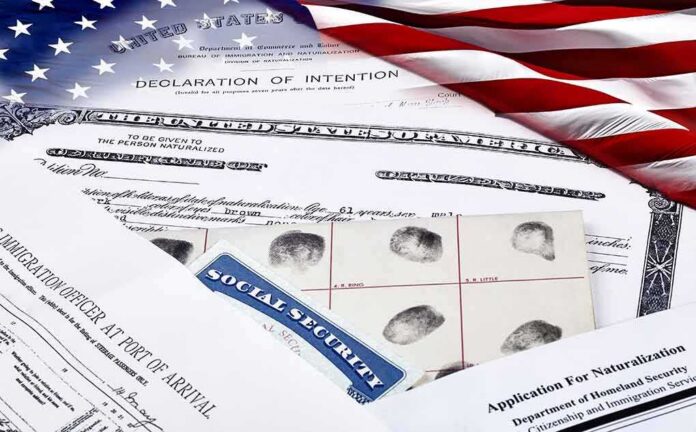
Federal guidance says a child born in the United States gets citizenship at birth, including births through assisted reproduction or surrogacy, with narrow exceptions like children of diplomats. That baseline, plus state parentage orders and birth certificates, creates a path that is simple for a child but complex for adults. Foreign intended parents can legally have children here. That mix fuels anger on both sides toward a government that has not built clear guardrails for a global surrogacy market.
Conservatives see a system that invites gaming and weakens national cohesion. Liberals see money bending the rules while workers and surrogates carry the risks. Both sides see elites finding doors that normal families cannot open. Congress has debated bills to curb foreign intended-parent contracts, but state laws and private contracts still dominate this space. Until lawmakers set clear national standards, judges will face piecemeal fights like Xu’s case rather than a stable rulebook.
What Matters Next For Families, Agencies, And Policy
Hospitals, clinics, and agencies operate under different state standards, which encourages forum shopping. California is known for permissive parentage orders, which draw international clients. If more judges question multi-pregnancy plans tied to a single intended parent, agencies may tighten screening or contract limits. Families pursuing surrogacy should ask counsel about parentage timelines, custody, and cross-border moves, since one adverse ruling can ripple through travel, passports, and care plans.
🔶 $120,000. A “single father.” A Chinese Billionaire Exploiting U.S. Birthright Citizenship
This is why Birthright Citizenship must be addressed.He is the intended father. In U.S. commercial surrogacy that usually means:
▪️ His sperm (sometimes with a separate egg donor, so… pic.twitter.com/s8ehUTX7gm— Bennetta Elliott (@belliott123) September 14, 2026
Lawmakers face a trade-off. If Congress narrows access for foreign intended parents, it may reduce perceived abuse but could also spark diplomatic and legal fights. If leaders keep the status quo, high-dollar clients will likely keep coming. The Xu case shows the core problem: a national policy on citizenship that remains broad, a patchwork of state family laws, and a private market that can scale faster than public safeguards. That is how systems fail regular people.
Sources:
wsj.com, ndtv.com, newsmax.com, physicianssurrogacy.com
© standardnewsdaily.com 2026. All rights reserved.