
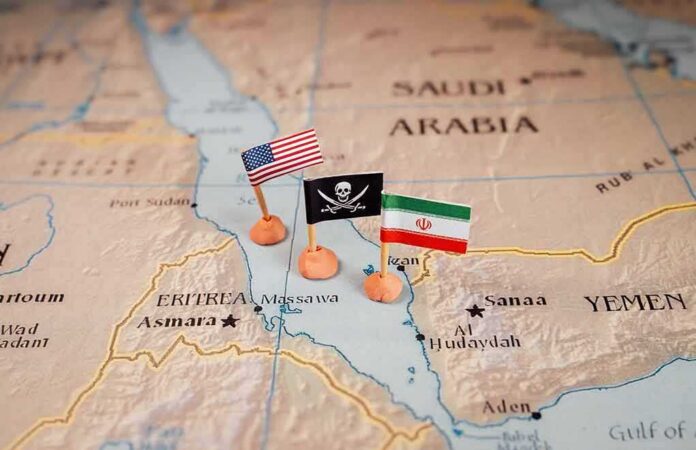
President Trump refused Saudi Arabia’s request for U.S. strikes on Yemen’s Houthis, opting for support short of war, according to multiple reports.
Story Snapshot
- Saudi Crown Prince Mohammed bin Salman reportedly asked twice for U.S. strikes; Trump said no.
- U.S. officials said the administration did not plan direct military action against the Houthis.
- White House reportedly offered intelligence and targeting support instead of airstrikes.
- Decision aimed to avoid opening another combat front while focusing on Iran and sea lanes.
What Reporting Says Happened
Axios reported that Saudi Crown Prince Mohammed bin Salman called President Trump twice and urged U.S. strikes on Houthi targets in Yemen. The report said Trump declined the request. It also said the administration would share intelligence and targeting data with Saudi forces. The story cited two unnamed U.S. officials and did not include a White House readout. Several outlets repeated the account, which remains based mainly on Axios’s sourcing.
The Jerusalem Post relayed that U.S. officials did not intend to take direct military action against the Houthis at this time. It said Washington would support Saudi Arabia’s efforts but stop short of U.S. strikes. That framing aligns with previous patterns where the United States backs partners through intelligence, advice, and logistics while avoiding a new war zone. The report did not include on-the-record quotes from U.S. officials or a formal statement.
Why This Matters at Home
This choice touches core concerns across the spectrum. Many Americans want strong borders at home and fewer open-ended wars abroad. Refusing strikes limits the chance of new U.S. casualties and runaway costs. It also avoids a wider fight that could roil energy markets and raise prices. At the same time, some will worry this signals weakness to Iran’s network and invites more attacks on shipping or allies. Both fears grow when officials keep details vague and off the record.
The decision reflects a long U.S. approach to the Yemen conflict. Since 2015, Washington has often provided intelligence and other support to Saudi operations while trying not to “own” the war. Analysts have warned that air power alone rarely solves Yemen’s political fight and can worsen harm without a path to talks. That history helps explain choosing non-combat help over direct strikes, even when partners push for more.
Strategic Tradeoffs the Administration Weighed
Officials reportedly aimed to keep focus on Iran and protect key sea lanes like the Strait of Hormuz and the Bab el-Mandeb. Direct U.S. strikes in Yemen could open a new front and stretch forces already tasked with deterring Iran. Intelligence sharing can still help Saudi defenses and respond to missile or drone threats. But this path relies on partners to act with care, which can test U.S. leverage over targeting and civilian risk.
Trump said to reject Saudi request for strikes on Houthis, who are now reportedly completing Bab el-Mandeb takeover https://t.co/5P4GQv6gSj via @timesofisrael This makes no sense to me-
— Donna Divine (@drdoeeu) September 11, 2026
Anonymous sourcing leaves gaps. There is no official call readout or legal memo in public view that defines “non-combat assistance” or its limits. That lack of clarity fuels a common worry: powerful players make high-stakes choices with little sunlight, and citizens learn major news from leaks. For readers across the left and right who believe Washington answers first to elites, the opaque process around war and peace deepens that distrust.
What to Watch Next
Watch for any White House or Pentagon statement that confirms or sharpens the policy line. Look for signs of expanded intelligence flows, new military liaison visits, or joint planning that stops short of strikes. Track Houthi actions at sea and against Saudi sites, which could test this approach. If shipping faces more attacks, pressure will rise to act. If partners show restraint and talks resume, support without strikes could hold.
Sources:
insiderpaper.com, jpost.com, haaretz.com
© standardnewsdaily.com 2026. All rights reserved.