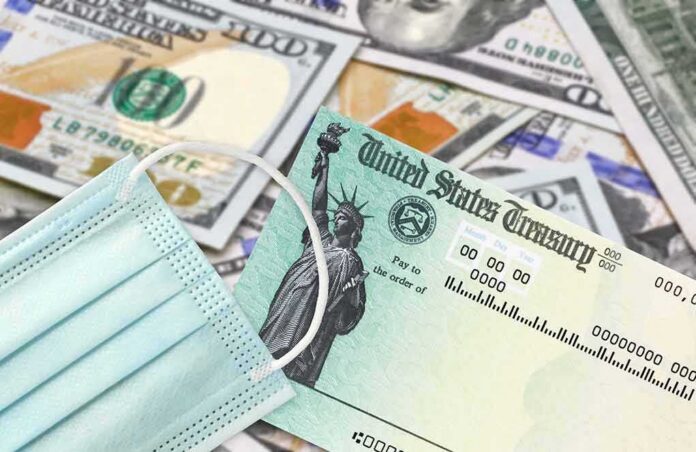
President Trump just ordered $500 rebate checks for nearly 1 million Americans he says got ripped off by Obamacare fees under the Biden administration.
Story Snapshot
- The White House announced $500 refund checks for almost 1 million people across 30 states.
- Officials say the money comes from roughly $500 million in excess Obamacare exchange fees collected under President Biden.
- The plan blames the Biden administration for overcharging enrollees through hidden fees built into premiums.
- Democrats and allied groups call the checks a political stunt that won’t cover real health costs.
- Questions remain about funding mechanics and whether Congress needs to sign off.
White House Announces Refunds For Overcharged Families
President Trump unveiled the rebate program on September 10, calling it a return of “Biden overcharges” to working families. The White House fact sheet says the federal government will send $500 per person to nearly 1 million Americans who paid inflated Obamacare exchange fees. Officials frame it as simple fairness: give people back money that was taken from them without justification.
The White House says the refunds affect residents in 30 states who bought coverage on Affordable Care Act exchanges. According to the Associated Press, the administration alleges these enrollees were overcharged for exchange fees during the Biden years. The exact list of states has not been fully detailed in public documents, but the scope covers a broad swath of the country.
Where The Half-Billion Dollars Comes From
Axios reports the rebate program draws from a roughly $500 million pool of excess fees the administration says built up under Biden-era Obamacare management. Insurers pay exchange user fees as a share of premiums, and those costs typically get passed along to customers buying coverage. The administration argues those fees ran higher than necessary, leaving a surplus now headed back to enrollees.
This isn’t the same as the well-known Obamacare rebate rule, called the Medical Loss Ratio or 80/20 rule. That older rule forces insurers to refund premium money if they spend too little on actual medical care. Health policy trackers note those checks average around $192 per person, far smaller than the $500 Trump is promising through this separate initiative.
Democrats Push Back On The Plan’s Value
Not everyone is applauding. The advocacy group Protect Our Care called the $500 checks “an insult” to families struggling with health costs, noting the payment doesn’t cover a single month of average insurance premiums or a short hospital stay. It’s a fair point about scale, but it dodges the core issue: money collected in excess fees should go back to the people who paid it, not stay buried in a bureaucracy.
Democrats have spent years defending enhanced Obamacare subsidies as a way to lower premiums, arguing they saved families roughly $800 a year on average. That framing treats government spending as generosity rather than addressing whether fees charged to enrollees were fair in the first place. The rebate fight ultimately comes down to a simple question: who controls the definition of “excess,” and who gets to keep it.
🔥BREAKING🔥
President Donald J. Trump announces $500 rebate checks to nearly 1 million hardworking Americans who were wrongly overcharged through Obamacare.
"Our Administration is doing the right thing and giving the money back to the people who were wrongly ripped off."…
— DAILY INTEL UPDATES (@Ericdavis1343) September 10, 2026
For conservative voters tired of watching Washington collect more than it needs and call it help, this rebate plan lands differently than another stimulus gimmick. It targets a specific, alleged overcharge and sends the money straight back to the people who paid it. Skeptics are right to ask how the checks get funded and whether Congress has a role, but the underlying principle, don’t let government agencies pocket fees beyond what’s needed, is one most Americans can get behind.
Whether this program rolls out smoothly before any political deadline remains to be seen. Past rebate and stimulus proposals have stalled or drawn confusion over timing and legitimacy. Families in the affected 30 states should watch for official Treasury notices rather than trust unsolicited calls or texts claiming to offer early payment.
Sources:
facebook.com, whitehouse.gov, axios.com, healthinsurance.org, protectourcare.org, irs.gov
© standardnewsdaily.com 2026. All rights reserved.