A UTSA student recited a “Kirk-aversary” poem that cheered Charlie Kirk’s assassination and taunted a conservative moderator about his neck.
Story Highlights
- A student at a UTSA campus event read a poem celebrating Charlie Kirk’s killing, quoting a “shot to the neck.”
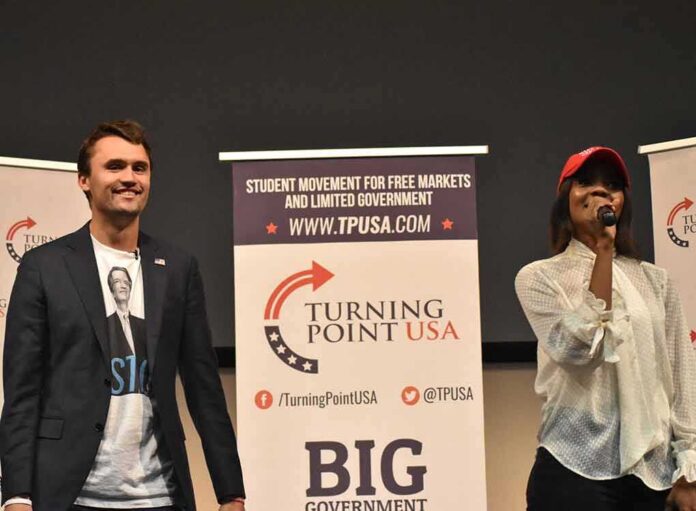
- The poem was delivered toward Christian Collins during a Turning Point USA “Pick Up the Mic” event.
- After the poem, the student mocked Collins for appearing without “neck” protection.
- UTSA’s public response was not detailed in the reports cited so far.
Student’s Poem Celebrates Kirk’s Killing at UTSA Event
Reports state that a University of Texas at San Antonio student read a poem at a Turning Point USA event that celebrated the assassination of Charlie Kirk. The poem quoted lines about a “shot to the neck” and framed the date as a “Kirk-aversary,” mimicking the style of ’Twas the Night Before Christmas. The segment circulated online and drew fast outrage. FOX San Antonio identified the event and quoted several lines heard in the recording that spread on social media.
The performance occurred during a “Pick Up the Mic” session and was directed at conservative activist Christian Collins, who was at the front of the room. Coverage identified Collins as the person to whom the poem was read. The setting was not a private space but a campus political forum where students and guests trade views. That placement made the poem’s message public, pointed, and unmissable for those in the room and those who later watched the clip.
Post-Poem Taunt Targets Moderator’s Neck
After finishing, the student added a taunt that referenced neck protection aimed at Collins. Multiple outlets reported that she told him he was brave to attend “with no protection” or “no neck brace.” Collins replied on the spot, asking if she was happy with herself and saying he would pray for her. The exchange underscored that the words were not abstract. They were aimed at a person standing a few feet away in a tense political setting.
Reports described the clip as going viral and sparking intense backlash. Commentators condemned the glee in the delivery and the focus on how Kirk died. The outcry reflected a broader concern: when campus forums become stages for mocking political murder, the line between expression and intimidation can blur fast. In this case, the available reporting emphasizes the shocking content and the immediate, personal nature of the taunt toward a conservative participant.
Free Speech, True Threats, and Campus Duty
American law draws a hard line between speech that is offensive and speech that is a “true threat.” The United States Supreme Court’s modern cases require proof of a specific intent to threaten before the government may punish threatening words. That standard is high by design. It protects debate, even when ugly, while allowing punishment of genuine threats. The fact pattern here raised moral alarm but did not include a finding that the words met the legal test.
That legal frame does not let campus leaders off the hook. Universities should protect open debate without letting events devolve into celebrations of violence. A clear conduct code, firm moderation, and fair time rules help keep speech sharp but civil. Schools can also state their values after incidents like this, without muzzling lawful speech. Decency is not censorship. It is a standard that helps people argue hard ideas without cheering the death of a fellow American.
Why This Struck a Nerve With Conservatives
Conservatives saw the poem as part of a pattern that treats their lives and speech as targets for scorn. The student did not just criticize policy. She mocked a man’s killing and then taunted a conservative in the room about his neck. That feels less like dialogue and more like social permission for cruelty. People who defend family values, faith, the Constitution, and peaceable assembly do not accept that tone on campus or anywhere else in civic life.
At @UTSA for Pick Up the Mic, a student read a poem celebrating the assassination of Charlie Kirk with such glee, then told me I was brave to be out here without my neck covered.
I told her I’d pray for her pic.twitter.com/AaNSDm0DSH
— Patriot Pascal Najadi (@PatriotPas0xgy) October 30, 2026
Research shows that constant exposure to political attacks on social media fuels anger and cynicism. Viral clips reward the harshest soundbites and widen divides. That cycle is exactly what followed this event. Leaders, moderators, and student hosts should resist it. They can model a better standard: protect free speech, reject applause lines for violence, and keep the door open to debate that tests ideas, not a person’s safety. That is how we rebuild trust across deep differences.
Sources:
foxsanantonio.com, twitchy.com, thegatewaypundit.com, wnd.com, houstondaily.com
© standardnewsdaily.com 2026. All rights reserved.