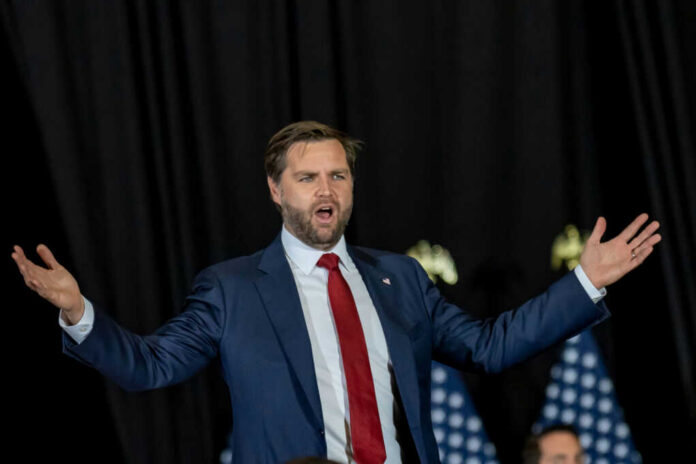
Vice President J.D. Vance says the path to end the Ukraine war runs through tough negotiations led by America’s allies, not endless U.S. checks.
Story Highlights
- Vance rejects open-ended U.S. funding for Ukraine and voted against a $61 billion package in 2024.
- Vance outlines a negotiation-first plan, with Ukraine and Europe at the table, to reach a “reasonable settlement”.
- The administration keeps pressure tools ready, including sanctions and possible military options, if talks fail.
- Public remarks do not reveal a detailed peace blueprint, leaving terms and enforcement unspecified.
Vance Sets Terms: Negotiate a Settlement, Do Not Fund a Forever War
Vice President J.D. Vance has made a clear case against writing blank checks for Ukraine. In May 2024, he argued the United States should not keep funding what he called a never-ending war and said America had done more than its fair share. In April 2024, he voted against a foreign-aid bill that included nearly $61 billion for Ukraine, signaling a firm stance on limiting U.S. exposure and urging smarter strategy over routine spending.
At the Munich Security Conference on February 14, 2025, Vance said the administration aims for a “reasonable settlement between Russia and Ukraine.” He stressed that Ukraine and European partners must be active in the talks to lock in a stable peace. He framed talks as negotiations “from a position of strength,” pairing diplomacy with leverage to prevent bad faith by Moscow or drift by any party.
Leverage Over Moscow: Sanctions Pressure and Reserved Military Options
Vance and administration voices have pointed to economic pressure as a key tool to guide talks. Reporting at the time also said some military options, including possible U.S. roles tied to peacekeeping or support, were not fully removed from the table. That mix aims to keep pressure on the Kremlin while giving negotiators real sticks if Russia stalls or cheats. This approach seeks peace through strength without locking America into an open-ended combat role.
Vance has also argued that Washington overstated Russia’s broader threat to global stability, a point he used to justify tighter limits on aid. That judgment, presented in 2024 and covered by major outlets, reinforced his push to shift more responsibility to Europe and to focus U.S. power where it matters most for American security and economic health.
Europe and Ukraine Up Front: Burden-Sharing and Local Ownership
Vance’s Munich remarks placed Europe and Ukraine at the center of any deal. He argued that only united parties can negotiate a long-lasting peace. This framing pushes Europe to carry a larger defense load while keeping Ukraine’s agency intact. It also reflects a common pattern in long wars where local and regional players must lead, and distant backers should avoid footing the bulk of the bill for years on end.
That burden-sharing logic aligns with a wider debate inside the alliance. Nations closer to Russia often commit more resources over time, while distant countries face pressure to scale back. Vance’s stance fits this reality and signals that Washington wants Europe to match words with resources as talks advance and enforcement needs become clear.
What Is Known—and Not Yet Defined—About the Plan
Vance’s public comments lay out the shape of a negotiation-first strategy but do not provide a full peace blueprint. They do not specify territorial terms, sequencing of steps, monitoring, or how parties would enforce a ceasefire if Russia violates a deal. Those details matter for any lasting settlement and would likely involve European monitors, sanctions triggers, and defined penalties for breaches. One public account also noted that the road to a deal would be difficult, with real disagreements ahead.
USA Vice President Vance unexpectedly calls Putin a “little dictator” and blames him for rising gas prices
USA Vice President J. D. Vance pointed out that Russia’s invasion of Ukraine in 2022 triggered a sharp rise in gas prices in the United States.
“Prices surged every time… pic.twitter.com/Voc4rrVuWN
— Mikhail Kondriukov (@Mihail1076951) October 26, 2026
Still, the core is clear: cut the blank checks, force serious talks, and use leverage to secure peace. For conservatives tired of endless spending and higher energy costs tied to foreign shocks, this plan aims to protect U.S. interests first. It backs allies, respects Ukraine’s role, and keeps America strong without sliding into another open-ended commitment. The mission now is to translate that framework into firm steps that end the war on terms that hold.
Sources:
transcripts.cnn.com, abcnews.com, securityconference.org, ro.usembassy.gov
© standardnewsdaily.com 2026. All rights reserved.