
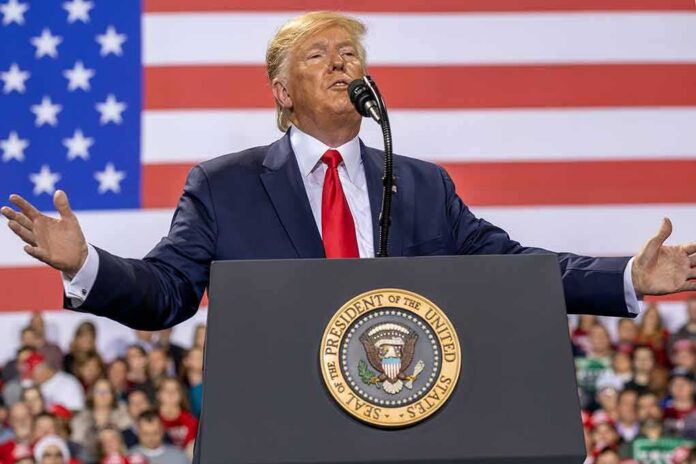
President Trump signaled possible talks with Kim Jong Un and said the Korean Peninsula is getting “safer,” even as the United States scales back drills with South Korea.
Story Snapshot
- Trump hinted at renewed contact with Kim Jong Un and said ties are improving.
- South Korea’s president said Trump is open to a phased approach on the nuclear issue.
- The White House reaffirmed denuclearization and openness to talks without preconditions.
- Experts say leader-to-leader diplomacy lowers tension but needs real follow-through.
What Trump Said And Why It Matters
President Trump said he may engage again with North Korea’s Kim Jong Un and claimed his personal ties are making the situation safer. He also ordered a substantial reduction of joint military drills with South Korea, a key United States ally, framing the move as cost-saving and de-escalatory. The statements put leader-level diplomacy back in the spotlight. They also revive a debate at home and abroad over how to deter threats while keeping doors to talks open.
South Korea’s President Lee Jae Myung said Trump told him at a Group of Seven dinner that it was time to pay attention to North Korea again. Lee also said Trump appeared open to a phased approach that first aims to halt nuclear and missile activities, while keeping full denuclearization as the long-term goal. These signals suggest a possible reset of United States strategy: near-term freeze steps matched with measured incentives, backed by continued pressure.
Where Policy Stands Right Now
The White House reaffirmed that the United States seeks North Korea’s denuclearization and is willing to talk without preconditions. That stance leaves space for quick leader contact or working talks. It also tries to balance two aims: cut near-term risks and keep the end goal in view. Past summit documents promised better ties and security guarantees in broad terms, but left details and verification for later work. That history shapes today’s options and limits.
Analysts across institutions say top-level outreach can cool tempers and open channels, but results fade without steady, detailed negotiations. They note that earlier summits brought dramatic images and short pauses in tension, yet core issues—sanctions relief, inspections, and alliance posture—stalled later progress. These lessons explain why officials in Washington, Seoul, and Tokyo watch both the tone and the mechanics: who meets, what is traded, and how steps are checked.
What A Phased Track Could Look Like
A phased approach could start with a verifiable halt to nuclear tests and long-range launches, paired with limited measures from the United States and partners, such as small humanitarian steps or narrow sanctions waivers tied to compliance. Each step would need clear verification before moving on. Supporters argue this reduces risk while building trust. Critics worry North Korea could pocket gains and stall. Both views reflect real outcomes seen after past engagements.
Trump may be in the final stages of preparing to attack North Korea.
His praise for Kim Jong Un and decision to reduce joint military exercises with South Korea may appear to signal peace. Yet the sudden display of friendship could be a feint, a deceptive manoeuvre designed to… pic.twitter.com/Eb4ySpk9lH
— Buregyeya Apollo, PhD (@ApolloBuregyeya) August 17, 2026
Scaling back United States–South Korea drills raises hard questions. Supporters see a chance to cut costs and lower friction as talks restart. Opponents fear it weakens deterrence and sends mixed signals to allies and rivals. The move echoes earlier pauses and reductions that aimed to support diplomacy but drew concern from defense planners. The administration will need to show how readiness stays strong while dialogue advances, so allies feel protected and adversaries deterred.
Why This Resonates With Voters
Many Americans across party lines doubt that Washington can manage complex threats while keeping promises at home. They see great-power games that drag on, cost more, and deliver little. These latest signals from Trump aim to lower danger without another open-ended commitment. The test is execution. Clear goals, steady talks, and honest updates can build trust. Vague vows and shifting timelines can deepen the sense that the system serves insiders, not the public.
What To Watch Next
Watch for concrete steps: a formal proposal on a test freeze, an initial meeting date, or a channel for working-level talks. Look for how the United States coordinates with South Korea and Japan and how it frames any trade-offs. Note whether military readiness plans change beyond exercises. Finally, track North Korea’s response. Silence or new tests would chill momentum. A pause or message through official media would suggest space for careful, step-by-step progress.
Sources:
insiderpaper.com, pbs.org, armscontrol.org, english.hani.co.kr, trumpwhitehouse.archives.gov
© standardnewsdaily.com 2026. All rights reserved.