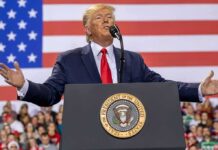
President Trump said there are no talks with Iran and that the U.S. naval blockade stays in place, signaling a hard line with real costs for global trade and American security.
Story Snapshot
- Trump denied any ongoing or scheduled talks with Iran and said the blockade remains active.
- Earlier reports quoted Trump saying talks were underway and even “all-day” at one point.
- Iran has denied direct talks while working with Oman on shipping rules in the Strait of Hormuz.
- Legal debates about what counts as a “blockade” shape how both sides frame the pressure campaign.
What Trump Just Announced And Why It Matters
On Tuesday, President Trump posted that there are no talks or conversations going on, or scheduled, with Iran, and that the naval blockade remains in full force and effect. The statement resets expectations after weeks of mixed signals about diplomacy and military pressure. The message suggests the White House wants clear leverage, not vague process updates. For families with service members at sea, and for shippers and consumers who face higher costs, the stakes remain very real.
This new denial contrasts with earlier remarks. Trump said on August 3 that talks with Iran were “going on right now,” and he called it Tehran’s “last chance” to get a deal. He later said there had been an “all-day negotiation,” portraying progress even while warning of severe strikes if no deal came through. These swings show the challenge of war-time messaging. Leaders often try to keep pressure high while leaving room for a deal if one appears.
Iran’s Stance And The Oman Channel
Iran’s officials have repeatedly denied that direct talks with the United States are underway, saying no meetings were planned. At the same time, Iran and Oman have been working on a plan to manage ship traffic through the Strait of Hormuz, with reports that they are close to an agreement on the legal mechanism and routing rules. This split helps explain the confusion: one side rejects “talks,” while both sides still navigate indirect steps that affect shipping and risk.
Regional mediators, including Qatar, have also described progress at points, even as Tehran publicly rejected claims of direct negotiations. That pattern is common in crises with Iran. Governments use indirect channels to test ideas, avoid public backlash, and shape leverage. The public then hears a mix of denials, threats, and hints of movement. For citizens, this can feel like double-speak from all sides. But it often reflects back-channel work that governments rarely admit in real time.
Is It A “Blockade”? The Law And The Messaging
Trump and major outlets use the word “blockade,” which signals maximum pressure. International law uses a narrower test. Scholars describe a blockade as a wartime naval operation that prevents vessels of all states from entering or leaving enemy ports or coasts, and it must be effective to bind others. That strict meaning matters because it shapes rights, duties, insurance costs, and how allies view U.S. actions. The legal label can sway whether partners support or resist the pressure.
JUST IN – Trump says that there are no talks or conversations scheduled or going on with Iran, that the "Naval Blockade remains in full force," with all water mines removed or detonated, "The Hormuz Strait is open and operating."
Source: https://t.co/XmmiOBUGgq@disclosetv pic.twitter.com/vem7jADJ9i
— Pedro Luz Cunha (@pplcunha) August 18, 2026
Reports also show shifting claims about the Strait of Hormuz, a key chokepoint for world oil. Some coverage said the waterway was open to non-Iran shipping even as Iran-linked traffic faced curbs. Other reporting described it as blocked until conditions were met. These differences reflect both battlefield realities and word choices. Either way, rerouting ships and deterring traffic raise prices. That hits truckers, homeowners, and small firms who already feel squeezed.
What This Signals For Americans On The Left And Right
Trump’s reset signals that Washington will lean on economic and maritime pressure while talks remain off the table, at least in public. Conservatives who want toughness on Iran may see a needed stand after years of mixed results. Liberals who fear endless conflict may see a path that keeps tension high with no clear off-ramp. Both camps share a core worry: elite decision-makers play inside games while regular people pay the tab in fuel costs, shipping delays, and risk to troops.
Bottom Line: Watch These Next Moves
Watch for signs that Oman or Qatar announce a practical shipping framework, even if Washington and Tehran deny “talks.” Look for any Pentagon change in rules for stopping or redirecting ships, which would hint at how “blockade” is being applied. And track whether Trump’s team sticks with public denials or returns to talk of progress. In this information fog, concrete actions at sea will tell you more than slogans or one-day statements.
Sources:
townhall.com, aljazeera.com, cnn.com, reuters.com, news18.com, usnews.com
© standardnewsdaily.com 2026. All rights reserved.