
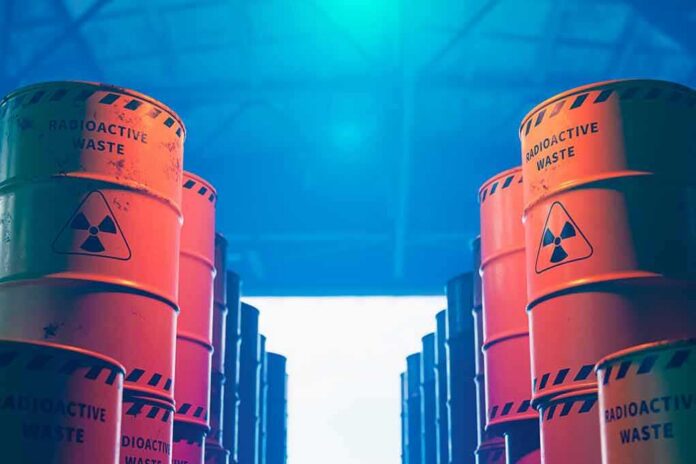
Iran’s security leadership says its enriched uranium will never leave the country, even as watchdog data shows a fast-growing stockpile that alarms nonproliferation experts.
Story Snapshot
- Iran rejects any plan to ship enriched uranium abroad, framing it as a sovereignty issue.
- International Atomic Energy Agency data shows Iran amassed 440.9 kilograms enriched up to 60% by mid-2025.
- The stockpile kept growing through spring 2025, heightening global concern.
- A reported third-country transfer idea surfaced, but no receiver was confirmed.
What Iran’s Refusal Means Right Now
Iranian officials say the enriched uranium will not be moved out of Iran under any deal. They argue transfer to the United States was never on the table. They frame keeping the stockpile at home as a matter of national rights and pride. They also say downblending inside Iran could be possible, but removal is not. These statements set a hard line that blocks one key option favored by some outside powers.
The public stance lands amid a broader U.S.-Iran standoff. The debate centers on how to cut breakout risk, which is the time needed to make bomb fuel if a decision is made. External removal is one tool. Downblending, conversion to fuel, tighter caps, and more inspections are others. Iran’s refusal narrows the menu. It pressures negotiators to find risk cuts inside Iran rather than shipping material abroad.
The Watchdog Numbers Driving Concern
The International Atomic Energy Agency reported that by June 13, 2025, Iran held about 9,874.9 kilograms of enriched uranium. That total included 440.9 kilograms enriched up to 60 percent uranium-235. Both the total stockpile and the 60 percent portion rose compared with the prior period. These figures come from the Agency’s safeguards work and estimates based on facility operations.
Earlier reports showed the 60 percent stockpile climbing across spring 2025. The Agency estimated 274.8 kilograms as of February 8 and 408.6 kilograms as of May 17. This steady growth pattern, not a one-off spike, is what set off louder warnings. The Agency has stressed that Iran is the only non-nuclear-weapon state producing and holding 60 percent material and calls that a serious proliferation concern.
Why 60 Percent Matters and What It Does Not Prove
Sixty percent enrichment is close to weapons-grade in technical terms, which is near 90 percent. The gap from 60 to weapons-grade is shorter than the path from low levels. That is why many experts push to remove or cut this stock. At the same time, the Agency does not say that enrichment to 60 percent is banned if it stays under safeguards. Concern about capability is not the same as proof of a weapons decision.
The stockpile also includes different forms and enrichment levels. Not all of it is ready for quick use in a weapon. Inspectors use material accountancy, access, and estimates to track it. Those methods have limits, and they are not a live, exact inventory every hour. Still, the pattern of growth in higher-enriched material is a red flag that policymakers weigh in setting demands.
The Stalled Transfer Idea and Its Practical Hurdles
Reports in April 2025 said negotiators floated a plan to move enriched uranium to a third country, with Russia named as a possible destination. The idea mirrors the 2015 deal’s model, when most of Iran’s stockpile left the country. But Moscow did not publicly say it would accept the material this time. Without a willing custodian and clear verification, the plan never moved from concept to action.
Iran’s firm refusal to ship material abroad deepens the standoff. It shifts focus to in-country fixes like downblending, conversion, and strict caps with monitors. Supporters say those steps can cut risk if done fast and verified. Critics argue only removal truly buys time and reduces leverage. With Washington and Tehran far apart, the risk is drift. Drift favors stockpile growth and leaves the region on edge, while regular people pay the price for policy failure.
Sources:
insiderpaper.com, iaea.org, iranintl.com, yahoo.com, foreignpolicy.com
© standardnewsdaily.com 2026. All rights reserved.