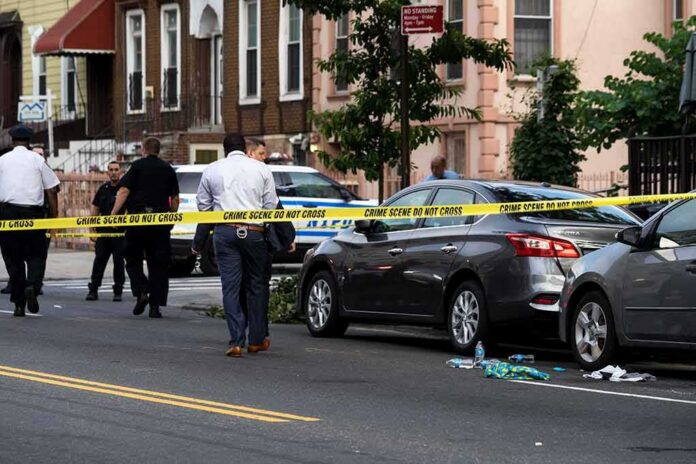
A quiet rural road in North Carolina turned into a mass shooting scene, leaving multiple people dead and a community wondering how such horror can unfold while leaders insist everything is “under control.”
Story Snapshot
- Multiple people were shot and killed at a home on Brooks Road in Prospect Hill, Caswell County.
- One person was taken to a hospital with gunshot wounds; officials have not shared exact casualty numbers yet.
- State investigators say the incident is contained and there is “no threat to the general public.”
- Limited information and tight control of the scene feed wider fears that ordinary Americans are kept in the dark when violence strikes.
Deadly shooting on a quiet North Carolina road
On a weekday morning in Prospect Hill, a small community in Caswell County, deputies answered a call that turned Brooks Road from a quiet country lane into a crime scene with multiple bodies. The North Carolina State Bureau of Investigation says the shooting happened around 8:30 a.m. at a home on Brooks Road and that when deputies entered, they found several people shot inside the residence. One victim was rushed to Duke University Hospital with a gunshot wound, while others were pronounced dead at the scene. Officials have acknowledged “multiple fatalities” but have not yet said how many people were killed or who they were.
Local and national outlets quickly labeled the event a “mass shooting,” echoing the language used by the North Carolina State Bureau of Investigation in its public statement. That statement confirmed an “early morning mass shooting on Brooks Road in Prospect Hills, North Carolina” and said four people had been shot, in a comment from a family member responding on the same post. Reporters on the ground described a heavy law enforcement presence and a blocked-off road, with staging at nearby locations while investigators worked inside the property. For neighbors in this rural area, the sight of crime-scene tape and police vehicles lining a country road underscored how national problems with violence are now hitting even the most out-of-the-way places.
Official response: contained incident, limited details
The Caswell County Sheriff’s Office asked the North Carolina State Bureau of Investigation to step in, a sign that local officials saw the case as too large and serious to handle alone. State investigators said deputies and the North Carolina State Highway Patrol “immediately responded” once the call came in, stressing that officers moved quickly to secure the area. Law enforcement has repeated one key message: there is “no threat to the general public at this time,” and the incident is believed to be isolated to that Brooks Road address. A Caswell County official later told reporters that multiple people were killed and at least one person was hospitalized, again stressing that the shooting did not pose an ongoing danger to the wider community.
Despite the quick assurance that the broader public is safe, the flow of information about what actually happened has been slow and tightly controlled. One local station noted that “no information about the number of victims, injuries or any arrests has been released” and that investigators were still working to learn what led to the shooting. The Facebook statement from the North Carolina State Bureau of Investigation ended with a blunt line: “No additional information is available at this time.” As of the latest reporting, authorities have not publicly named any suspect, explained a motive, or confirmed whether anyone is in custody. For many Americans, this mix of tragic headlines and official silence has become all too familiar.
Why this hits a nerve across the political divide
For conservatives and liberals alike, this kind of event taps into fears that the system is failing in basic ways. People who focus on public safety look at yet another mass shooting and see proof that violence continues to surge while leaders in Washington spend more time fighting each other than fixing core problems at home. Others worry that the “mass shooting” label is used quickly, while the real questions—how did someone get the weapon, what protections failed, why was this home targeted—take far longer to answer. In a time when many citizens feel the federal government is run by distant elites, the gap between fast talking points and slow answers deepens distrust.
***** CASWELL COUNTY UPDATE *****
(CASWELL COUNTY, N.C.) — The Caswell County Sheriff's Office responded to a call for service just before 8 a.m. today at 352 Brooks Road in Prospect Hill, NC.
Deputies arriving on scene found multiple people who had been shot. One person was…
— NC SBI (@SBI1937) August 5, 2026
There is also frustration with how information is handled when lives are lost. The Prospect Hill case follows a pattern seen in many violent incidents: a brief official message appears, local outlets repeat it, and the public is left with a few phrases—“mass shooting,” “isolated incident,” “no threat to the community”—instead of a clear picture. Early reports here confirmed that multiple people were dead and one person was hospitalized, yet did not reveal who they were, whether families had past contact with law enforcement, or if warning signs were missed. When roads are blocked, access is restricted, and details are held back during an “active investigation,” people on both the right and the left can feel shut out of the truth and worry that only insiders see the full story. In a small rural community where neighbors often know each other well, that silence can feel even louder.
Broader questions this raises about trust and safety
This shooting on Brooks Road is not just a local tragedy; it points to national issues that cut across party lines. Many Americans now ask whether basic security—being safe in your own home, on your own land—can still be taken for granted. When officials say there is “no threat to the general public,” people understand that the gunfire has stopped, but they may not feel that the deeper threat of a broken system has gone away. Some wonder if leaders mainly aim to calm markets and headlines instead of confronting why repeat mass shootings happen in quiet towns and cities alike. Others see the heavy use of phrases like “isolated incident” as part of a wider tendency to downplay long-term problems, from crime and drug abuse to mental health and breakdowns in family life.
For a country already divided on many issues, events like Prospect Hill reveal a growing shared concern: the belief that ordinary citizens do not get straight answers when violence erupts, and that accountability rarely reaches higher than the crime scene itself. People who resent “woke” rhetoric and people who resent “America First” slogans may disagree on policy, but both can look at this case and ask why, years into tough talk about law and order, small communities are still seeing mass shootings with very few clear facts made public. As more details come out about what happened in that North Carolina home, those answers will matter not only to grieving families and neighbors, but also to millions across the country who are searching for proof that someone in power is truly working to make these horrors less common—not just to manage the message after they happen.
Sources:
facebook.com, wxii12.com, youtube.com, wlos.com, police.sa.gov.au, wjla.com
© standardnewsdaily.com 2026. All rights reserved.