Federal agents say a man who allegedly posed as a dentist, harmed patients in five states, and then cut off his ankle monitor is now on the run, raising fresh questions about how the justice system protects ordinary people from repeat fraudsters.
Story Snapshot
- The Federal Bureau of Investigation (FBI) says Carlos Andres Rendon Bermudez is a fugitive after cutting off his court-ordered GPS ankle monitor.
- Federal prosecutors in Puerto Rico indicted him for a scheme to perform dental procedures without a valid license, including braces, veneers, and anesthesia.
- The FBI says he allegedly posed as a licensed dentist and caused harm to patients in Ohio, Texas, New York, Florida, and Puerto Rico.
- The case highlights how health care fraud and weak oversight can leave regular Americans exposed while officials focus on headlines and takedown press releases.
FBI hunt for an alleged fake dentist turned fugitive
Federal Bureau of Investigation (FBI) officials say Carlos Andres Rendon Bermudez is wanted for violating the conditions of his pretrial release in a federal case in San Juan, Puerto Rico. He was arrested on June 22, 2026, in Ohio and ordered to home incarceration with a GPS ankle monitor. According to an FBI “Most Wanted” posting, that monitor was later cut off and Rendon Bermudez is now a fugitive they believe left the United States. An FBI alert from the San Juan field office says he was last seen near the border of Costa Rica and Nicaragua and urges people to call the FBI tip line or the nearest American embassy with any information.
The FBI posting states that Rendon Bermudez was indicted after allegedly claiming to be a licensed dentist, even though he had no license, and performing dental procedures that harmed patients in Ohio, Texas, New York, Florida, and Puerto Rico. A Spanish-language report that cites FBI information repeats those claims and notes that some patients suffered serious damage. The Bureau classifies him among its wanted fraud fugitives, placing his case within a larger “wanted collection” of people accused of cheating the public. This kind of listing is meant to put public pressure on fugitives while signaling that the government takes health-related fraud seriously.
Federal indictment over unlicensed dental work and fraud scheme
The United States Department of Justice (DOJ) says Rendon Bermudez, age 32 and based in Columbus, Ohio, was charged in Criminal Case 26-240 in the District of Puerto Rico as part of the “2026 National Health Care Fraud Takedown.” According to the DOJ press release and case summaries, he and co-defendant Jandiel Santos Rodriguez were indicted for conspiracy to commit mail and wire fraud, mail fraud, wire fraud, and misbranding of devices, all tied to a scheme “to defraud to perform dental services without proper licensing.” Prosecutors also charged Rendon Bermudez with making false statements to federal officials. The DOJ describes this takedown as part of a nationwide push to crack down on health care fraud schemes that target vulnerable patients.
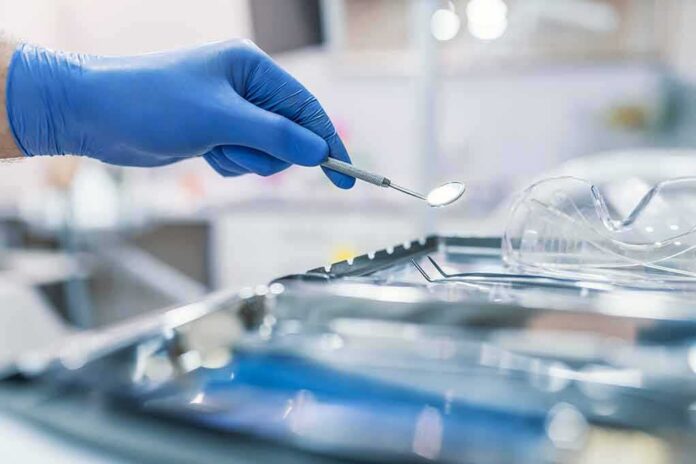
As described in the federal indictment, prosecutors say Rendon Bermudez carried out a wide range of dental procedures without a valid license to practice dentistry. The alleged procedures included braces, teeth whitening, dental cleaning, veneer application, and treatment of cavities. They say he used an electric grinding tool on patients’ teeth, administered anesthesia, and gave prescription antibiotics after procedures. Santos Rodriguez is accused of working as his representative in Puerto Rico, scheduling appointments, advertising services on social media, and falsely telling patients that Rendon Bermudez was a licensed dentist. These details paint a picture of a small but active shadow practice built on trust that, if the allegations are proven, was badly abused.
Pattern of fake dental practices and public frustration
The Rendon Bermudez case fits a broader pattern that many Americans find alarming: people pretending to be medical professionals and getting close to patients while regulators and law enforcement only step in after serious harm. Dental fraud experts say these schemes often mix false claims about training with illegal billing or cash-only deals, making it hard for patients to know who to trust. In other states, news outlets have reported on siblings in Orlando accused of running a fake dental clinic for years, shaving down teeth for veneers and leaving some patients disfigured or badly infected. These stories reinforce the sense that ordinary families are often the last line of defense against fraud that the system should catch earlier.
For many people on both the right and the left, this case also taps into deeper anger about how the federal government works. Officials announce big “takedown” operations with tough talk, yet a defendant who is serious enough to charge with mail and wire fraud can still cut off a GPS monitor and flee the country. That feels like basic incompetence to citizens who already believe elites protect themselves while everyday people suffer. At the same time, health care remains expensive and confusing, pushing patients toward cheaper, less regulated services where fraudsters can operate. Both conservatives and liberals who fear a “deep state” or distant bureaucracy see stories like this as proof that the system reacts after damage is done, instead of preventing it.
What regular Americans can take from the Rendon Bermudez case
The case against Rendon Bermudez is still an indictment, not a conviction, so he is legally presumed innocent until proven guilty in court. But the detailed allegations from the DOJ and the urgent warnings from the FBI show how much damage an unlicensed provider can do before anyone steps in. For families trying to protect themselves, the lesson is clear but frustrating: always check licenses with state boards, be wary of cut-rate offers, and push back when something feels off. For a country already divided over politics, this alleged fake dentist on the run is another reminder that, across ideologies, many agree on one thing—the system that is supposed to guard our health too often fails, and the people most at risk rarely have the power to fix it.
Sources:
youtube.com, controlandoelejido.com, facebook.com, fbi.gov, forfeiture.gov, dea.gov, noticel.com, beckersdental.com, local12.com, miamiherald.com, yahoo.com, justice.gov
© standardnewsdaily.com 2026. All rights reserved.