Seven shots fired into a car holding a 5-year-old now define a high-stakes clash over federal power and public safety.
Story Snapshot
- Officials say Immigration and Customs Enforcement targeted a man with a prior felony during a Bronx arrest attempt.
- New York City’s police chief says the driver moved the car forward before an officer fired seven rounds, hitting his neck.
- The child in the back seat was unharmed; officers rendered aid, and the driver is hospitalized.
- Homeland Security vows no pause in enforcement as protests and city leaders demand answers.
What Officials Say Happened in Marble Hill
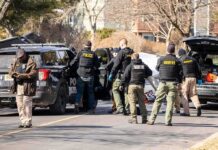
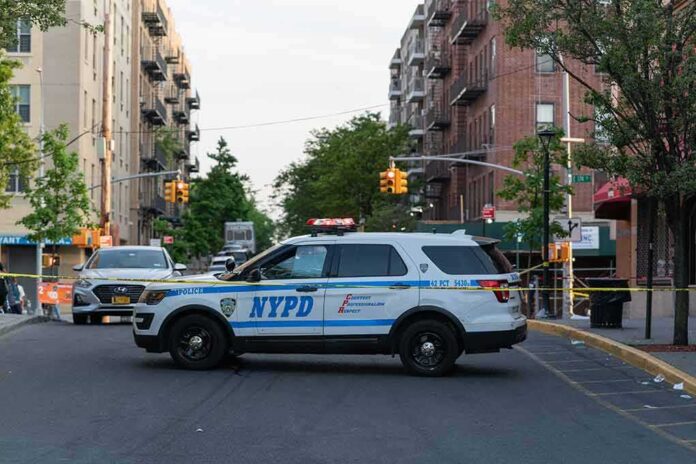
Department of Homeland Security officials said Immigration and Customs Enforcement officers were making a targeted arrest of a Dominican national with a prior grand larceny conviction and multiple prior arrests for assault, robbery, drugs, and weapons possession. New York City Police Commissioner Jessica Tisch said the man, identified as 28-year-old Oscar Belgal, was pulling into a parking space when a federal officer approached with a gun drawn. Belgal then moved the car forward, and an officer fired seven rounds.
Commissioner Tisch said evidence at the scene showed at least one federal agent discharged seven rounds and struck Belgal in the neck below his left ear. Department of Homeland Security officials said agents immediately gave medical aid at the scene. They said the man lived and was taken to a local hospital. They said the Federal Bureau of Investigation and Homeland Security Investigations are on scene, and the investigation is ongoing.
The Child, the Tactics, and the Questions Left Open
Reports across outlets agreed a five-year-old child sat in the back seat and was not harmed; the child later went to a relative. Witness accounts described officers wearing face masks and Department of Homeland Security-branded vests, which can add to public distrust of plainclothes operations in crowded areas. No body-camera, dashcam, or street video has been released to show speed, contact, or angles. That leaves key details about threat and tactics unproven in public so far.
Without video or a sworn statement from the shooter, the record relies on brief agency quotes and press summaries. That limits the public’s ability to judge whether the officer faced an immediate, specific threat from the vehicle. Courts and police policies often stress that shooting at moving vehicles should be reserved for situations where there is an immediate threat of death or serious injury, not to stop a car on its own.
Political Fallout: No Pause vs. Demands to Halt
Homeland Security Secretary Markwayne Mullin said enforcement will not pause in New York after the shooting. He argued that officers must continue operations and that sanctuary policies make arrests more dangerous by pushing encounters into public places. Mayor Zohran Mamdani condemned the shooting and said there is no justification for firing so many rounds into a car with a child inside, urging President Trump to end Immigration and Customs Enforcement operations in the city.
DHS Secretary Markwayne Mullin blasted sanctuary city policies following an ICE shooting in the Bronx, saying they undermine public safety and create an environment where crime can thrive. “When you have sanctuary cities and sanctuary politicians, you endanger the safety of the… pic.twitter.com/rda98GbjJK
— Breaking911 (@Breaking911) October 9, 2026
Protesters gathered outside New York Presbyterian Allen Hospital, where Belgal is being treated, chanting “Immigration and Customs Enforcement out of the Bronx” and calling for accountability and full transparency about what happened. This fast split—federal force framed as necessary by agencies and as excessive by critics—matches a wider pattern seen in immigration operations. Early narratives tend to harden before investigators release full records.
Why This Matters Beyond One Block
For many Americans, this is not just about one arrest. It is about trust. People on the right want officers to take violent offenders off the streets and to do it safely. People on the left want limits on deadly force and clear oversight. Both sides want a government that plays it straight. That requires timely release of video, use-of-force reports, and radio logs to show what officers saw and why they fired, not just statements after the fact.
Accountability Steps to Watch Next
Key records could settle the debate: body-worn camera video if officers wore cameras, nearby surveillance clips, and any dashcam on the block. A reconstruction could map vehicle path, speed, and bullet trajectories. Radio and dispatch traffic could show if agents reported a vehicle assault in real time. The shooter’s sworn report would state their threat perception. Until those are public, the core question—immediate threat or avoidable escalation—remains open to proof.
Sources:
facebook.com, bronx.news12.com, cbsnews.com, aljazeera.com, nbcnewyork.com, newsday.com, nbcnews.com, npr.org
© standardnewsdaily.com 2026. All rights reserved.