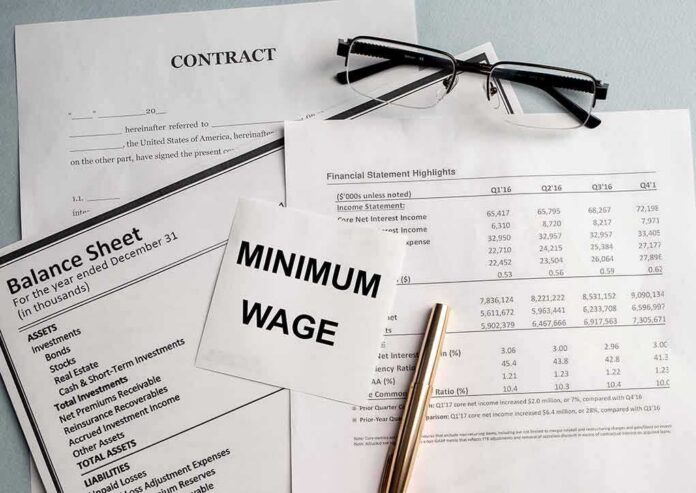
New York will freeze its 2027 minimum wage because a legal “off-ramp” was triggered by economic conditions the state tracks, halting an inflation adjustment.
Story Snapshot
- New York’s law pauses 2027’s inflation-based hike after an off-ramp condition was met.
- The minimum stays $17 in New York City, Long Island, and Westchester; $16 elsewhere.
- The 2023 law ties raises to inflation starting in 2027, with built-in pause triggers.
- Governor Hochul floated a change to restart inflation indexing as soon as March 2027.
What New York Decided And Why It Matters
New York’s Department of Labor said the minimum wage will not rise on January 1, 2027, because one of the law’s “off-ramps” was met. That means the planned inflation-based increase is paused. State pages say the minimum will stay $17 per hour in New York City, Long Island, and Westchester County, and $16 per hour in the rest of the state. Officials describe this as a rule set by law, not a political choice for this year.
In 2023, lawmakers set a new path for how wages move. After set raises through 2026, annual changes would follow a regional inflation measure starting in 2027. But they also added “off-ramps.” These stop increases if certain economic or budget conditions happen. That design is common in wage index plans. It aims to protect jobs during slowdowns, but it can also become a public verdict on the economy’s health.
How The Off-Ramps Work And What Likely Tripped
State summaries say the off-ramps activate when the economy shows stress, like job losses or other set thresholds. New York’s pages do not publish the exact calculation tables with the announcement. They state only that a condition was met, which blocks the inflation raise for 2027. Local reporting has tied the freeze to a jobs benchmark written into the 2023 law, though the official notice stays strictly mechanical in tone.
The bottom line for workers and small business is clarity but little comfort. Workers lose a cost-of-living bump in a year of still-high prices. Owners avoid another step-up in payroll at a shaky moment. Many readers on the right and left may see the same thing: the rules feel automatic when they hurt and slow when they help. That fuels the view that elite policy writers protect their own while regular people ride the shocks.
What Could Change Before Spring 2027
Governor Kathy Hochul has floated a change to state law that could let inflation-based increases restart on March 1, 2027, if lawmakers agree. That would shorten the freeze. The proposal keeps the broad idea of indexing but tries to reduce the chance that one weak stretch blocks a whole year. Whether the Legislature moves on this idea will decide if 2027 ends up as a full freeze or only a delay.
New York lost enough jobs this year to trip the law's own minimum wage freeze: from more than 10 million in January to 9.96 million by July.
.@GovKathyHochul's answer is to change the trigger, not ask why the jobs are leaving. The alarm went off, so she wants to unplug it.— Financial Guys Media Network (@finguys) October 2, 2026
This debate shows a larger tension. Many conservatives blame high costs and weak growth on years of heavy rules and taxes. Many liberals blame deep inequality and low pay for workers. Yet both sides say the system feels rigged. A trigger that stops a raise without a clear, public worksheet is one more reason people doubt the process. Publishing the exact data and math would help rebuild trust that the rule is fair and not a back-room deal.
What To Watch Next
Watch three things. First, the winter jobs reports. If hiring rebounds, pressure will grow to end the freeze sooner. Second, the Legislature’s calendar. If leaders take up the governor’s idea, the pause could end by March. Third, small business surveys. If owners say a sudden hike would force cuts, lawmakers may resist a fast restart. If workers’ groups show rising hardship, momentum for a midyear increase could build.
Why This Fits A National Pattern
Many states and cities tie wages to inflation and add pause switches for downturns. The goal is stability. The risk is confusion and anger when the pause kicks in. New York’s move fits that playbook. The law set the process, the economy met a trigger, and the state froze the rate. The facts are not in dispute. The fight now is over values: protect jobs first, or protect pay from inflation first.
Sources:
thegatewaypundit.com, post-journal.com, dol.ny.gov, ny.gov
© standardnewsdaily.com 2026. All rights reserved.