An undercover video triggered a Trump Justice Department probe into a Texas Democrat group after a staffer called $25 payments a “roundabout way of paying people for their votes.”
Story Snapshot
- Justice Department opened a probe into Texas Majority PAC after a viral video surfaced.
- Staffer on tape described $25 payments for a one-hour Zoom “class,” raising vote-buying concerns.
- Texas Majority PAC fired the staffer and says the program paid for legal grassroots work, not votes.
- Rep. Pat Fallon asked Attorney General Todd Blanche to investigate the program and vendors.
What Sparked The Federal Probe
Townhall published an undercover video on September 16 that showed Sky McAdams, identified as an organizing manager for Texas Majority Political Action Committee, describing a “roundabout way of paying people for their votes.” Coverage of the clip also repeated a concrete figure: $25 for a one-hour Zoom class per participant. Fox News Digital later reported that two sources said the Department of Justice opened an investigation, which raised the stakes well beyond online debate.
New York Post and others echoed details from the video, including the $25 Zoom payment structure, which is the crux of the allegation because cash tied to election activity can cross legal lines if it conditions payment on voting or vote choice. While the core evidence in public view is the undercover clip and related reporting, the federal attention suggests the issue cleared an initial threshold for review under election-crimes guidance.
How Texas Majority PAC Responded
Texas Majority Political Action Committee acknowledged the video’s authenticity but rejected the vote-buying claim. A spokesperson said the video was not digitally altered and that the program pays participants for grassroots organizing work, which they say is common in campaigns. The spokesperson said the staffer was factually incorrect in describing the program and was fired immediately after the video surfaced. That response aims to draw a bright line between legal outreach and illegal inducements.
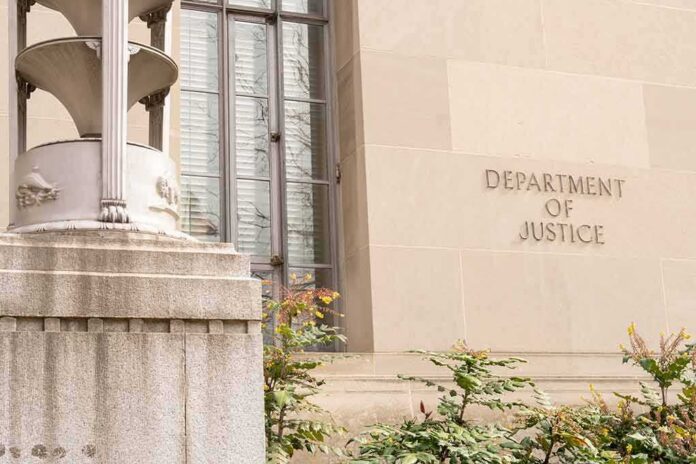
The group’s defense places intent at center stage. Paying people for training or outreach can be lawful, but paying for votes is not. That is why investigators often examine whether money was tied to registration, turnout, ballot proof, or candidate choice. The Department of Justice Public Integrity Section oversees election-crime matters and can review programs that risk blurring those lines. The probe will likely focus on records, contracts, and communications that show how the program actually worked.
What Congress And Investigators Will Look For
Representative Pat Fallon sent a letter urging Attorney General Todd Blanche to investigate Texas Majority Political Action Committee’s program and the vendors named in coverage, including tools cited for a “paid relational program”. Investigators often seek payment logs, attendee lists, training scripts, and vendor agreements to learn if any compensation was tied to voting or proof of voting. Federal law bars paying or offering something of value in exchange for a vote, while allowing legitimate campaign work.
Are Texas Democrats paying voters to vote?
DOJ is reportedly investigating Texas Majority PAC, per Fox News (two unnamed sources), after Townhall's undercover video of its then-organizing manager calling a $25 Zoom class "a roundabout way of paying people for their votes."
PAC:… pic.twitter.com/D2TqjU0NN5
— TexasHoneyBadger🇺🇸 (@Honey_Badger_TX) October 1, 2026
The Department of Justice’s Public Integrity Section provides oversight for election-crime allegations across the country. When media reports spur attention, the section can coordinate with United States Attorneys to review facts, interview witnesses, and secure records. That structure exists to protect the process and maintain nationwide standards for election cases. The current reporting does not show a docketed case number, charge, or indictment, so the matter remains in the investigative stage.
Why This Matters For Election Integrity
Election trust depends on a clear wall between legal outreach and illegal inducements. Paying people for a one-hour Zoom session might be legal if the class is training for campaign work. It becomes illegal if payment is conditioned on voting or how someone votes. The tension in this case comes from the staffer’s phrasing and the $25 offer, which is why President Trump’s Department of Justice moved to review the facts. The facts, not spin, will decide what happened.
Conservatives want clean elections with equal rules for all. This probe is a test of that promise. If records show a lawful program, the public should see it. If evidence shows cash tied to votes, charges should follow. Either way, sunlight is the answer. Citizens deserve elections free from schemes, loopholes, and word games. The law is simple here: do the work, fine; pay for votes, not fine. The country will watch how this gets resolved.
Sources:
foxnews.com, hotair.com, townhall.com, the-express.com, justice.gov
© standardnewsdaily.com 2026. All rights reserved.