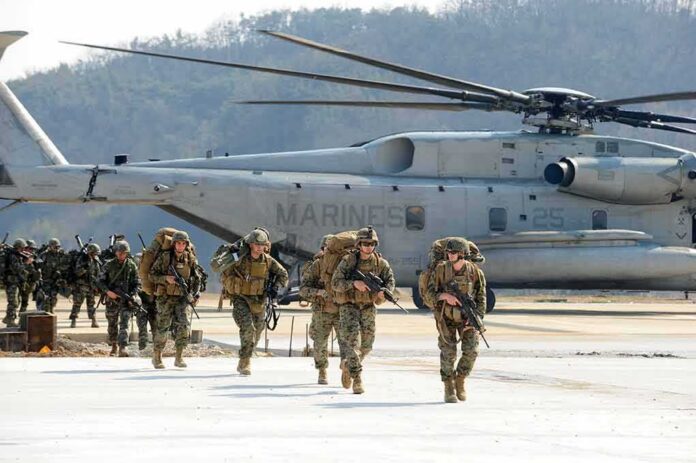
U.S. Central Command says American forces have left Erbil Air Base, formally ending the Operation Inherent Resolve mission in Iraq after 12 years.
Story Highlights
- CENTCOM reports the final U.S. personnel and equipment departed Erbil Air Base, closing the Iraq mission.
- Pentagon framing shifts from a war coalition to an Iraqi-led security effort with normal bilateral ties.
- Coalition headquarters moved to Jordan while counter-ISIS support continues in the region.
- The 2021 transition laid the path from combat to advise-and-assist roles before this final exit.
What CENTCOM Announced About the Final Departure
U.S. Central Command announced it completed the orderly departure of U.S. forces and equipment from Erbil Air Base. The command said this marks the end of the Operation Inherent Resolve mission in Iraq. The move closes a 12-year deployment that began after the rise of the Islamic State group. Reporting describes this as the formal end of the mission inside Iraq, not the end of all regional counter-terror work. The command’s notice anchors the timing and scope of the change.
Pentagon statements frame the change as a success and a handoff to Iraqi forces. Officials described a transition from a wartime coalition to an Iraqi-led security effort with a normal bilateral defense relationship. That means Iraq leads on its own soil, while the United States keeps ties for training, intel sharing, and planning as needed. This framing signals mission completion while preserving tools to help a partner fight terror threats if they reappear.
How This Fits the Long Path From Combat to Advisory Roles
The road to this exit started years ago. In 2021, the United States and Iraq agreed to end the combat role by year’s end. Commanders said troops would remain to advise, assist, and enable Iraqi Security Forces. That shift formally moved U.S. forces out of direct fighting and into support roles. The policy set a clear route toward today’s outcome, where the mission inside Iraq is closed and Iraqi forces carry day-to-day security duties.
Coverage explains that after the combat role ended, a limited U.S. presence stayed behind in non-combat functions. That presence focused on training Iraqi units, sharing intelligence, and helping with planning and logistics. Those activities backed Iraq’s gains against the Islamic State group without leading combat patrols. The final Erbil departure brings that advisory chapter in Iraq to a close and marks the formal handoff to full Iraqi lead on security operations.
What Continues Elsewhere and Why It Matters
Coalition officials say the Combined Joint Task Force for Operation Inherent Resolve now runs from Jordan. That move underscores a geographic shift in command while Iraq assumes the lead at home. Counter-ISIS work continues in the broader region, which shows the United States is not blind to ongoing threats. The distinction is important: the Iraq-based mission ended, but regional vigilance and support to partners still continue outside Iraqi soil.
For years, the U…S relied on military bases to maintain its influence in West Asia. Today, its withdrawal from Iraq is nearing completion.
This is more than just the movement of troops; it reflects a shift in the regional balance that cannot be ignored. pic.twitter.com/kI1p0crQVj— vafakarimi (@vafakarimi03) September 29, 2026
Regional security remains fluid, so strong bilateral ties matter. Iraqi forces have improved since 2014, but terror cells can try to regroup. A normal defense relationship lets Washington help from a distance while respecting Iraqi sovereignty. For U.S. taxpayers and troops, the end of the Iraq mission reduces exposure, lowers costs, and refocuses resources. For America’s enemies, it signals confidence that allies can hold ground without a large U.S. footprint on the front lines.
What Conservatives Should Watch Next
Policy makers will track three things in the months ahead. First, Iraq’s ability to contain the Islamic State group and secure its borders. Second, how Iran-backed militias test Baghdad’s control. Third, how U.S. regional command in Jordan supports partners without drifting into open-ended deployments. The administration presents this as a clean transition that protects U.S. interests while honoring Iraqi sovereignty. Continued clarity on mission scope and costs will matter for accountability.
Why This Marks a Victory and a Vigilance Test
The Pentagon says the mission that helped defeat the Islamic State group in Iraq has ended. That is a victory for American forces, our coalition partners, and Iraqi troops who now lead. It also tests a core conservative aim: finish defined missions, avoid nation-building, and keep a tight, accountable posture. With the headquarters moved and Erbil closed, the United States can keep pressure on terrorists across the region while keeping our troops out of an open-ended ground role.
Sources:
legion.org, kurdistan24.net, military.com, cbsnews.com, foxnews.com, upi.com, townhall.com
© standardnewsdaily.com 2026. All rights reserved.