Two people died, two were hospitalized, and one person was missing after a medevac helicopter plunged into the waters off Catalina Island near Los Angeles.
Story Snapshot
- Officials said a medevac helicopter crashed just after leaving Catalina Island around 8 p.m.
- Five people were aboard; two died at the scene, two were rescued and hospitalized, and one was missing.
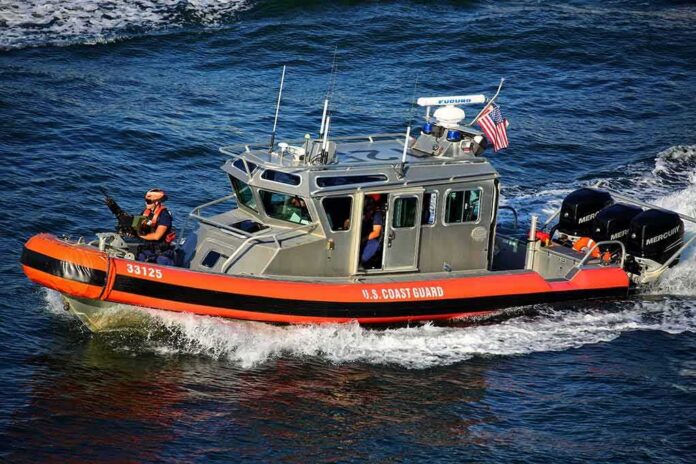
- Los Angeles County Fire, the U.S. Coast Guard, the Los Angeles County Sheriff’s Department, and Avalon Fire led the response.
- REACH Air Medical Services confirmed one of its helicopters was involved.
What officials confirmed on the ground and at sea
Los Angeles County Supervisor Janice Hahn said a medevac helicopter leaving Catalina Island crashed shortly after takeoff. She reported that county fire, sheriff’s deputies, the United States Coast Guard, and Avalon Fire responded and began search and rescue operations. Dispatch logs placed the crash and first calls just before 8 p.m. Crews reached the site near Avalon’s coastline as night fell. Divers, boats, and air assets worked the surf line and the darkness to pull survivors from the water.
Los Angeles County Fire officials confirmed two people died at the scene. They also said two survivors were taken to mainland hospitals. Reports varied on the exact order of the rescues, which is common during fast-moving incidents, but they lined up on the core facts: five aboard, two deceased, two hospitalized, and one missing as searches continued into the night. That final unaccounted person kept the operation active and urgent as the evening turned to early morning.
The helicopter, its mission, and the operator’s first statement
REACH Air Medical Services acknowledged that one of its helicopters was involved and said its immediate concern was the well-being of those on board. The aircraft flew a medical transport mission, often called a medevac flight, which can involve a patient and medical crew or a repositioning leg tied to care. Officials did not release identities or specific roles for each person aboard. Investigators will confirm the flight’s exact purpose once they complete interviews and review logs.
Medical transport flights operate under pressure to move fast, at night, and over hard terrain or open water. Those factors raise risk, which is why standards and training for these crews run high. Federal safety researchers have long flagged weather, night operations, and dispatch pressure as repeat links in fatal accident chains. That does not assign blame in this case. It explains why early facts here look familiar to those who study air medical safety.
The timeline and the search that followed
Reports placed the crash around 7:50 to 8:00 p.m., close to Avalon and Pebbly Beach. Witness calls and agency dispatches converged as responders pushed boats off piers and launched aircraft. Crews pulled multiple people from the water, and medics moved quickly to stabilize survivors for transport to Los Angeles County hospitals. The Coast Guard kept surface and air searches active for the missing person as currents shifted and night visibility narrowed the search window.
#BREAKING Medical Helicopter Crash.
Two people have died and two others were injured another is missing after a REACH Air Medical Service helicopter crashed in the waters just seconds after taking off from Pebbly Heliport on Catalina Island.
There is a search for the missing… pic.twitter.com/zeFCD3AsAe
— Tony Perez (@Tony_MNNews) October 1, 2026
The Los Angeles County Sheriff’s Department supported the perimeter, while Los Angeles County Fire divers and the Coast Guard focused on the water. Avalon Fire handled shoreline staging and scene support. That joint posture is standard near Catalina, where island geography forces agencies to share assets. The coordination worked as designed: rescue first, then recovery if needed, and only then the deeper technical work of aviation accident investigation.
What comes next: investigation and public answers
The National Transportation Safety Board will collect flight data, maintenance logs, crew training records, and weather information to map out what failed and why. The Federal Aviation Administration will support regulatory reviews. Coroner records will confirm identities and cause of death. Hospital officials will set what they can share about patient condition. These steps take time, but they produce the only answers that matter: facts that stand up in daylight, in courtrooms, and in cockpits.
Common sense says rescue first, facts second, talking points last. Officials followed that order. Early reports can differ on details like exact timing or rescue counts, but the backbone here is firm. A medevac helicopter crashed near Avalon around 8 p.m. Five people were aboard. Two died, two survived and were hospitalized, and one person was still missing during the night search. That is the story to carry forward until investigators publish more.
Sources:
latimes.com, ktla.com, abc7.com, spectrumlocalnews.com, kcra.com, data.ntsb.gov
© standardnewsdaily.com 2026. All rights reserved.