
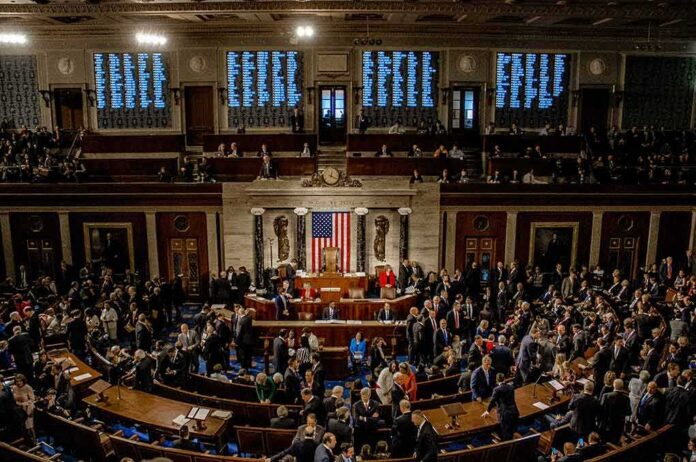
House Democrats handed Hakeem Jeffries a 251–11 nomination win, but closed-door dissent hints at hard fights ahead.
Story Highlights
- Democrats nominated Jeffries 251–11 in a closed caucus vote while he ran unopposed
- Jeffries would be the first Black Speaker if he wins the full House vote
- Progressive holdouts sought commitments on health care and Israel policy before backing him
- The nomination shows unity on paper, but 218 floor votes are still required
What Democrats Decided Behind Closed Doors
House Democrats selected Hakeem Jeffries as their nominee for Speaker with a 251–11 vote in a closed-door session on November 18, 2026. Reports said Jeffries ran unopposed and secured a decisive mandate within the caucus. The tally came after Democrats recaptured the House majority in the midterms, setting up a real chance to govern in the next Congress. The vote made clear who will lead Democrats, but it did not reveal individual member reasons for dissent or specific internal deals reached.
Jeffries has led House Democrats since 2023, when he succeeded Nancy Pelosi as the party’s top figure. He formally launched this bid with a dated “Dear Colleague” letter on November 4, asking for support to become the 57th Speaker. That letter set a public marker for his intentions and leadership pitch. Supporters see continuity and experience. Critics want concrete policy terms attached to that promise. The letter itself confirms his bid, not policy outcomes or enforcement tools.
Why This Matters for the Speakership Vote
The caucus result does not equal victory on the House floor. Jeffries still needs a majority of the full chamber, often framed as 218 votes, when members vote publicly. The strong caucus tally suggests momentum, but it does not lock in every member under the lights. Recent Speaker fights show that floor votes can split even when a party seems unified. That gap creates leverage for factions that want firm commitments before they deliver final support.
Several progressive newcomers and activists pressed for pledges on two flashpoints: a vote on Medicare for All and tighter limits or bans on certain arms sales to Israel. Coverage described seven progressive members who said they voted “no” while talks continued, noting “meaningful progress” but unfinished work. Protesters also confronted Jeffries at a party event over health care and Gaza, signaling public pressure will not fade. Those demands test unity as Democrats move from nomination to governing.
The Historic First and the Policy Crossroads
If elected by the full House, Jeffries would become the first Black Speaker in United States history. That milestone carries weight in a Congress that often looks distant from everyday life. But symbolism and policy will collide fast. Voters across the spectrum are tired of gridlock, rising costs, and elites who seem to play by different rules. A Speaker must turn promises into bills, floor votes, and results people can feel at the kitchen table.
Hakeem Jeffries Wins House Democrats’ Speaker Nomination With 251 Votes https://t.co/hWZJDGmUon
— HeadlinesXtra US (@eheadlyn) November 18, 2026
Americans on the right and left share a growing belief that Washington serves the powerful first. Closed caucus votes feed that distrust, even when they are standard practice. The 251–11 tally signals strength, yet the dissent reminds us that real accountability happens in public votes and clear agendas. The next test is simple: can Jeffries secure 218 votes without papering over hard policy lines on health care, immigration, spending, and foreign aid? That answer will show if change is real or only brand new packaging.
Sources:
redstate.com, npr.org, abcnews.com, jeffries.house.gov, washingtonexaminer.com, nytimes.com, wfla.com, washingtonsun.com, bracingviews.com
© standardnewsdaily.com 2026. All rights reserved.