Trump’s claim that the Iran ceasefire is “over” lands as fresh strikes hit targets tied to the conflict, while his team still keeps talks alive.
Quick Take
- Trump said the ceasefire with Iran is “over” during remarks at the NATO summit.
- U.S. Central Command said it hit more than 80 Iranian military targets after attacks on three commercial ships.
- Trump also said negotiators can keep talking, even after his hardline public message.
- Iran and its Revolutionary Guard Corps say the United States violated the ceasefire first.
Trump Says the Ceasefire Has Ended
President Donald Trump said the ceasefire with Iran was “over” after new attacks and retaliation on both sides. He made the comments at the NATO summit and tied his decision to Iranian strikes in the Strait of Hormuz, a vital shipping lane for world oil traffic. Trump also used unusually harsh language, calling Iran’s leaders “sick people” and saying he no longer wants to deal with them.
Trump’s message was not a formal legal order. He said, “To me, I think it’s over,” which leaves room for political interpretation. That matters because he also said negotiators could keep talking if they wanted, which suggests the diplomatic channel has not fully shut down. For readers who want a clean break, the public message sounds final. For lawyers and diplomats, the wording leaves real gray area.
How the Fighting Escalated
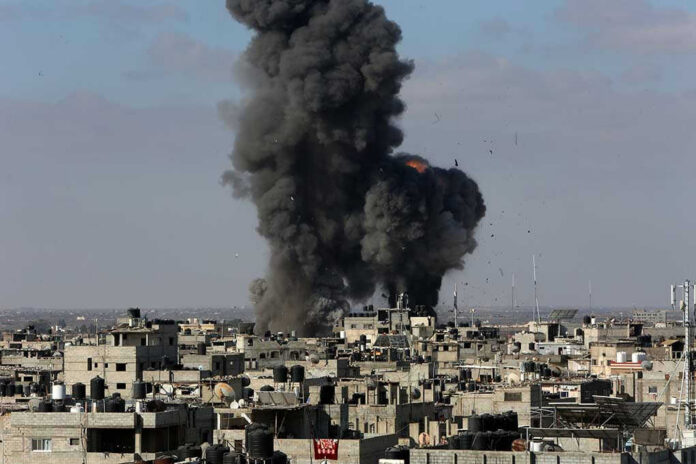
U.S. Central Command said American forces struck more than 80 Iranian military targets after attacks on three commercial vessels in the Strait of Hormuz. The targets included air defense systems, missile storage, drone storage, coastal surveillance, naval capabilities, and other military infrastructure. Those strikes fit the administration’s case that it was degrading Iran’s ability to attack shipping and U.S. interests in the region.
Trump’s public version of events also rested on a trust issue. He said Iran agrees to terms in private, then tells the press it never made a deal. That charge matches his larger claim that Tehran is acting in bad faith and cannot be trusted at the table. Supporters of a strong American response will see that as proof that delay only invites more attacks and more deception.
Iran Pushes Back on Who Broke the Deal
Iran’s Revolutionary Guard Corps says the United States violated the ceasefire first by launching an airstrike. Iranian officials also say their response was aimed at military sites, not commercial ships. That creates a direct clash over who broke the agreement first, and the public record in the research package does not resolve that fight with independent forensic proof.
The ceasefire itself has already been under strain for weeks. Reports in the research package say both sides have violated it at different times, and earlier talks also relied on a temporary framework rather than a fully settled peace treaty. That helps explain why one side can call the deal dead while the other says it is still alive. The fight is not only military. It is also about who controls the story.
What the Next Phase Looks Like
Even with Trump’s “over” declaration, the administration has not fully closed the door on diplomacy. Reuters and other coverage in the research package say talks on a longer deal have continued, and Trump has at times described the negotiating process as ongoing. That means the country may be looking at a familiar pattern: public hard lines, private talks, and a fragile pause that can crack again at any moment.
For conservatives, the bigger issue is simple. A weak ceasefire invites more chaos, threatens energy routes, and puts American forces back in the crosshairs. The Strait of Hormuz carries a huge share of global oil trade, so any new round of attacks can hit fuel prices, shipping, and U.S. leverage abroad. Trump is signaling that he wants strength, not endless managed decline, but the mixed signals show how unstable the situation remains.
Sources:
redstate.com, politico.com, en.wikipedia.org, axios.com, instagram.com, youtube.com, britannica.com
© standardnewsdaily.com 2026. All rights reserved.