standardnewsdaily.com — America is about to test whether a 30-year-old act of state violence can still haunt a retired communist strongman in a very real United States courtroom.
Story Snapshot
- Federal prosecutors are moving to indict former Cuban president Raúl Castro over the 1996 Brothers to the Rescue shootdown that killed four men.[1][3]
- Families of the victims and Miami’s exile community see the case as overdue justice, not ancient history.[2]
- The evidence reportedly includes intelligence intercepts and alleged audio tying Castro to the shootdown order.[3]
- The indictment could be more powerful as a symbol than as a practical path to a prison cell.[3]
A Three-Decade-Old Shootdown Roars Back to Life
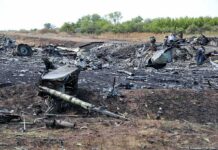
Federal prosecutors and Florida officials are converging on a case most Americans barely remember but Miami will never forget: the 1996 shootdown of two Brothers to the Rescue planes by Cuban fighter jets, which killed four volunteers over international waters.[1][2] The group searched the Florida Straits for desperate rafters fleeing the island. Families of Mario de la Peña, Carlos Costa, Pablo Morales, and Armando Alejandre have waited three decades for someone in Havana’s ruling circle to face American justice.[2]
United States officials now say that “someone” is 94‑year‑old Raúl Castro, former president, defense chief, and enforcer of his brother Fidel’s revolution.[1][3] Reports describe the Justice Department preparing charges that tie him directly into the chain of command that green‑lit the shootdown.[3][4] For the exile community, this is not a legal curiosity; it is the moment they have long demanded, when the man they blame for decades of repression finally sees his name on an American criminal docket.
What Prosecutors Say They Have On Raúl Castro
Coverage from Miami and Washington describes a case built around both old and newly leveraged evidence. Commentators point to alleged audio recordings, reportedly obtained years ago by the Miami Herald, that capture Raúl Castro giving orders related to the shootdown operation.[3] Lawmakers previously cited these recordings in letters pushing for action. Federal investigators are said to be pairing such material with intelligence intercepts and long‑standing records about Cuban air-defense communications on the day the planes were destroyed.[1][3]
The legal theory appears straightforward, even if the politics are not. Prosecutors would argue that civilian planes flying in international airspace were targeted by military jets, in violation of international norms and United States law, and that Castro personally authorized or ratified the attack.[1][3] Analysts note that prior civil cases and international findings have already treated the shootdown as an unlawful killing.[2] The unresolved piece has always been direct personal accountability: not which aircraft fired the missiles, but which leader made the decision that four unarmed fliers would not return home.
Justice, Symbolism, And The Exile Community’s Long Memory
Little Havana’s reaction to the indictment talk can be summed up in two words repeatedly heard on local streets: “About time.” Cuban Americans interviewed outside iconic spots like Versailles Restaurant and the Freedom Tower say this is not revenge; they call it the bare minimum of justice for men they view as humanitarians shot out of the sky.[4] Many attended vigils for years, watching the aging faces of parents and widows who feared they would die without seeing any real accountability.[2]
For that community, the case also scrapes at a deeper wound. Brothers to the Rescue was not just rescuing rafters; it symbolized the hope that someone, somewhere, would stand between Castro’s regime and the people risking everything to escape it.[2] Shooting those planes down sent a brutal message: Havana would punish even those who helped the desperate. When American conservatives talk about standing with dissidents and opposing communist tyranny, this is the kind of moment they mean. A delayed indictment signals that some lines still matter, even decades later.[1]
Can A Nonagenarian Dictator Ever See The Inside Of A Cell?
Legal experts and foreign policy analysts point out the obvious catch: Cuba is not extraditing Raúl Castro to Miami.[3] Havana has long rejected American criminal claims against its officials, and there is no treaty mechanism that will magically deliver him to federal marshals. Some call the looming case “mostly symbolic,” a marker on the historical record rather than a prelude to a perp walk. Even so, symbolism has teeth when it intersects with travel, sanctions, and diplomatic isolation.
By JOSHUA GOODMAN, ALANNA DURKIN RICHER and ERIC TUCKER MIAMI (AP) — The Justice Department is preparing to seek an indictment against former Cuban President Raúl Castro, three people familiar with the matter told The Associated Press on Frid… https://t.co/VEJAMjmw8W
— Capital Gazette (@capgaznews) May 15, 2026
An indictment would make Castro radioactive anywhere friendly to United States law enforcement, limiting future movement and freezing any reachable assets.[1] It would also formalize, in a court document, the narrative that many in Miami have repeated for years: that the shootdown was not a tragic accident, but a deliberate decision by the man who once ran Cuba’s Ministry of the Revolutionary Armed Forces. For Americans who still believe in moral clarity, putting that accusation into black‑and‑white legal language matters, even if the defendant never sits at the defense table.[1][3]
Sources:
[1] Web – DOJ Seeks Raúl Castro Indictment Over 1996 Brothers to the …
[2] Web – Florida Reopens Investigation into Raúl Castro Over 1996 Brothers …
[3] YouTube – Raúl Castro could face charges in Brothers to the Rescue shootdown
[4] YouTube – Feds to announce Raúl Castro’s indictment in 1996 shootdown
© standardnewsdaily.com 2026. All rights reserved.