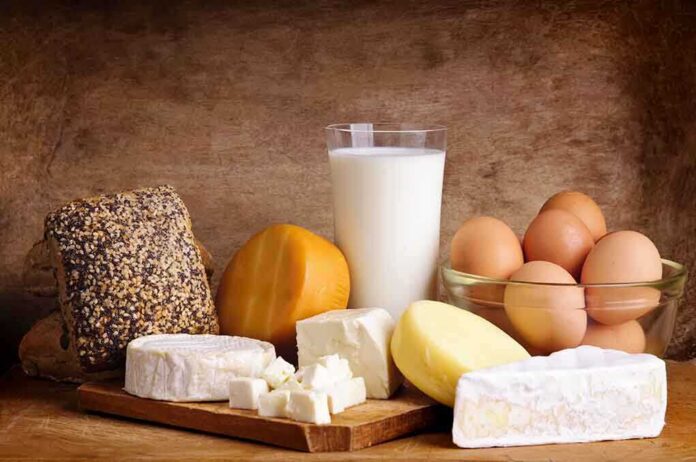
When a private, global initiative can steer how your milk is made without a single vote in Congress, both farmers and families have reason to ask who is really calling the shots.
Story Snapshot
- A dairy-sector coalition is advancing methane-cutting plans, measurement, and on-farm practice changes across the supply chain [1][2][5][6].
- Backers say nearly 40% of global milk production is represented, signaling meaningful market influence even without government mandates [1][6].
- U.S. dairy leaders frame the goals as voluntary and tied to 2050 greenhouse-gas neutrality, not legal requirements [4][5][6].
- Critics warn that “voluntary” targets plus data reporting can become de facto conditions for selling milk, but direct procurement mandates are not documented here [2][5][6][8].
What Pathways to Dairy Net Zero Seeks to Change
Global Dairy Platform launched Pathways to Dairy Net Zero to drive emissions reductions through production efficiencies, rigorous measurement, and methane action plans across the dairy value chain [1][2][5][6]. Guidance for dairy-sourcing companies urges businesses to measure emissions, build a Dairy Methane Action Plan, and disclose progress, elevating data and reporting as core features [2][5][6]. Supporters frame the effort as industry-led rather than state-imposed, with leaders saying dairy can “lead this transition” while coordinating farms and firms of all sizes [1][5].
The initiative’s reach amplifies its potential leverage: launch and program materials say participating organizations represent roughly 30% to nearly 40% of global milk production [1][6]. That scale matters because large buyers can diffuse standards through contracts, financing, and expectations even without legislation. However, the record presented here does not include supplier codes, purchase agreements, or enforcement clauses that tie milk access explicitly to Pathways metrics or practices [2][5][6][8]. The absence of those documents limits firm conclusions about procurement pressure.
Inside the U.S. Dairy Net Zero Strategy
The U.S. Dairy Net Zero Initiative links on-farm pilots to 2050 environmental stewardship goals that target greenhouse-gas neutrality, improved water outcomes, and potential revenue diversification [4]. The menu of practices—such as anaerobic digestion, renewable fertilizers, manure covers and flares, nutrient and water recovery, and lagoon-reducing drying technology—signals concrete operational changes for many farms [4]. Program language remains voluntary, emphasizing research, technical assistance, and pragmatic action rather than mandates or penalties endorsed by law or regulation [4].
The Nature Conservancy’s summary describes farmer support that includes tailored planning, multi-year best-management guidance, and incentive payments, reinforcing a support-first posture rather than command-and-control [3]. Proponents contend that better productivity and resource efficiency can lower emissions and sustain farm viability [1][3]. Critics counter that measurement and monitoring frameworks can create compliance-like infrastructure that shifts power to data gatekeepers, yet the provided sources do not include privacy terms or data-sharing contracts to confirm or refute that risk [2][5][6][9].
Voluntary Collaboration or Soft Regulation by Supply Chain?
Pathways materials repeatedly describe a collaborative, voluntary movement that will “support action” over decades [5][6][9]. That framing aligns with a wider agricultural trend where climate goals advance through industry standards and buyer expectations rather than statutes. Supporters say this speeds innovation and avoids one-size-fits-all rules. Skeptics on both left and right worry that private coalitions can set economic conditions without democratic oversight, disadvantaging smaller operators least able to absorb new costs [1][2][4][5][6][8][9].
1/ 🚨 ANOTHER DAY, ANOTHER BATTLE 🚨
Dairy farmers are vital in rural America, but now face radical ESG mandates disguised as “sustainability.” As @HL_Impact notes, Pathways to Dairy Net Zero will burden small farms with costly compliance.
Let’s look at the facts and ask the… https://t.co/6YsIKZxv8i
— Secretary Brooke Rollins (@SecRollins) May 13, 2026
The evidence set here draws mainly from program and partner pages, which confirm ambition and scope but do not supply farm-level cost accounting, contract clauses, or opt-out rights [1][2][3][4][5][6][8][9]. That limitation leaves key accountability questions open: Who owns farm emissions data? Do lenders or processors incorporate these metrics into underwriting or procurement? Are incentives sufficient to offset capital and operating costs for digesters, covers, or drying systems on small and mid-sized farms? Until independent economics and governance documents surface, those concerns remain unresolved.
Sources:
[1] Web – Pathways to Dairy Net Zero Initiative Launched
[2] Web – Dairy-Sourcing Companies – Net Zero Action Accelerator
[3] Web – Dairy Industry Aims for GHG Neutrality – The Nature Conservancy
[4] Web – [PDF] U.S. Dairy Net Zero Initiative
[5] Web – About the Initiative – Pathways to Dairy Net Zero
[6] Web – Pathways to Dairy Net Zero: Home
[8] Web – Our Approach to Sustainable Dairy Farming | Mars Global
[9] Web – P2DNZ – Dairy Sustainability Framework
© standardnewsdaily.com 2026. All rights reserved.