
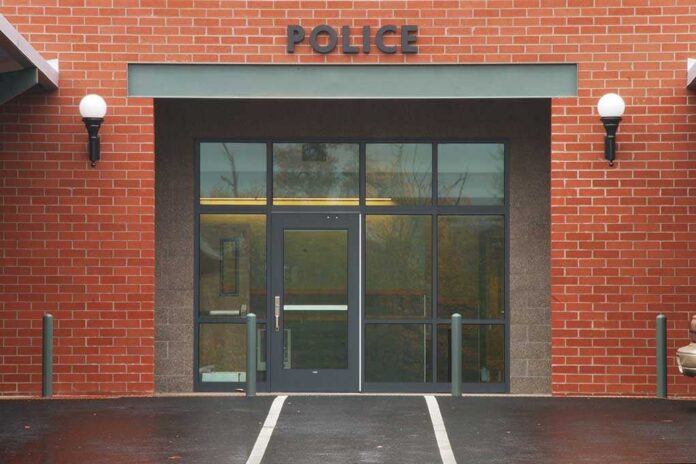
A small-town mayor just tried to wipe out his entire police department after a dispute tied to his wife, and the blowback now raises serious constitutional and rule-of-law concerns for every American who values accountable government.
Story Snapshot
- A posted notice announced the Cohutta, Georgia police department was dissolved and all personnel terminated [3].
- The mayor denied retaliation and framed the move as a management change, while the council and attorney flagged charter violations [1][3].
- County deputies temporarily covered policing duties during the shutdown [1].
- The town council quickly reinstated the officers and promised back pay [1][3].
What Happened In Cohutta, Georgia
Local reporting shows residents in Cohutta found a door notice credited to Mayor Ron Shinnick stating the police department was dissolved and all personnel were terminated, a sweeping action that stunned the town of roughly 850 people [3]. Coverage indicates the decision followed months of tension over complaints involving the mayor’s wife and access to municipal systems, culminating in a burst of social media scrutiny and town hall friction [2][3]. The mayor publicly denied retaliation and offered no detailed, document-level rationale beyond asserting the need for change [3].
CBS News Atlanta reported that when no Cohutta officers were on duty, the Whitfield County Sheriff’s Office assumed city law enforcement services, ensuring calls still received a response despite the local shutdown [1]. While that contingency protected residents, the arrangement underscores the destabilizing nature of dissolving an entire department at once. FOX 5 Atlanta described residents as embarrassed and officials as alarmed by the disruption, with the mayor comparing his decision to changing a coach, a framing critics said trivialized public safety stakes [3].
Why The Town Council Reversed Course
The town attorney advised that the mass termination did not follow the Cohutta charter’s rules, including a notice provision before suspending or removing employees, and the council moved to reinstate the force with back pay shortly after the mayor’s action [1]. FOX 5 Atlanta reported the attorney’s view that the mayor failed to notify the council and violated established procedures, an assessment that directly undercut the unilateral dissolution [3]. The quick reinstatement signaled institutional rejection of the process and sought to restore local stability and trust.
The sequence added confusion. Earlier, the police chief, mayor, and town attorney had appeared together, reading a statement suggesting disputes had been mediated and concerns resolved. Soon after, the department was suddenly dissolved, despite that public signal of progress [3]. That whiplash fueled perceptions that personal disputes spilled into official actions without a transparent, documented cause. The absence of a signed directive explaining facts and legal authority leaves voters and officers sifting media quotes rather than clear records [3].
The Dispute Over The Mayor’s Wife And Sensitive Access
FOX 5 Atlanta reported officers filed formal complaints alleging the mayor’s wife, Pam Shinnick, retained access to payroll and personnel records after her termination, raising workplace-governance and privacy concerns [3]. A town hall video summary similarly referenced officer concerns about continued access to personal and classified information [2]. However, the public record shown in current reporting does not include the actual complaint texts, access logs, or an investigative finding that would confirm the scope or veracity of those concerns, limiting what citizens can conclude confidently [2][3].
Cohutta mayor fires entire police department https://t.co/eIgT6WW8BD via @YouTube
— Grant Bryant (@GrantBryant15) May 11, 2026
Mayor Shinnick denied retaliation and cast the overhaul as an organizational reset, saying it was simply time for a change, but did not release a detailed written justification that connects facts to legal authority and proportional response [3]. Without those primary documents, the public cannot weigh whether individualized remedies—like restricted permissions, audits, or targeted discipline—would have sufficed instead of mass termination. That gap invites the perception of personal influence and fuels anger about government overreach and disregard for due process.
Why This Matters To Constitutional Conservatives
Small towns are often the front line for constitutional norms, especially due process, limited government, and equal treatment under the law. When a mayor dissolves an entire police department amid a family-related dispute and without following the charter, citizens see the danger of concentrated power edging past lawful guardrails [1][3]. Even if a security concern existed, the remedy must respect established procedures, provide clear documentation, and avoid the appearance of punishing protected complaints or speech by public employees.
Conservatives support law and order, but law and order starts with leaders obeying their own rules. Cohutta shows why charters, notice periods, and council oversight exist: to slow rash actions, force transparency, and ensure accountability. Residents deserve to see the mayor’s written termination directive, the officers’ complaint texts, and any system access logs. Those records would allow citizens to judge whether this was prudent administration or a violation of trust that put politics before public safety [1][2][3].
What Accountability Should Look Like Next
Citizens and council members should demand release of the charter provisions governing employee removal, the exact timeline of mayoral communications, and any internal legal opinions that justified the attempted dissolution. If the town charter requires notice and the mayor skipped it, corrective action and training are baseline steps, with potential legal review to prevent recurrence [1][3]. Transparent disclosure protects officers, residents, and taxpayers while restoring confidence that policing decisions follow law, not personal grievance.
The Whitfield County Sheriff’s Office stepped in to keep Cohutta safe, and the council reinstated the department to stabilize services [1][3]. That is the right direction. Now the town needs documents, not sound bites. Constitutional government depends on process as much as outcomes, and every official—no matter how small the town—must respect the limits of office to preserve liberty and public safety together.
Sources:
[1] Web – Small Georgia town reinstates officers days after the mayor dissolved …
[2] YouTube – Cohutta Town Hall addresses police firings, mayor’s authority; no …
[3] Web – Why a Georgia town’s entire police force was fired and …