Ninety miles from Key West, Cuba has quietly amassed over 300 military drones — and U.S. intelligence says Havana is now discussing using them against American targets.
Story Snapshot
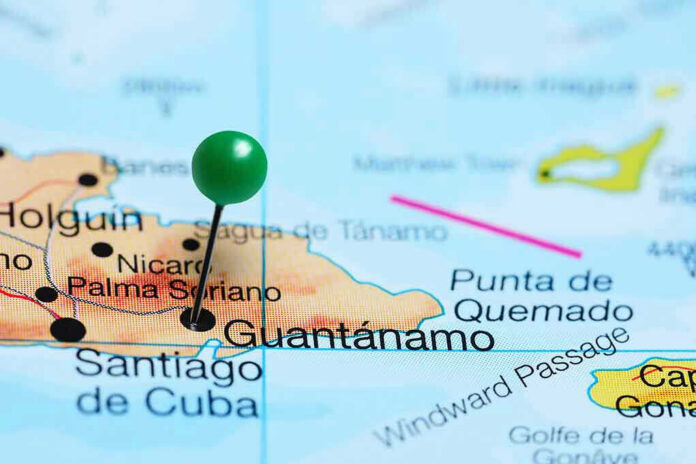
- Axios reported May 17, 2026, that Cuba secured more than 300 military drones, sourced from Russia and Iran, and began discussing strikes on Guantanamo Bay, U.S. naval vessels, and possibly Key West, Florida.
- U.S. officials estimate approximately 5,000 Cuban soldiers fought alongside Russian forces in Ukraine, with some returning home carrying firsthand knowledge of drone warfare tactics.
- Cuban authorities reportedly requested additional drones and military assets from Russia within the past month, suggesting the buildup is ongoing rather than static.
- The core intelligence remains classified, meaning the public cannot independently verify drone quantities, types, or the alleged intent to strike American targets.
What U.S. Intelligence Is Actually Claiming
Axios broke the story May 17, 2026, citing classified intelligence and a senior U.S. official who described the situation in stark terms: “When we consider these technologies being so nearby, along with a variety of malicious actors from terrorist organizations to drug cartels, Iranians, and Russians, it raises alarms. It is an escalating danger.” [1] The report states Cuba secured over 300 military drones and that Cuban officials recently began internal discussions about targeting the U.S. base at Guantanamo Bay, American naval vessels operating in the region, and potentially Key West itself. [1]
The drone supply chain reportedly runs through Russia and Iran — two nations that have already demonstrated they will arm proxy forces with one-way attack drones. Iran’s loitering munitions have been deployed extensively in Ukraine and the Middle East, and analysts have documented how rapidly that technology transfers across authoritarian networks. [8] Cuba acquiring over 300 such systems is not a theoretical exercise. The proximity to the American mainland makes even a modest strike capability genuinely consequential in ways that a similar buildup in a distant country simply would not be.
The Cuba-Ukraine-Russia Battlefield Connection
The most underreported detail in this story is not the drones themselves — it is the human intelligence pipeline behind them. U.S. officials estimate roughly 5,000 Cuban soldiers participated in Russia’s invasion of Ukraine, with some returning home and briefing Cuban military leadership on the real-world effectiveness of drone warfare. [1] Russia reportedly compensated Cuba approximately $25,000 per soldier. [1] That means Cuba did not just buy hardware. It bought knowledge from a live battlefield where one-way attack drones have reshaped modern warfare. A nation that understands how to deploy these systems operationally is categorically more dangerous than one simply warehousing them.
Intelligence intercepts cited in the Axios report also suggest Cuban intelligence is actively studying how Iran has successfully resisted American pressure. [1] That is not defensive posturing. That is a government examining a playbook for sustained confrontation with the United States, which reframes the drone acquisition as part of a broader strategic calculation rather than a simple arms purchase.
What the Intelligence Does Not Yet Prove
Intellectual honesty requires acknowledging what this report does not establish. The underlying intelligence is classified, which means no procurement contracts, delivery manifests, satellite imagery of storage sites, or drone model specifications have been made public. [1] The alleged discussions about striking Guantanamo Bay and Key West represent reported intent, not a documented operational order. Intent claims sourced from intelligence intercepts have historically ranged from accurate warnings to analytical overreach, and without knowing the confidence level assigned by the intelligence community, the public cannot calibrate the threat precisely.
@axios reports-#Cuba received 300 long range suicide drones, likely from Iran and Russia, and is preparing to use them against the U.S. base at Gitmo, US Navy, and the Florida Keys, in case of an American attack on Cuba..
— Sandeep Mukherjee (@Libertarian196) May 18, 2026
Cuba has not publicly responded to the allegations. Axios noted only that a Cuban representative could not be reached for comment. [1] That silence does not confirm the claims, but it also does not rebut them. What is clear is that this story moved from a single classified-source report to a transnational news item within hours, amplified by outlets across multiple continents before any independent verification was possible. [2][3] Rapid amplification of security claims is not proof of accuracy, but the speed of pickup does reflect how seriously the international press treated the underlying allegation. When U.S. officials describe a neighbor 90 miles offshore as an escalating danger armed with Russian and Iranian drones and staffed by soldiers who learned their trade in Ukraine, that is not a claim that disappears quietly. It demands scrutiny, verification, and a serious policy response — regardless of what the full intelligence picture eventually reveals.
Sources:
[1] Web – Exclusive: U.S. eyes attack-drone threat from Cuba – Axios
[2] Web – US examining threat from Cuba, which has acquired over 300 drones
[3] Web – CUBA HAS ACQUIRED MORE THAN 300 MILITARY DRONES …
[8] YouTube – IS CUBA NEXT? US Drones Swarm Russian Ally as Havana Warns …