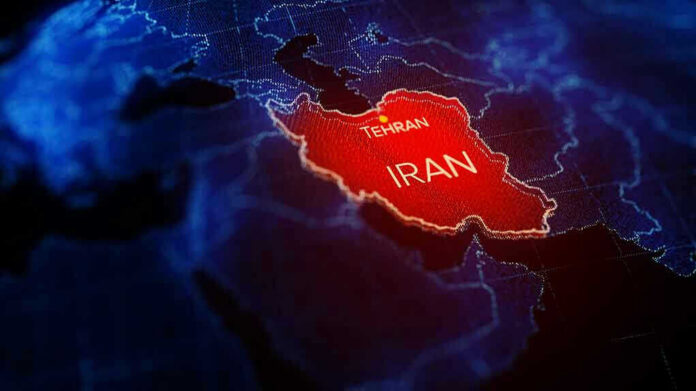
standardnewsdaily.com — As Washington confirms new “self-defense” strikes inside Iran, many conservatives are asking whether our troops are finally being protected—or if America is being dragged into yet another open-ended confrontation with a rogue regime that has long tested our resolve and our resources.
Story Snapshot
- U.S. Central Command says American forces hit Iranian missile launch sites and mine‑laying boats in southern Iran in “self-defense.”
- The strikes come during an announced ceasefire, raising questions about escalation, rules of engagement, and congressional oversight.
- Iran has already fired missiles at a U.S. base and threatened vital shipping lanes like the Strait of Hormuz in response to earlier clashes.[4][5]
- Conservatives now face a familiar dilemma: how to support strong defense and Trump’s leadership while demanding proof, transparency, and clear limits on endless conflict.
What The Pentagon Says Happened In Southern Iran
United States Central Command (U.S. CENTCOM) publicly confirmed that American forces carried out what it called “self-defense strikes” in southern Iran, a statement relayed on air by a CENTCOM spokesperson, Captain Tim Hawkins.[2] According to that account, U.S. forces targeted missile launch sites and Iranian boats that were “attempting to emplace mines,” with the stated goal of protecting U.S. troops from threats posed by Iranian forces.[2] Officials emphasized that these actions were limited, focused, and intended to neutralize specific, active threats rather than launch a broad offensive campaign.[2]
Fox’s LiveNOW coverage, citing both CENTCOM and a Reuters defense reporter, described the operation as taking place “today” in southern Iran and repeatedly stressed that the Pentagon framed the mission as defensive.[2] The statement added that Central Command would “continue to defend our forces while using restraint during the ongoing ceasefire,” signaling an effort to present the strikes as consistent with a broader pause in large‑scale fighting.[2] Notably, early reports carried no mention of U.S. casualties or damage to American equipment linked to this specific round of strikes, reinforcing the portrayal of a pre‑emptive protective action.[2]
Ceasefire Tensions, Nuclear History, And The Risk Of Mission Creep
The strikes did not occur in a vacuum; they landed against the backdrop of a fragile ceasefire and years of escalating confrontation with Tehran over nuclear ambitions and regional aggression.[1][4] In 2025, during what became known as the Twelve‑Day War, the United States Air Force and Navy struck three major Iranian nuclear facilities—Fordow, Natanz, and Isfahan—under “Operation Midnight Hammer,” using B‑2 stealth bombers and Tomahawk cruise missiles.[1] Those attacks reportedly set back Iran’s nuclear program by up to two years, but they also locked both nations into a continuing cycle of retaliation and brinkmanship that has never fully resolved.[1]
Iran’s behavior since then has hardly been peaceful; Tehran launched missiles at a large American base in Qatar in retaliation for the 2025 nuclear strikes, testing the limits of deterrence without producing U.S. casualties.[4] Analysts warned then that Iran might escalate further by threatening to close the Strait of Hormuz, the narrow energy lifeline through which roughly one‑fifth of the world’s oil and gas flows, a move that would hammer global energy prices and American consumers already angry about high fuel costs.[4] This pattern of tit‑for‑tat action, punctuated by ceasefires and “limited” operations, is precisely why many on the right fear creeping entanglement and demand clear, constitutional boundaries on the use of force.
Self‑Defense Or Escalation? Questions Conservatives Are Right To Ask
Because this latest strike took place during an “ongoing ceasefire,” critics argue it can be seen as escalatory, even if the Pentagon labels it defensive.[2] The current public record does not include basic details such as precise coordinates, full rules of engagement, or the underlying intelligence that allegedly showed Iranian boats actively laying mines in key waters.[2] There is also no released bomb damage assessment for Iranian targets, nor independent satellite imagery, to prove exactly what was hit and whether it was necessary to strike at that moment, all of which keeps citizens and Congress dependent on a single official narrative.
For conservative readers who support President Trump’s pledge of “peace through strength,” this creates a tension: we demand that our troops never be left vulnerable, yet we also remember how vague “self‑defense” language has been abused in prior administrations to justify open‑ended operations without a clear authorization for the use of military force.[1][4] Lawmakers who promised to rein in the permanent foreign policy establishment now face pressure to seek war powers notifications, full legal justifications, and classified briefings to ensure these strikes fit constitutional limits and do not morph into another limitless commitment that drains American treasure while our own border remains insecure.
What This Means For U.S. Security, Energy, And Trump’s America First Agenda
Every clash with Iran carries real consequences for American security, energy prices, and regional stability, particularly around chokepoints like the Strait of Hormuz.[4] If Iranian forces were truly preparing to lay mines near vital shipping lanes, neutralizing that threat protects not only our sailors and bases but also global commerce that keeps American families and retirees from paying even more at the pump.[2][4] At the same time, any misstep or miscalculation could invite Iranian missile retaliation on U.S. bases, Israel, or Gulf partners, as seen in recent missile exchanges and threats across the region.[4][5]
Reuters reports, "The US military carried out strikes on Monday in southern Iran against targets including boats attempting to lay mines and missile launch sites, in what it described as defensive actions." pic.twitter.com/ORUP4UdpsQ
— ANI (@ANI) May 26, 2026
For Trump‑era conservatives, the stakes are bigger than one night of airstrikes: they test whether Washington has finally learned to pair a strong military with clear objectives, exit ramps, and accountability to the Constitution. Supporting the self‑defense of our troops does not require blind faith in the same national security bureaucracy that for years pushed endless wars, brushed aside congressional authority, and ignored the cost to working‑class Americans. The next moves—what evidence is shared, what limits are set, and what mission is defined—will show whether this administration truly breaks that pattern or repeats it.[1][2][4]
Sources:
[1] YouTube – U.S. strikes Iran in ‘self-defense,’ officials say
[2] Web – 2025 United States strikes on Iranian nuclear sites – Wikipedia
[4] YouTube – US launches strikes on southern Iran
[5] Web – U.S. forces bomb Iranian missile sites near Strait of Hormuz – Xinhua
© standardnewsdaily.com 2026. All rights reserved.