
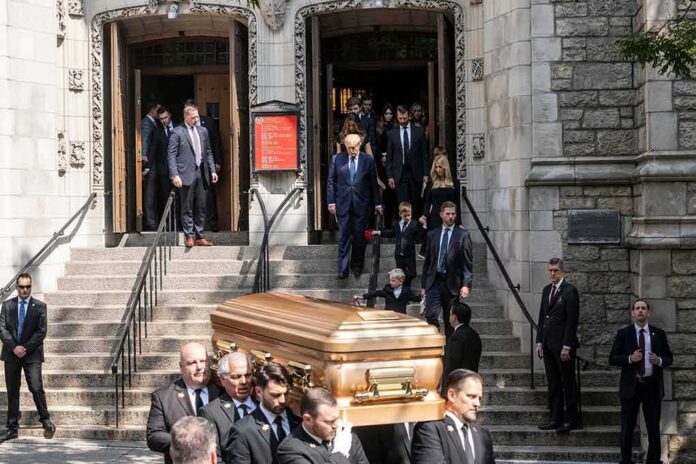
A Toledo cathedral says a priest will offer a funeral Mass for a man in a same-sex civil marriage, citing his conscience and undisclosed pastoral facts.
Story Snapshot
- The cathedral confirmed the priest judged he could offer the funeral Mass in conscience.
- Church law presumes Catholic funerals but allows limits to prevent public scandal.
- A bishop’s guidance stresses case-by-case calls and a path if there were signs of repentance.
- Key facts about the deceased’s repentance or status remain private and unconfirmed.
What The Cathedral Confirmed And What Remains Unknown
Cathedral staff said the celebrating priest reviewed the case and, in conscience, will offer the November 9 funeral Mass for John Arthur Park at Our Lady, Queen of the Most Holy Rosary Cathedral in Toledo. Staff added that outside observers may not know all the pastoral details and declined to share more. The cathedral did not publish a diocesan ruling, a canonical memo, or evidence of repentance. Public records do not confirm whether the Mass occurred or what was said.
Catholic law presumes funeral rites for the faithful, yet it also protects against public scandal. The Code of Canon Law says the dead “must be given ecclesiastical funerals,” but allows denial for manifest sinners if a public funeral would cause scandal, unless there were signs of repentance before death. This tension is the heart of the Toledo case. The core dispute is whether private facts satisfy the exception and prevent scandal.
How Canon Law Frames The Decision
Canon 1176 creates a basic right to a church funeral for Catholics, and says funerals are usually held in the person’s parish church. Canon 1184 narrows this right when a person’s public conduct would make a church funeral a cause of scandal, unless the person showed repentance before death. These canons work together: one creates a presumption for a funeral, the other requires pastors to judge if scandal would result and whether repentance changes the outcome.
Bishop Thomas Paprocki’s public teaching explains how leaders might apply these rules. He said no one is denied Christian burial for having a homosexual orientation alone. He added that someone who entered a same-sex marriage could receive funeral rites if the person repented and renounced the marriage. He also described using a private service when a public Mass would cause scandal. His approach backs a careful, case-by-case review.
Why This Case Fuels A Wider Trust Gap
Supporters of a strict line say a public funeral risks sending a mixed message about church teaching if the deceased remained in a publicly known union without signs of repentance. They argue pastors should clearly avoid scandal or opt for a private service when needed. Critics of the cathedral’s silence say the lack of a public canonical rationale feeds confusion and distrust. They want proof the exception applies here and that the liturgy will not blur doctrine.
Pastors face a communication bind. Privacy rules rightly protect confession and counseling. Still, withholding details leaves space for narratives that the rules change for the well-connected while average people face hard lines. Many Americans, left and right, already think institutions protect insiders first. A simple, non-confessional explanation from the diocese—outlining the canons used and how scandal will be prevented—could help restore confidence without breaching privacy.
What To Watch Next
Watch for a brief diocesan note confirming whether the funeral occurred and how the parish addressed scandal concerns. Look for neutral details: who presided, how the homily framed hope, sin, mercy, and repentance, and whether any public program clarified church teaching. If the diocese cannot share private facts, it can still explain its process. Clear process helps people judge fairness even when specific facts must stay sealed.
Sources:
lifesitenews.com, canonlaw.info, catholic.com
© standardnewsdaily.com 2026. All rights reserved.