
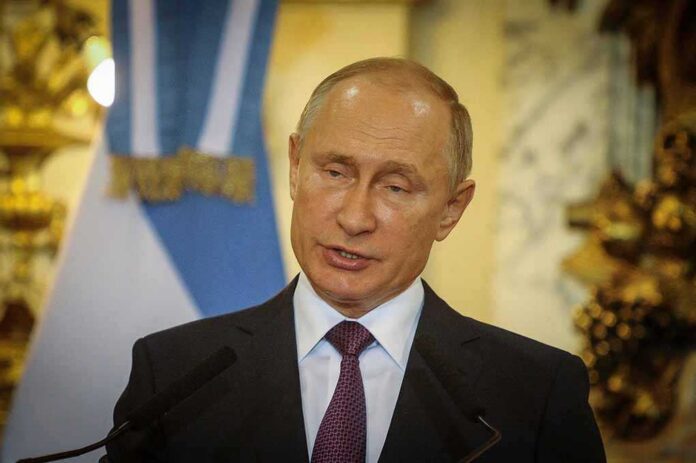
Russia freed 74-year-old American Stephen Hubbard during a meeting with U.S. envoy Steve Witkoff, marking a hard-won victory for an American wrongly held abroad.
Story Highlights
- U.S. envoy Steve Witkoff confirmed Russia released American Stephen Hubbard during talks with Vladimir Putin.
- Putin said Hubbard was taken to Pulkovo Airport in St. Petersburg after his release.
- The State Department had classified Hubbard as wrongfully detained after his 2022 capture in eastern Ukraine.
- President Trump said he raised Hubbard’s case with Putin ahead of Witkoff’s visit.
Confirmed Release During Envoy’s Meeting With Putin
The Associated Press reported that U.S. envoy Steve Witkoff confirmed Russia had released American Stephen Hubbard during his meeting with Vladimir Putin. CBS News reported the same confirmation from Witkoff, anchoring the news to an on-site exchange in St. Petersburg. Russian state outlets and major international media added key details, including Putin’s description of Hubbard’s post-release location. Together, these accounts outline a clear sequence: high-level talks, a public confirmation, and an immediate transfer step.
Russian President Vladimir Putin said Hubbard was taken to Pulkovo Airport following the release, according to reports summarizing state media statements. That detail matched the timeline described by outlets tracking the envoy’s visit. The emphasis on a swift move to the airport suggests Russian authorities facilitated outbound travel quickly. While reports did not publish a transfer order, the statements from both sides aligned on the core fact: Hubbard is out of custody and in transit.
Who Is Stephen Hubbard and Why His Case Mattered
Reports identify Hubbard as a 74-year-old retired teacher and Michigan native, held by Russia after being detained in eastern Ukraine in April 2022. The United States government later designated him as wrongfully detained, which elevated his case to a specialized diplomatic track. That status matters. It signals the government’s view that his prosecution was not a normal criminal matter. It also mobilizes tools and attention aimed at securing safe return for Americans used as leverage abroad.
Reuters reported that a Russian court convicted Hubbard in 2024 and issued a sentence of nearly seven years, based on Russian claims that he fought for Ukraine. U.S. officials and family members disputed those claims, and the trial was closed to the public. The classification by the State Department as wrongfully detained framed Hubbard as an American caught in a political struggle, not a common criminal. That framework shaped the Trump administration’s approach and public messaging throughout the case.
Trump, Witkoff, and the Diplomacy Behind the Outcome
CNN reported that President Trump said he raised Hubbard’s case directly with Putin before Witkoff’s travel, placing the White House at the center of the push. Witkoff’s on-the-ground role in St. Petersburg added the final diplomatic nudge. This two-step effort fits a wider pattern where the United States treats many overseas detentions as leverage situations and uses focused envoy work to break logjams. In this case, the approach produced a concrete result: Hubbard’s freedom.
⚡️🇷🇺🇺🇸 — According to Peskov, Moscow released American Stephen Hubbard on humanitarian grounds as a goodwill gesture, noting that Washington had sought Hubbard’s release for some time. Trump stated that the U.S. transferred no one to Russia in exchange, and Witkoff is planned to…
— MaxOsint Intel (@maxosintintel) October 21, 2026
Hubbard’s release also fits a broader trend. Analysts and officials have noted a rise in cases where states detain Americans and seek advantage. The United States uses the wrongful detention process to escalate these cases to senior levels and keep pressure on the detaining country. That does not settle every dispute or answer every question about past proceedings. But it shows a practical path: speak with one voice, apply steady pressure, and bring Americans home when the window opens.
What This Means for American Strength and Resolve
This outcome shows that clear goals, direct talks, and steady leverage can free Americans. It also reminds us that hostile regimes test our will. When the United States labels a case as wrongful, it signals the stakes and brings the full weight of the government to bear. In Hubbard’s case, coordination between President Trump and envoy Steve Witkoff delivered results. The message is simple: Americans are not bargaining chips, and our people come first.
Sources:
cbsnews.com, apnews.com, bostonglobe.com, cnn.com, bbc.com, foxnews.com
© standardnewsdaily.com 2026. All rights reserved.