Prosecutors ruled two Colorado officers were justified in killing a stabbing suspect after new body-camera video and an outside investigation backed their account of an imminent threat.
Story Highlights
- Investigators said deadly force by two Grand Junction officers met Colorado’s legal standard.
- Body-camera video shows police firing as the suspect’s car moved in the parking lot after a stabbing.
- The district attorney declined charges, citing defense of life for officers and bystanders.
- Advocates questioned firing toward traffic and whether the car was turning away.
What Investigators Concluded About the Shooting
Mesa County’s Critical Incident Response Team reviewed the June 19, 2026 shooting outside a Dairy Queen in Grand Junction. The team found Officers Zachary Diaz and Tim Long legally justified in using deadly force to protect themselves and others. The 21st Judicial District Attorney declined charges. The decision cited Colorado’s standard that an officer must reasonably believe deadly force is needed and lesser force will not stop an imminent threat to life.
Prosecutors said the officers responded to reports of a stabbing inside the restaurant. Officials later identified the suspect as 31-year-old Patti Wilson. Authorities said Wilson stabbed a customer before leaving and getting into a car. The confrontation moved into the parking lot, where officers fired at the moving vehicle. A coroner later said Wilson died from two gunshot wounds suffered during the incident.
What the Videos Show From the Parking Lot
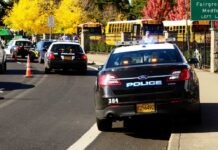
Released body-camera footage shows officers approaching as Wilson’s car moved in the lot. The video captures officers firing at the vehicle. Local reporting based on the footage said the car was not driving directly at officers at the moment they began shooting. The clips also show the vehicle heading toward the busy North Avenue corridor, raising concern about bystanders and traffic in the area near the restaurant.
Grand Junction police later named the two officers who fired their weapons as Diaz and Long, both patrol officers. Coverage of the district attorney’s review included a screenshot from Officer Long’s camera as shots were fired. The review described both officers as believing Wilson posed an imminent threat to them and nearby people when they discharged their weapons. The district attorney stated that belief met the law’s “objectively reasonable” test in that moment.
Why the Charging Decision Matters for Public Trust
The ruling turns on a narrow legal question: what a reasonable officer believed at the exact time shots were fired. That point can differ from what citizens see when they watch video later. Research on body cameras shows footage can help confirm events, yet it rarely erases all dispute. Studies also find mixed effects on force overall, which means cameras aid accountability but do not end hard calls in fast-moving threats.
For many Americans, the process itself is the issue. People on the right and left see a system that protects insiders and leaves victims, taxpayers, and small business workers to absorb the damage. Shoppers were stabbed. Police fired in a lot near traffic. Then lawyers and press releases decided what was “reasonable.” That cycle feeds the view that institutions answer to themselves first, and to the public only after decisions are final.
Critics’ Questions About Traffic Risk and Vehicle Direction
Advocates and some local coverage raised two main doubts. First, they asked why officers fired toward a moving car near a busy street, which could endanger drivers and pedestrians. Second, they argued the car appeared to be turning away at the time officers fired, not directly at them. Those points come from bystander and body-camera video reviews, not a formal reconstruction that contradicts the official finding.
Two Grand Junction, Colorado, police officers will not face criminal charges after fatally shooting a transgender suspect who stabbed an older customer inside a Dairy Queen following a dispute over a Cherry Coke.
Newly released police bodycam footage is shedding additional light… pic.twitter.com/Wx9PKKmI8V
— The Gateway Pundit (@gatewaypundit) November 18, 2026
The district attorney’s office reached the opposite view after the outside team’s probe. Investigators emphasized the stabbing minutes earlier, the moving vehicle as a potential weapon, and the officers’ split-second decision that a deadly threat still existed. The report concluded lesser force would not stop that threat in time. That is why prosecutors declined to file charges against Diaz and Long.
What Comes Next in Grand Junction
Two tracks now matter. First, the police department must review tactics for vehicle encounters in busy areas. Clear rules on shooting at moving cars and redirecting traffic can lower risk for bystanders. Second, the city should share records and training steps in plain language, not legalese. Honest updates help residents who worry both about violent crime and about government that only speaks through closed-door memos.
None of that brings back a life or heals the stabbing victim. But simple steps can show respect for people who live and work on North Avenue. Publish a clear timeline. Explain why other force options were not possible. State what will change before the next call. When leaders do not answer basic questions, citizens assume the worst. And that, more than any one case, is what keeps trust falling.
Sources:
thegatewaypundit.com, gjsentinel.com, kjct8.com, westernslopenow.com, bja.ojp.gov
© standardnewsdaily.com 2026. All rights reserved.