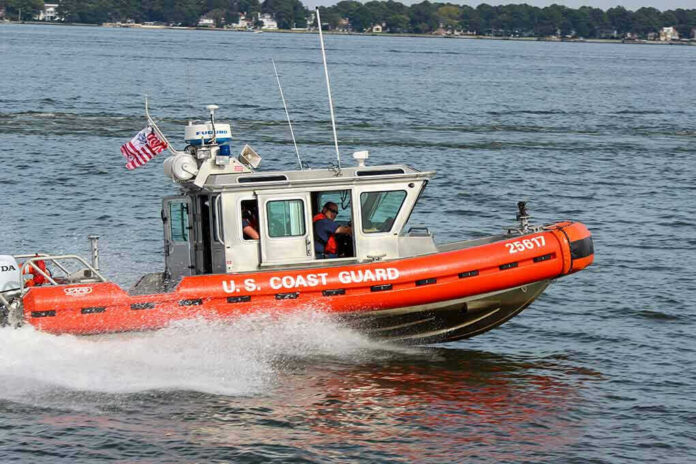
Shots rang out off Key Biscayne as Coast Guard crews disabled a fleeing boat, raising urgent questions and firm support for tough border enforcement.
Story Snapshot
- Coast Guard interdiction near Biscayne Bay involved warning and disabling fire.
- Official materials confirm stepped-up South Florida security and interdictions, not incident details.
- New Coast Guard rules push more use-of-force authority to crews on scene [18].
- Key facts about the boat’s identity and cargo remain unverified in public records.
Coast Guard Presence Intensifies Around Biscayne Bay
United States Coast Guard units and local partners are enforcing a security zone in Biscayne Bay during major public events this summer. The zone runs from Port Boulevard south to the Miami River entrance near Bayfront Park. The enforcement window spans June 13 to July 6. These patrols add to the regular law enforcement and search-and-rescue work in the busy South Florida waters. The Coast Guard Southeast District has also reported recent interdictions and rescues across the region [2][4].
Coast Guard press materials show sustained drug and migration enforcement by cutters, boats, and aircraft. Recent offloads in Florida followed major cocaine seizures at sea. The service describes itself as the nation’s lead maritime law enforcement agency. It uses ships, aircraft, and intelligence to find and stop human trafficking and drug smuggling that target America’s coasts. That mission set frames why a non-compliant vessel near Key Biscayne would draw a fast, armed response [1][25].
What We Know — And What We Do Not
Public releases do not include an incident report for the Key Biscayne shooting. They do not confirm the vessel’s name, flag, crew nationality, or cargo. They also do not show the exact steps taken before shots were fired. We lack the pursuit timeline, radio calls, and a full threat picture. Those gaps matter. They affect how we judge the decision to fire. They also shape public trust as the facts emerge or remain sealed [1][2][4].
Even with missing files, this interdiction tracks with known tactics. The Coast Guard uses a force continuum at sea. Crews start with commands and warnings. They can escalate to warning shots and then to engine-disabling fire if a boat will not stop. That approach has long roots, including during Prohibition. Airborne use of force was developed in the late 1990s to counter faster smuggling threats. The policy focuses on minimum force needed to end the danger and compel compliance [19].
New 2026 Rules Put More Authority at the Point of Contact
In March 2026, the Coast Guard delegated surface use-of-force authority to commanding officers and pursuit coxswains. Before this change, crews needed a flag officer’s permission to move up the force scale. The updated policy lets on-scene leaders act faster when a vessel refuses orders and tries to flee. An official case example under the new rules described disabling an outboard and finding eight migrants aboard, who were then turned over to Border Patrol [18].
This shift has two results. First, it speeds interdictions and can lower risk to both crews and suspects by ending a chase sooner. Second, it raises the bar for documentation and transparency after shots are fired. When decisions move to the front line, after-action records matter more. They show whether warnings were given, targets were limited to engines, and non-lethal options were tried first. That proof protects the mission and public confidence [18].
South Florida’s High-Tempo Mission Space
South Florida waters face constant pressure from traffickers and illegal migration groups. The Coast Guard Southeast District lists recent seizures off Cape Florida worth millions. Local units also stop illegal charters and answer frequent distress calls. With big public events drawing crowds, security layers grow denser in Biscayne Bay. This environment makes a rapid interdiction near Key Biscayne not only plausible, but expected when a boat ignores lawful orders to stop [4][13].
Americans want safe coasts and honest borders. They also want facts. The Trump administration backs firm enforcement at sea. That stance aligns with common sense: stop smugglers fast and protect our people. At the same time, the government owes the public a clear record. Releasing the incident report, radio logs, and use-of-force packet would show whether crews followed the rules. Speedy disclosure would stop rumor, confirm the win, and guide any needed fixes [18].
Sources:
[1] Web – New: Coast Guard Opens Fire, Disables Chinese Smuggling Boat
[2] Web – United States Coast Guard
[4] Web – 2026 U.S. Coast Guard Outlook Summit – Defense Leadership Forum
[13] Web – The U.S. Coast Guard rescued four mariners that were stranded as …
[18] Web – Key Biscayne – WPLG Local 10
[19] Web – One person was taken to the hospital on Saturday after a vessel in …
[25] Web – United States Coast Guard – Wikipedia
© standardnewsdaily.com 2026. All rights reserved.