
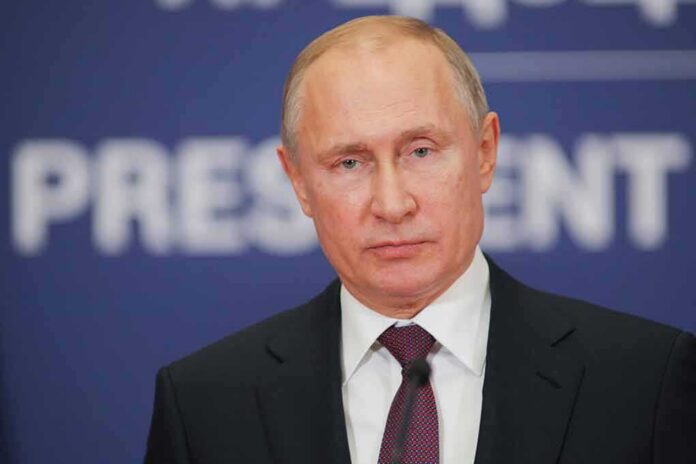
Analysts warn that a clear Russian defeat in Ukraine could raise the risk of Vladimir Putin’s removal, shaping why Moscow keeps the war going rather than ending it now.
Story Snapshot
- Research links a Russian defeat to a higher risk that Putin could be removed.
- Experts say Putin seeks a settlement only if it protects his life and power.
- A possible “freeze” could trade a ceasefire for holding key occupied areas.
- Putin still claims talks are possible, but on terms favoring Moscow’s goals.
What New Analyses Say About Putin’s Incentives
Center for a New American Security analysts link a Russian defeat in Ukraine to a higher chance that Putin could be ousted. They conclude this gives him little reason to end the war now. A Spanish defense study adds that long attrition also strains Russia at home. It says internal political, social, and economic risks could push the Kremlin toward a negotiated exit. These findings point to a narrow path where Putin stays in the fight while avoiding a result that looks like defeat.
Ukrainian expert Oleksandr Yizhak says Putin will negotiate only if it preserves his life and power. He argues that stopping the war without guarantees could mean accountability for launching it. That view helps explain why Russia keeps intense pressure on Ukraine while floating talks. It also fits a broader pattern in which personalist rulers fear what happens after war more than the cost of staying in it, especially if defeat could trigger elite moves or public backlash.
Why a Ceasefire “Freeze” Is on the Table
The Spanish defense analysis outlines a way to pause the war without admitting failure. It describes a possible ceasefire or partial pullback coupled with keeping symbolically vital areas, such as parts of Donetsk and Luhansk. The paper says those territories anchor Russia’s imperial story at home, so holding them helps manage domestic politics even if front lines stop moving. This “win by not losing” logic offers a face-saving freeze rather than an all-or-nothing end.
This path also shows the core tension in Moscow. Prolonging the war avoids the risk of being seen as beaten, but it drives costs that can shake domestic stability. The same study warns that attrition brings political, social, and economic strains that could push the Kremlin to negotiate. That means Putin’s safest choice can flip over time. If battlefield losses or home-front stress grow, a freeze or limited deal could look better than open-ended fighting.
What Putin Says He Wants Versus What He Can Accept
Putin continues to say that talks are possible, but only if they meet Russia’s stated security aims. He told reporters that all proposals are on the table, while stressing that Moscow will act based on its interests. Independent assessments note his conditions include Ukrainian neutrality, military limits, and recognition of the territories Russia claims. Those terms amount to major concessions by Kyiv and keep pressure on Ukraine to accept Moscow’s map.
🇺🇸🇺🇦 The Ukraine War: Can the United States Bring It to an End?
Strategic assessment | 14 October 2026 | Outlook: October 2026 – March 2027
The United States has substantial leverage to help end Russia's war against Ukraine, but Washington cannot impose a durable peace by itself.… pic.twitter.com/q3Mn6sRPkX— Letros Antonis (@AntonisLetros) October 14, 2026
This public stance does not prove he will never settle. It does show that any deal must look like a win at home. Analysts caution that most claims about Putin’s inner motives rest on expert reading of incentives, not leaked Kremlin plans. Still, the incentives are plain. A defeat risks his position. Endless war risks the economy and social calm. That narrow space in between—pausing the war while claiming gains—may be the only option he can sell inside Russia.
Why This Matters for Americans Watching Washington
For many Americans, this story hits a nerve. People on the right and left see leaders abroad and at home protecting their own power first. They worry about endless wars, high costs, and deals cut by elites far from voters. These analyses suggest Moscow is gaming optics as much as strategy. That should guide how Washington sets goals, spends money, and measures success. Clear ends, tough oversight, and honest timelines help avoid another open checkbook with no finish line.
Sources:
tsn.ua, stripes.com, english.ahram.org.eg, smh.com.au, reuters.com
© standardnewsdaily.com 2026. All rights reserved.