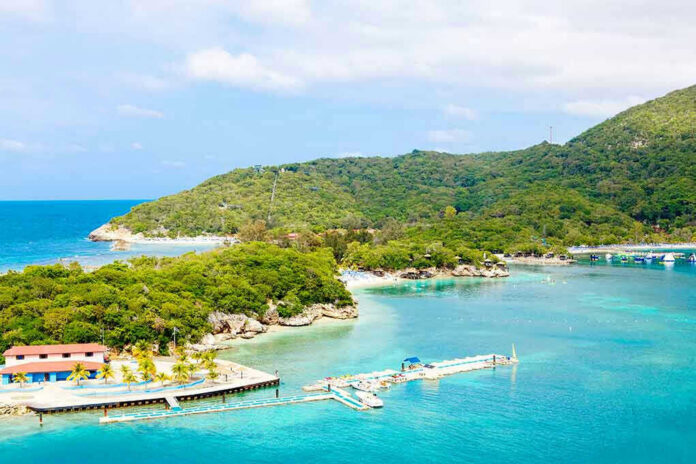
Jeffrey Epstein’s private island has become a stronger symbol than anyone expected, because the new footage shows rooms, objects, and spaces that still raise hard questions years later.
Quick Take
- House Oversight Committee Democrats released never-before-seen footage and images of Little Saint James that were recorded by United States Virgin Islands authorities in 2020.
- The images do not show any people, but they do show a bedroom, a dental chair, masks on a wall, a speed-dial phone, and a chalkboard with words like “truth,” “deception,” and “power.”
- Survivors have said under oath that they were trafficked to Little Saint James and abused there, which gives the island’s physical details a much darker meaning.
- The release has fueled public debate, but the footage itself cannot prove trafficking on its own because it was recorded after Epstein’s death and does not show crimes in progress.
What the New Release Actually Shows
The House Oversight Committee shared photos and video that were taken in 2020 during a search by United States Virgin Islands authorities. The material offers a rare look inside a property that has long sat at the center of Epstein’s abuse story. But the footage is not a smoking gun. It shows the island’s interior after Epstein’s death, not the acts survivors described. That gap matters, even for people who find the release disturbing.
Still, the visuals are hard to dismiss. Reporters described a room with masks on the wall, a dental chair, and a phone with names on speed-dial buttons. Another image showed a chalkboard with words like “truth,” “deception,” and “power.” Those details invite strong interpretations, especially from readers already familiar with trafficking cases, where control, secrecy, and psychological pressure often matter as much as physical force.
Why Survivors’ Accounts Matter More Than Props
The strongest part of the public record remains survivor testimony. PBS reported that several survivors said they were trafficked to Little Saint James and exploited there. That is the core evidence, because direct victim accounts can explain what a room was used for, who controlled it, and how the island functioned. A photo can suggest a pattern. A sworn witness can describe the pattern from the inside. That is why the testimony carries such weight.
The released footage also has clear limits. It does not show any individuals, so it cannot prove abuse happened in front of the camera. It was recorded in 2020, one year after Epstein died, which means it cannot capture the crimes survivors say happened during his ownership. For that reason, the footage works best as context, not as standalone proof. It strengthens the story, but it does not replace the story.
The Temple, the Objects, and the Open Questions
Much of the public fascination has centered on the so-called temple structure and the objects inside it. BBC reporting said the structure had been permitted as a music pavilion, yet the released images did not show a piano. That mismatch has fueled suspicion. But suspicion is not the same as proof. The public still lacks a full, independent forensic review of the building, its design, and its actual use during Epstein’s ownership.
Never-before-seen footage reveals the innerworkings of Jeffrey Epstein's private island.
The newly released video takes viewers on a rare tour of what has become known as "Epstein island."
Filmed by an artist who says he worked for Epstein from 2010 to 2019, the video captures… pic.twitter.com/K59sFjOTvI
— Fox News (@FoxNews) July 7, 2026
The broader danger is easy to see. Viral clips can turn a serious abuse case into internet theater. NBC News reported that influencers have rushed to Little Saint James to chase views, and that trend can flatten the real issue into spectacle. When that happens, the island stops being a crime scene in the public mind and becomes a haunted set piece. That may drive clicks, but it does nothing for truth, victims, or accountability.
What the Release Means Going Forward
The best next step is fuller disclosure. The public needs the complete set of images, video, and related records from the 2020 search so investigators, journalists, and experts can examine them carefully. It would also help to hear directly from the United States Virgin Islands authorities who made the search. Their sworn account could clarify which objects they considered important and which claims remain speculation.
For now, the release does something important and limited at the same time. It confirms that the island contained unsettling features. It also reminds readers that a disturbing room is not the same thing as a courtroom case. The legal and moral weight still rests most heavily on survivor testimony and any future records that show who used the island, how they used it, and what others knew.
Sources:
facebook.com, cnn.com, instagram.com, pbs.org
© standardnewsdaily.com 2026. All rights reserved.