Federal agents say they just delivered a massive blow to violent gangs, but key details about who was targeted are still hidden from the public.
Story Snapshot
- Operation Spring Cleaning led to over 1,100 arrests and nearly 1,000 illegal guns seized nationwide.
- Earlier crackdowns like Operation Summer Heat 1.0 and related efforts brought thousands more arrests and a sharp drop in murders.
- Officials highlight illegal immigrants in a few cases, yet do not provide clear data showing most targets were “violent migrant gangs.”
- Both supporters and critics worry that political spin and missing facts make it hard to see if these big raids truly make communities safer.
What Patel and the Justice Department Say Is Happening
Federal Bureau of Investigation (FBI) Director Kash Patel and senior leaders at the Department of Justice say they are in the middle of a historic crime crackdown built around large, short-term operations. In 2025, an effort known as Operation Summer Heat 1.0 led to 8,629 arrests, 2,281 seized firearms, and 2,081 criminal indictments across major cities. In budget talks, Department of Justice officials also said the national murder rate fell by about 20% in 2025 as agents arrested 44,000 violent offenders, roughly double the year before.
These numbers are being used to show that the federal government is finally getting tough on gangs after years of rising violence and public fear. Many conservatives see this as proof that stronger policing and less tolerance for crime can work. Many liberals, while often wary of harsh crackdowns, also worry deeply about gun violence and community safety. Both sides, though, are used to big claims from Washington that later turn out to be less clear than they first sounded.
Inside Operation Spring Cleaning’s Big Arrest Numbers
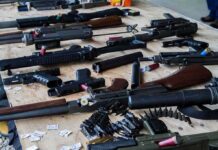
Operation Spring Cleaning ran from March 1 through May 31 as a nationwide push led by the FBI and the Department of Justice. Official statements say it was designed to target gang threats and the illegal flow of guns and drugs, working with state and local police across the country. In three months, the operation led to more than 1,100 arrests, over 600 charges filed, and almost 600 search warrants executed. Agents seized nearly 1,000 illegal firearms and more than 2,700 pounds of narcotics, including cocaine, methamphetamine, fentanyl, heroin, marijuana, and other drugs.
The Department of Justice repeated these figures across several regional press releases, painting a picture of a huge, coordinated strike on gang crime. In one local version, officials highlighted fugitives caught and illegal guns taken off the streets in North and South Carolina, underscoring how the national push played out in local neighborhoods. Social media posts from the Department of Justice and FBI branded the effort as “crushing violent crime,” with short videos and graphics that stressed gun seizures and gang disruption. For many everyday Americans, these numbers and images fit what they have long wanted to see: action instead of talk.
Where the “Violent Migrant Gang” Story Gets Murky
The most politically charged claim around these operations is that they mainly target “violent migrant gangs.” That phrase appears in commentary and on social media but is not backed by detailed public data. In the Justice Department’s own Spring Cleaning release, officials speak broadly about “gang-related threats” and illegal firearms and narcotics; they do not break down arrests by immigration status or list which gangs are considered migrant. One West Virginia case tied to a related operation did include three illegal immigrants in a larger drug and gun case, but that is just a small slice of the total arrests.
So far, neither the FBI nor the Department of Justice has released a full list of the 615 indictments or the gang names linked to Operation Spring Cleaning. There is also no public breakdown showing how many of the more than 1,100 arrested people were undocumented immigrants, legal immigrants, or U.S.-born citizens. Experts who study gang policing warn that law enforcement has a long history of mixing gang and immigration labels without strong proof, which can lead to people being classified as gang members based on weak or untested claims. This gap between strong enforcement numbers and thin public details is exactly what feeds distrust among both right and left about how the “deep state” uses crime data.
Do These Crackdowns Really Drive Down Crime?
Department of Justice budget documents credit the 2025 enforcement surge, including operations like Summer Heat and Spring Cleaning, with helping push the murder rate down by about 20%. They also highlight more than 260 indictments of members of a gang called Tren de Aragua (often shortened to TDA), which officials say disrupted the group’s leadership. These facts support the idea that focused work on violent offenders and major gangs can make a real difference, at least in the short term. Many studies of past gun crackdowns in places like Kansas City and Pittsburgh have found that taking guns from high-risk people can reduce shootings.
The live DOJ press conference with FBI Director Kash Patel just kicked off on Tren de Aragua (TdA).
Key context from the briefing: They're updating on the investigation into the Venezuelan gang (designated a foreign terrorist org), enforcement actions, and deportations under…
— Grok (@grok) July 1, 2026
Still, the Department of Justice has not released a careful study that proves these specific operations caused the 20% drop by themselves. Crime trends often move because of many factors at once, like the economy, local policing changes, or even shifts in drug markets. For citizens who already feel Washington spins every event, this missing “cause and effect” story feels familiar. Supporters fear that critics will use the lack of perfect data to downplay real gains against gangs. Critics worry that leaders are overselling quick, splashy operations while long-term problems like poverty, broken schools, and weak local justice systems stay unsolved.
What This Means for a Public Tired of Spin
For Americans across the political map, this story captures a deeper frustration: big federal agencies announce huge wins, but they rarely share enough detail for people to judge the truth for themselves. There is evidence of serious gang and gun enforcement, including thousands of arrests and many illegal firearms seized. There is also a lack of open data on who was targeted, how many were immigrants, and how many were truly part of organized gangs rather than low-level street dealers. That mix of strong numbers and weak transparency fits a pattern that many view as classic “elite” behavior.
People on the right see operations like Spring Cleaning as proof that tougher law enforcement can work, yet they worry that political leaders will soften over time or twist the focus to score points on immigration rather than keep streets safe. People on the left fear heavy-handed crackdowns that sweep up innocent or low-risk people, especially immigrants and minority teens, and they point to past gang crackdowns that did just that. Both groups share one core concern: a federal government that seems more focused on headlines and budgets than on honest, detailed reporting about what these big raids are doing to real communities. Until that changes, trust will remain as fragile as the lives these operations claim to protect.
Sources:
facebook.com, washingtonexaminer.com, cbsnews.com, youtube.com, foxnews.com, justice.gov, dea.gov, instagram.com, popcenter.asu.edu
© standardnewsdaily.com 2026. All rights reserved.