As crude oil costs fall fast, Trump is putting “Big Oil” on notice and telling gas retailers to stop squeezing American drivers.
Story Snapshot
- Trump ordered the Department of Justice to investigate major oil companies and gas retailers over high pump prices.
- He says crude oil prices are “dropping like a rock” while drivers see only small cuts at the pump.
- Industry groups insist prices reflect taxes, refining, and normal market lags, not illegal “gouging.”
- Conservatives now face a key question: real market failure, or another Washington push toward back‑door price controls?
Trump’s Warning Shot At Big Oil And Gas Retailers
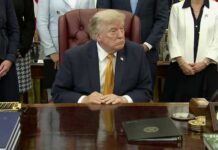
President Donald Trump has publicly warned oil companies and gas retailers that they are in “big trouble” if they keep prices high while crude oil costs fall. In a late‑night Truth Social post, he said the big oil companies are not dropping prices at the pump in line with the sharply lower prices they are paying for oil, adding that these wholesale prices are “dropping like a rock” and customers are being “gouged.”[8]
Trump then said he has instructed the Department of Justice to “immediately start looking into this,” making it clear he expects gasoline prices to fall much faster. Multiple outlets report that the administration has now asked federal investigators to look at the pricing behavior of large producers and refiners, including ExxonMobil and Chevron, after crude benchmarks dropped sharply in recent weeks while the national average for regular gasoline remained around the high‑$3 range.[2]
What Is Really Behind Sticky Gas Prices?
Energy industry groups and many economists push back on the idea that “Big Oil” is simply flipping a switch to rip off drivers. The American Petroleum Institute, which represents major oil and gas firms, explains that the price of a gallon of gasoline comes from several parts: crude oil itself makes up roughly half or a bit more, while refining costs, distribution and marketing, and federal and state taxes make up the rest. That means crude prices alone do not control what you pay at the pump.[11]
Researchers have also found that gas prices usually go up quickly when crude rises but fall more slowly when crude drops, a pattern called “asymmetric pass‑through.” Studies of United States gasoline markets show that this slower drop is common and linked to how stations manage inventory, competition, and costs, not just greed or collusion. A Dallas Federal Reserve paper reached a similar conclusion, tying the slower decline to basic supply‑chain economics rather than organized price‑fixing.[12][13]
Investigations, Free Markets, And Conservative Concerns
For many conservative readers, this story hits two nerves at once: pain at the pump and fear of creeping government control. The United States Oil and Gas Association notes that repeated deep investigations by the Federal Trade Commission have found no evidence that energy companies were guilty of illegal price gouging during past price spikes. Those official reviews traced high prices mainly to world crude costs, refinery outages, and demand swings, not secret plots in corporate boardrooms.[17]
At the same time, Americans are tired of paying nearly four dollars a gallon after years of inflation, war‑driven shocks, and past “green” schemes that choked supply. Trump’s decision to call out oil giants speaks to that frustration and to a belief that powerful corporations should not hide behind talking points while families struggle to afford basic travel and commuting. Yet if a Justice Department probe morphs into de facto price controls or heavy‑handed regulation, it could undercut the free‑market energy revival many conservatives want to see.[9][18]
Where This Leaves Conservative Voters
Trump’s move forces Big Oil, retailers, and the Washington establishment to answer a simple question: are drivers getting a fair deal when crude drops, or not? Early data show crude prices have fallen faster than pump prices in recent weeks, giving Trump a political opening to demand answers even if the legal bar for “price gouging” will be hard to meet in court. For now, much of the evidence on both sides is still broad and lacks detailed company‑by‑company pricing records.[3]
Trump Warns Gas Retailers: Drop Prices Immediately or Face Consequences — New York Is Still Getting Ripped Off at Over $4 a Gallon
President Trump is putting direct pressure on gas retailers, stating that with oil now sitting at $68 a barrel and trending lower, pump prices are… https://t.co/i0omNf6ooC
— News Picks Daily (@NewsPicksDaily) June 30, 2026
For conservatives, the path forward is to back real transparency without inviting socialist‑style control. That means pressing for clear Energy Information Administration data on how fast lower crude prices reach local stations, encouraging competition in refining and distribution, and watching closely that any Justice Department review stays focused on facts, not politics. Lower prices, strong supply, and a light‑touch federal government remain the goals—and any side that stands in the way should expect real scrutiny.[14]
Sources:
[2] Web – Trump accuses oil companies of gas price ‘gouging,’ calls for DOJ …
[3] Web – Trump accuses oil companies of gouging drivers, orders DOJ to …
[8] Web – Trump orders investigation into oil companies for alleged price …
[9] YouTube – Trump accuses oil companies of gas price gouging, calls for federal …
[11] Web – Trump says DOJ will ‘immediately’ look into price gouging at the gas …
[12] Web – How Gasoline Prices Are Determined – American Petroleum Institute
[13] Web – Price pass-through in US gasoline markets – ScienceDirect
[14] Web – [PDF] Gasoline and Crude Oil Prices: Why the Asymmetry
[17] Web – Factors affecting gasoline prices – U.S. Energy Information … – EIA
[18] Web – What Determines Retail Prices for Gasoline and Diesel? – Volta Oil
© standardnewsdaily.com 2026. All rights reserved.