
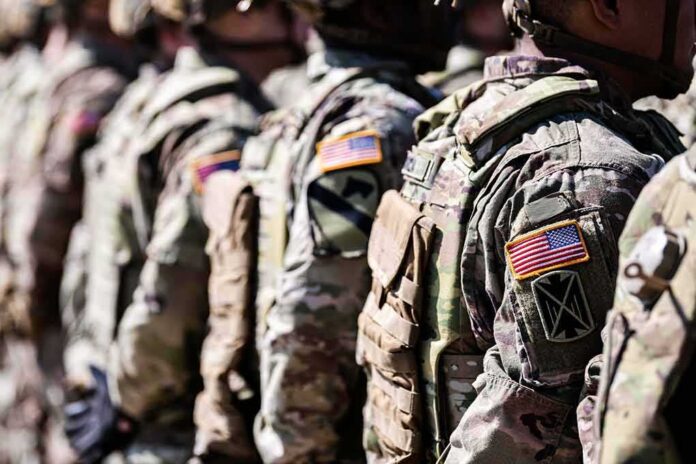
U.S. Army soldiers from the 1st Infantry Division are rotating into Lithuania to deter Russia and back NATO’s eastern flank, replacing another American unit as planned.
Story Highlights
- The 2nd Brigade Combat Team, 1st Infantry Division, will deploy to Lithuania as a scheduled rotation.
- The rotation replaces the 1st Brigade Combat Team, 1st Armored Division, keeping a continuous U.S. presence.
- U.S. officials and Lithuania describe the move as part of Operation Atlantic Resolve to deter Russia.
- About one thousand U.S. troops typically operate and train in Lithuania during these rotations.
Who Is Deploying And Why It Matters
Army officials said soldiers with the 2nd Brigade Combat Team, 1st Infantry Division, will deploy to Lithuania to continue the U.S. presence on NATO’s eastern flank. The unit will replace the 1st Brigade Combat Team, 1st Armored Division, in a planned changeover. Officials framed the move as part of a steady, predictable rotation that supports Operation Atlantic Resolve and reassures allies on the Baltic front. The rotation signals resolve to Moscow and helps keep the peace through strength.
Lithuania’s president said a new group of American troops is on the way, ending questions about a potential gap in U.S. forces there. The statement aligned with Army leaders in Europe, who tied the deployment to ongoing deterrence along the frontier with Russia. Since 2019, the United States has kept a regular battalion-sized presence in Lithuania, shifting to a continuous rotational model after Russia’s expanded war in Ukraine. Those rotations aim to close seams and maintain readiness.
How The Rotation Fits NATO’s Eastern Defense
NATO moved to a forward posture in the Baltics after 2014, adding multinational battlegroups and more exercises with allied armies. The United States has paired that with recurring Atlantic Resolve rotations that train with partners across the region. The 1st Infantry Division, under higher commands in Europe, has a track record of combined training with allies from Estonia to Poland, building shared tactics and trust that matter in a crisis. These habits reduce friction and speed response.
Lithuania has invested to host and sustain American troops over the long term. U.S. soldiers train at local ranges, practice rapid movement, and work on air and ground integration with Lithuanian units and other allies. During a typical cycle, more than one thousand American troops operate in Lithuania and take part in multiple joint drills. That footprint is not a permanent base, but it keeps skilled forces close, tested, and able to flow in more power if needed.
What The Rotation Means For U.S. Readiness And Taxpayers
Rotations keep American units sharp, move heavy gear forward, and pressure-test the logistics that win wars. Past Atlantic Resolve deployments have pushed tanks, infantry vehicles, and artillery across Europe, proving that ports, rail, and roads can handle the load. That practice reduces risk in a real emergency and protects American lives if conflict spreads. It also shows allies that the United States will meet its pledge and that aggression will not pay.
1st Infantry Division soldiers deploy to Lithuania in ongoing effort to deter Russia via /r/army https://t.co/HDoXu063oT #army #miltwitter
— /r/Army (@rArmyReddit) September 24, 2026
Supporters of a strong defense see this as a sober, cost-aware way to hold the line. A continuous rotational presence avoids the expense and politics of new permanent bases while keeping combat power near potential flashpoints. It matches President Trump’s push for allies to step up, while the United States provides key muscle and leadership. The bottom line is simple: train hard with friends now, so we never have to fight later. That is common sense deterrence backed by action.
Sources:
taskandpurpose.com, stripes.com, army.mil, dvidshub.net, kaiserslauternamerican.com, kariuomene.lt, militarnyi.com
© standardnewsdaily.com 2026. All rights reserved.