Four people are dead after a U.S. military strike on a Caribbean speedboat that commanders say was running drugs along a known smuggling route.
Story Snapshot
- U.S. Southern Command says “confirmed intelligence” tied the boat to drug trafficking.
- The strike is part of a yearlong campaign using lethal force against suspected drug boats.
- Human rights groups question the legality and evidence behind these killings.
- The Pentagon released few details, continuing a pattern of classified justifications.
Pentagon Confirms Fatal Strike and States Rationale
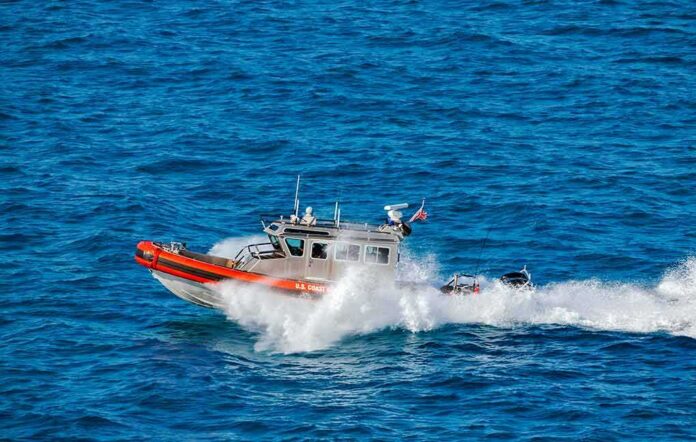
U.S. Southern Command said Joint Task Force Western Hemisphere carried out a “lethal kinetic strike” on August 25 against a “go-fast” vessel in the Caribbean. The command said the boat ran along established smuggling routes and that “confirmed intelligence” showed active drug trafficking. The command said four people on board were killed. The release framed the targets as tied to narcotics networks and justified the action as part of ongoing maritime counter-drug operations.
Major outlets echoed the Pentagon’s account and noted the scarcity of further details. Reports said commanders did not publish the boat’s flag, cargo, or the intelligence basis beyond a short statement. The strike fits a series of similar actions in the Caribbean and eastern Pacific over the last year. Those actions use aircraft or armed surface forces to disable or destroy suspected smuggling boats at sea, rather than attempt a boarding or seizure.
Campaign Marks Shift Toward Lethal Maritime Enforcement
Coverage has tracked a shift from interdiction to intelligence-led lethal force. Reporters noted the campaign began in September last year and has paused and resumed at points since then. Officials describe boats as “go-fast” or “low-profile” craft known in trafficking. The government often releases images or short clips later, but it rarely provides full evidence to the public. That secrecy increases questions from critics about targets and rules for using deadly force at sea.
Supporters of the strikes argue they disrupt large trafficking networks that move cocaine and other drugs north. They say boats can be armed, hard to stop, and dangerous to board in rough seas. They point to long-standing smuggling routes and patterns visible to maritime patrols. They note that fast boats can dump cargo and scuttle vessels before any boarding, making prosecution and seizure difficult. They argue speed and surprise are needed to reduce flow and break networks.
Legal and Human Rights Concerns Intensify
Human rights groups and legal analysts dispute the strikes’ legality and necessity. One analysis reported that international and domestic law do not allow killing suspected traffickers who pose no imminent threat. Some experts say the United States is not in an armed conflict with cartels, so the law of armed conflict does not apply. They argue peacetime law and human rights standards require arrest and due process unless there is an immediate threat to life.
These concerns grow when the government withholds details on cargo, survivor recovery, or attempts to hail and stop a vessel first. Critics warn that “confirmed intelligence” claims are hard to verify from the outside when the evidence stays classified. They also warn that lethal maritime actions can create diplomatic friction with coastal states and can endanger civilians who work at sea, like small-scale fishers, if identification standards are not robust and transparent.
Public Accountability and The Information Gap
Journalists noted that officials did not disclose the nationality of those killed or publish proof of drugs on board. This has been common across the campaign, where basic facts remain classified or undisclosed. That pattern leaves the public to judge high-stakes uses of force with little more than short statements. For many citizens, on the left and right, this validates a deeper fear that powerful agencies act without real oversight and that evidence is shown only when it helps the narrative.
SOUTHCOM says a U S strike destroyed a go fast vessel on a known Caribbean drug trafficking route killing four people it described as narco terrorists after intelligence allegedly confirmed the boat was actively involved in trafficking#NYI pic.twitter.com/PNMXHgD1XV
— NewYork-Insight (@NewYork_Insight) September 20, 2026
The government’s defenders respond that disclosure can reveal intelligence sources and methods. They say cartels adapt fast and exploit any leak. Still, a democracy must balance secrecy with trust. Concrete steps can help: publish clear rules for force at sea, document warnings and intercept attempts, and release sanitized after-action findings when safe. These steps do not end debate, but they respect the public that funds and authorizes this power and wants safety without sacrificing core ideals.
What This Means For Families, Sailors, and Policy
Families in the region, many living close to the water, carry the risk of misidentification if standards fail. U.S. sailors and aircrews also carry the burden of split-second calls under pressure. They need clear rules and political backing that holds up under legal scrutiny. Congress and the courts can demand more transparency while still protecting sensitive intelligence. That balance can support both security and the rule of law that guards every innocent life at sea.
Sources:
theguardian.com, foxnews.com, atlantanewsfirst.com, aljazeera.com, npr.org
© standardnewsdaily.com 2026. All rights reserved.