
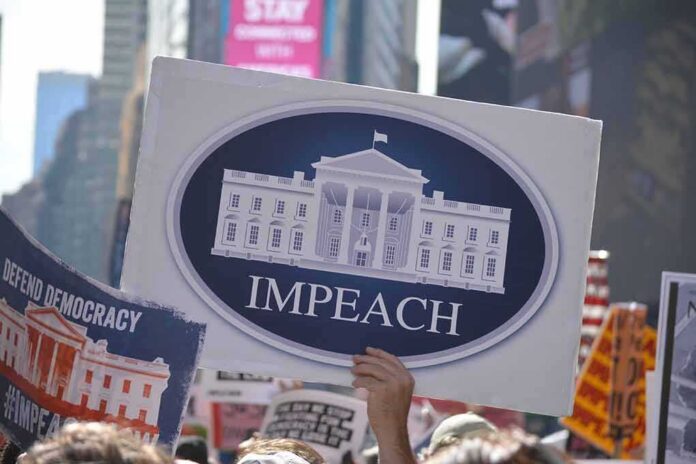
Steve Scalise says Democrats would impeach President Trump “day one” if they win the House, sharpening a hard-edged midterm warning backed by recent party history and open talk of new investigations.
Story Snapshot
- House Majority Leader Steve Scalise argues Democrats will impeach Trump immediately if they retake the House.
- Democrats have impeached Trump before; the House holds the sole power to impeach under the Constitution.
- Some Democratic leaders signal focus on investigations first, not instant impeachment.
- Both parties now frame impeachment as a partisan weapon shaped by who controls Congress.
What Scalise Said And Why It Matters
House Majority Leader Steve Scalise said Democrats would impeach President Trump on the first day if they win the House this November. He made the claim in an interview, arguing Democrats are “not even being shy about it.” The warning serves as a turnout push for Republicans who might sit out the election. Scalise has long tied Democrats to aggressive impeachment tactics, dating back to his 2019 remarks blasting the process against Trump as a “vendetta”.
Scalise repeated this message at high-profile party events and on social platforms, saying impeachment would be the first order of business if Democrats gain power. His comments fit a pattern where campaigns lean on fear of rapid investigations and removal efforts to energize voters. The appeal speaks to wider frustration that Washington fights more about power than results on inflation, immigration, and energy costs. Voters on both sides fear elites in government put careers over solutions.
What Democrats Are Signaling Now
Recent reporting says Democrats preparing for a possible House majority are developing broad investigative plans on Trump’s world and related firms instead of moving to impeach immediately. Party sources describe an oversight-first approach, with room to escalate if findings warrant it. That stance differs from Scalise’s “day one” forecast. It does not rule out impeachment later, but it points to hearings, subpoenas, and document reviews before any extreme step.
House Minority Leader Hakeem Jeffries has also downplayed impeachment talk this cycle, saying Democrats are not focused on it right now. He left options open without making impeachment a near-term pledge. That message tempers expectations of an instant drive to remove Trump if the chamber flips. It also reflects a lesson from past fights: voters punish parties seen as obsessed with process over pocketbook issues.
The Constitutional Power And The New Normal
The Constitution gives the House the sole power to impeach and the Senate the sole power to try impeachments. That makes impeachment a political decision as much as a legal one. Congress does not follow a set burden of proof like a court. Outcomes turn on vote counts, timing, and control of each chamber. This structure explains why warnings rise when a shift in House control seems possible.
Legal and historical analyses show impeachment has grown into a sharper partisan tool in recent years. Scholars describe its use as tied to factional battles, not just rare constitutional crises. That trend accelerated in the Trump era, when two House impeachments and fierce Senate trials set new precedents and expectations on both sides. As a result, claims about rapid impeachment now land as plausible to many voters, even when party leaders hedge.
How This Lands With Frustrated Voters
Conservatives hear Scalise’s warning and see a threat to the 2024 choice they made. Liberals hear talk of “day one” and see a needed check on what they view as abuses. Many others hear both parties talking process, not progress. They worry Washington elites will spend another year on hearings and headlines while prices, border pressure, and health costs grind on. That fear of a government serving itself, not citizens, is why this message sticks.
🚨 THE MIDTERM STAKES: DEMOCRATS ARE PREPARING FOR MAJOR TRUMP INVESTIGATIONS IF THEY WIN THE HOUSE
House Democratic leaders are already discussing how they would use a new House majority to investigate President Donald Trump, his administration and members of his family — and… pic.twitter.com/voOzHqo68B
— JoSweet 🇺🇸🐊 (@Molnar_Politico) September 14, 2026
The bottom line for readers is simple. If Democrats win the House, they will likely launch wide oversight of Trump and his allies first. Impeachment remains possible because the House can do it with a simple majority. Scalise argues it would be immediate. Democratic leaders suggest a slower path. Voters should weigh how each path affects issues they feel every day, not only the next round of partisan war.
Sources:
youtube.com, scalise.house.gov, bbc.com, x.com, deseret.com, congress.gov, brennancenter.org, en.wikipedia.org
© standardnewsdaily.com 2026. All rights reserved.